Humane removal with cleanup and proofing
ACAT's current site supports a full-service path that includes animal removal, rat-specific service support, cleanup help, and a clear path from inspection to removal to prevention.


If you need rat removal in Riverside, the real solution is not just setting traps. It is finding how rats got in, removing active animals safely, cleaning contaminated areas when needed, and sealing the openings that let the infestation start in the first place.
Call (877) 724-5314Riverside County
All City Animal Trapping supports homes, rentals, HOAs, and commercial properties throughout Riverside County, with same-day help available when scheduling allows.
Need help now? Call (877) 724-5314 to discuss the rat activity you are seeing, hearing, or smelling.
What to expect
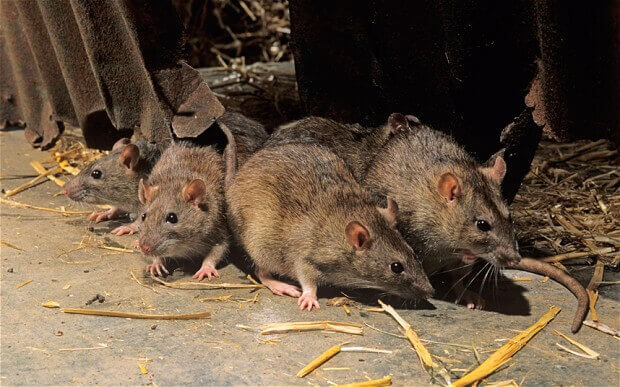
Direct answer: Professional rat removal usually includes inspection, humane trapping or active removal, cleanup when contamination is present, and exclusion work that helps stop rats from coming back. That full-process approach is what separates a short-term fix from a lasting one.
Rats can create more than a nuisance. They can contaminate insulation, leave droppings in attics and garages, chew wiring, damage stored belongings, and create recurring odor problems. A property owner in Riverside usually needs clarity on three things right away: how serious the problem is, what the service will include, and what must happen to keep the issue from repeating.
ACAT already offers broader animal removal services, dedicated rat removal service support, and follow-up help for decontamination and odor removal when rats have left a mess behind. For Riverside homes and businesses, that matters because rat problems rarely stay limited to one trap location.
Some calls need urgent attention, especially when you have strong odor, daytime sightings, contamination in living areas, or signs of damage around wiring and insulation. Other situations are better handled through a scheduled inspection that maps the problem carefully before removal begins. Either way, the sooner the property is inspected, the easier it is to limit damage and plan the right scope of work.
This page is for homeowners, landlords, property managers, HOAs, and commercial operators in Riverside who need a practical answer to a common problem: how do you get rid of rats in a way that solves the source instead of chasing symptoms?

Warning signs
Many rat infestations start quietly. By the time the issue is obvious, rats may already be nesting in the attic, moving through wall voids, or contaminating storage and insulation areas.
| Sign | What it may mean | Why quick action matters |
|---|---|---|
| Scratching or movement at night | Active nesting in the attic, walls, or ceiling voids | Rats can expand their nesting areas and damage more materials over time |
| Droppings in the pantry, garage, or attic | Ongoing feeding or established travel paths | Waste can contaminate surfaces, food storage, and insulation |
| Chewed wires, boxes, or ducting | Longer-term activity and active gnawing behavior | Property damage and possible electrical risk can increase if ignored |
| Strong urine or musty odor | Hidden nesting or contamination buildup | Odor often points to an area that needs removal plus cleanup |
| Repeated sightings inside the structure | More than a one-off exterior encounter | The infestation may already be established and spreading |
These signs often indicate more than one access point or more than one nesting area. Grease marks can show where rats repeatedly travel. Droppings can reveal feeding zones and high-activity routes. Noises in the attic usually mean the problem is already structural, not just outside near landscaping or trash storage.
If you suspect chewed wiring, smell strong odor, see contamination near stored food, or notice repeated activity during the day, it makes sense to bring in professional help quickly. The CDC advises using safer cleanup methods for rodent waste rather than sweeping or vacuuming dry droppings, because dry cleanup can spread particles into the air. Their cleanup guidance is a useful benchmark for why contaminated areas should be handled carefully.
The repeat-entry problem
Trapping is only one part of the job. If the openings that allowed rats into the property stay open, repeat activity is likely. If contaminated nesting material stays in place, odor and sanitation concerns can remain even after the active animals are gone.
Once rats have been active inside a structure, the issue can extend beyond removal. Droppings, urine, soiled insulation, nesting debris, and lingering odor may all need attention. That is why it helps to coordinate removal with cleanup support and, when needed, follow-up sanitation planning through ACAT's decontamination and odor removal service.
The CDC notes that rodents can enter through surprisingly small gaps, which is why exclusion work matters so much after the active removal phase. Their guidance on sealing up to prevent rodent entry reinforces a simple principle: if a structure still offers access, food, water, and shelter, the problem can return.
How it works
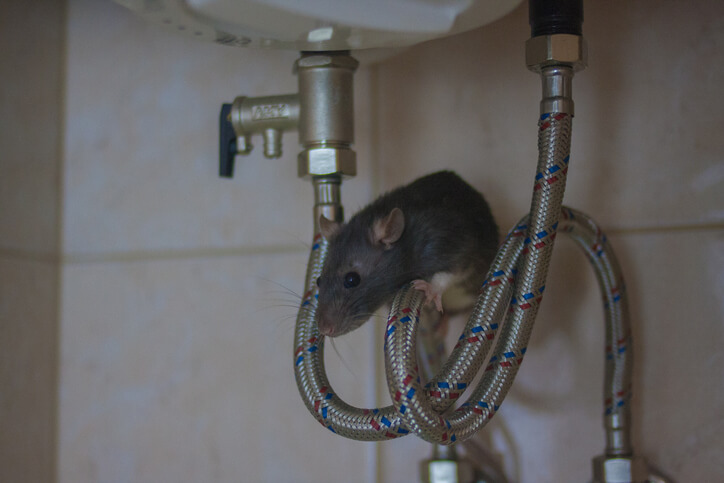
The goal is clarity. Here is the simple version of how a full-process rat removal job usually works.
The first step is inspecting likely access routes, nesting areas, food sources, rooflines, attic spaces, crawlspaces, garages, utility penetrations, and exterior gaps. This helps determine whether the activity is isolated or part of a larger infestation.
Once the activity is mapped, the removal plan can be matched to the species behavior, property layout, and safety concerns around children, pets, tenants, or customers. Humane removal focuses on controlled, practical methods rather than a vague one-size-fits-all approach.
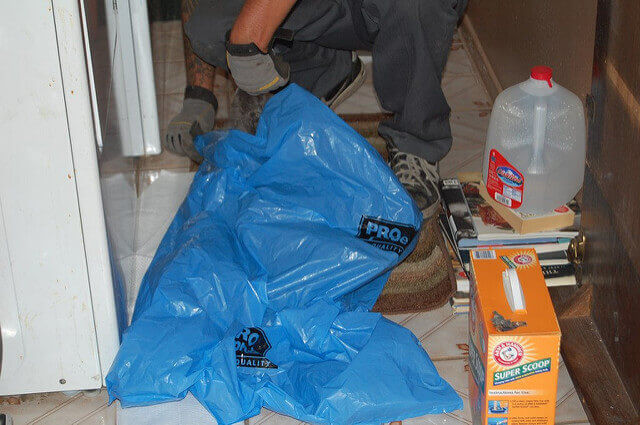
After active removal, the next question is what was left behind. Depending on the property, that may include droppings, contaminated insulation, nesting debris, or odor hotspots. Cleanup needs vary, but this step is often what turns a stressful infestation into a property that feels usable again.
The last step is making it harder for rats to return. That may include sealing likely entry points, recommending storage and sanitation changes, and helping the property owner understand what to watch for after service.
The EPA's overview of preventing rodent infestations aligns with this step by emphasizing food, water, and shelter control alongside exclusion work.
Call to discuss the activity at your property and the next step for inspection, removal, cleanup, and exclusion.
Call (877) 724-5314Estimates
Direct answer: Rat-removal cost depends on how large the infestation is, where the activity is located, how easy the structure is to access, and whether cleanup, insulation work, or repairs are also needed. A clear quote usually comes after inspection, not before.
That does not mean pricing has to feel mysterious. ACAT's trapping prices page already explains that job size and scope can vary. The main point for Riverside homeowners and managers is understanding what changes the scope.
| Cost factor | Why it matters |
|---|---|
| Infestation size | More active areas usually mean more labor, follow-up, and monitoring |
| Property access | Attics, roofs, wall voids, crawlspaces, and commercial spaces can add complexity |
| Structure type | Single-family homes, multi-unit properties, and businesses do not all need the same approach |
| Cleanup needs | Contaminated insulation, droppings, and odor issues can expand the scope beyond trapping |
| Number of entry points | More openings often mean more exclusion material and repair time |
Removal addresses the active rats. Cleanup and repair address what the infestation left behind. If rats have contaminated insulation, damaged materials, or left behind concentrated waste, the best long-term result may require a broader plan than basic removal alone.
Why ACAT
Many pages in this market focus only on urgency. The better buying reason is process clarity. Property owners want to know that someone will inspect the full problem, remove the animals, explain what cleanup is needed, and help reduce the chance of repeat entry.
ACAT's current site supports a full-service path that includes animal removal, rat-specific service support, cleanup help, and a clear path from inspection to removal to prevention.
Rat problems look different in attics, garages, restaurants, storage rooms, retail properties, apartment buildings, and HOA-managed communities. The service plan should reflect how the structure is used, how urgent the issue is, and what kind of follow-up is needed to protect the property.
The ACAT site confirms coverage across Riverside County through its broader locations page. Local service coverage helps property owners understand whether the team can respond to Riverside jobs and nearby service calls without sending them through a generic statewide funnel.
What we handle
These jobs often involve scratching at night, disturbed insulation, droppings, odor buildup, and roofline access points. They also tend to be the cases where trapping alone is least effective without follow-up exclusion.
Rats do not always stay in one easy-to-reach area. Some infestations move between exterior gaps, garages, wall voids, and attic spaces. A full inspection helps connect the activity patterns instead of treating each symptom separately.
Commercial and multi-unit situations often need faster communication, more coordinated scheduling, and a clearer prevention plan. In those settings, rodent activity can affect tenants, staff, customers, and ongoing operations, so the scope should be matched to real-world property needs.
Attic activity
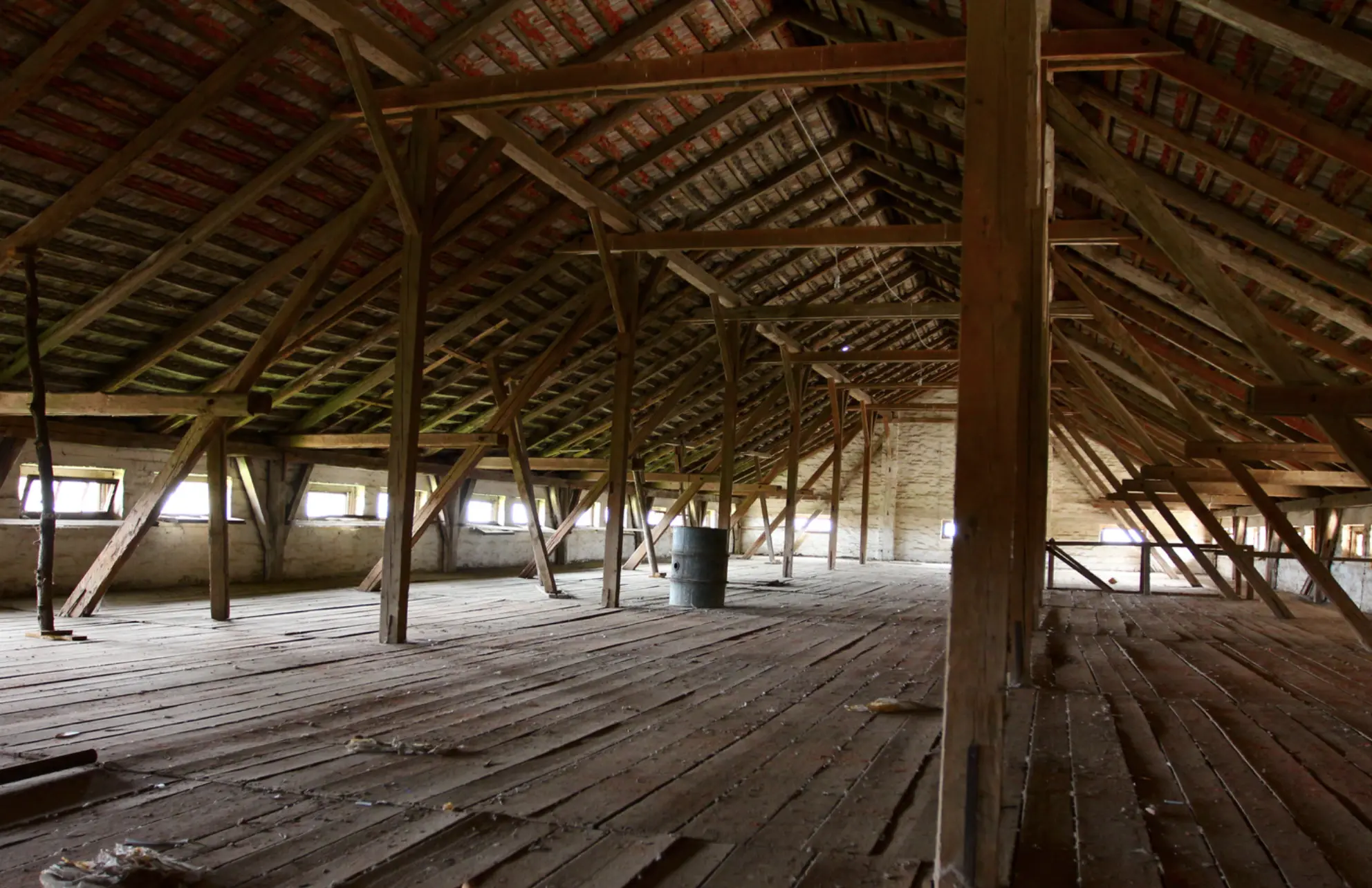
Attic sounds, droppings, disturbed insulation, and structural gaps can be connected during a full inspection. That makes it easier to build a removal and prevention plan around the actual activity instead of treating each symptom separately.
Summary
FAQ
The timeline depends on the species, the size of the infestation, and whether the activity is isolated or spread across multiple areas. Some situations can be stabilized quickly, while larger attic or multi-entry problems may require phased removal, follow-up visits, and additional exclusion work.
The best approach depends on the property, species, and safety concerns around children, pets, tenants, and food areas. Many property owners prefer a removal-and-exclusion strategy because it focuses on solving access and prevention instead of relying only on a temporary chemical fix.
Cleanup needs vary by job. Some cases need light sanitation guidance, while others involve soiled insulation, nesting debris, strong odor, or concentrated droppings. That is why it helps to discuss cleanup needs during inspection instead of assuming every rat-removal job has the same scope.
That is often one of the most important parts of the job. Removing active rats without closing the openings they used can lead to repeat infestations. Exclusion work may involve rooflines, vents, utility penetrations, crawlspace access points, and other gaps that are easy to miss without a structured inspection.
Yes, rat problems affect more than single-family homes. Commercial properties, apartment buildings, rentals, and HOA-managed communities often need a clear plan for inspection, communication, active removal, and prevention so the issue does not keep disrupting operations or residents.
If possible, note where you heard sounds, where droppings were found, when activity happens, and whether odor is strongest in any specific area. Avoid disturbing dry waste, and keep children and pets away from active problem spots until the inspection is completed.
Coverage
Next step
If you are hearing movement in the attic, finding droppings, seeing repeated rat activity, or dealing with odor and contamination, the next step is a professional inspection that looks at the full problem. ACAT offers Riverside-area support through its rat-removal, cleanup, and broader animal-service pages, making it easier to move from diagnosis to removal to prevention.
For immediate help, call (877) 724-5314. If you want more background first, review ACAT's About Us page, explore the broader animal removal service hub, or compare job-scope expectations on the trapping prices page.