

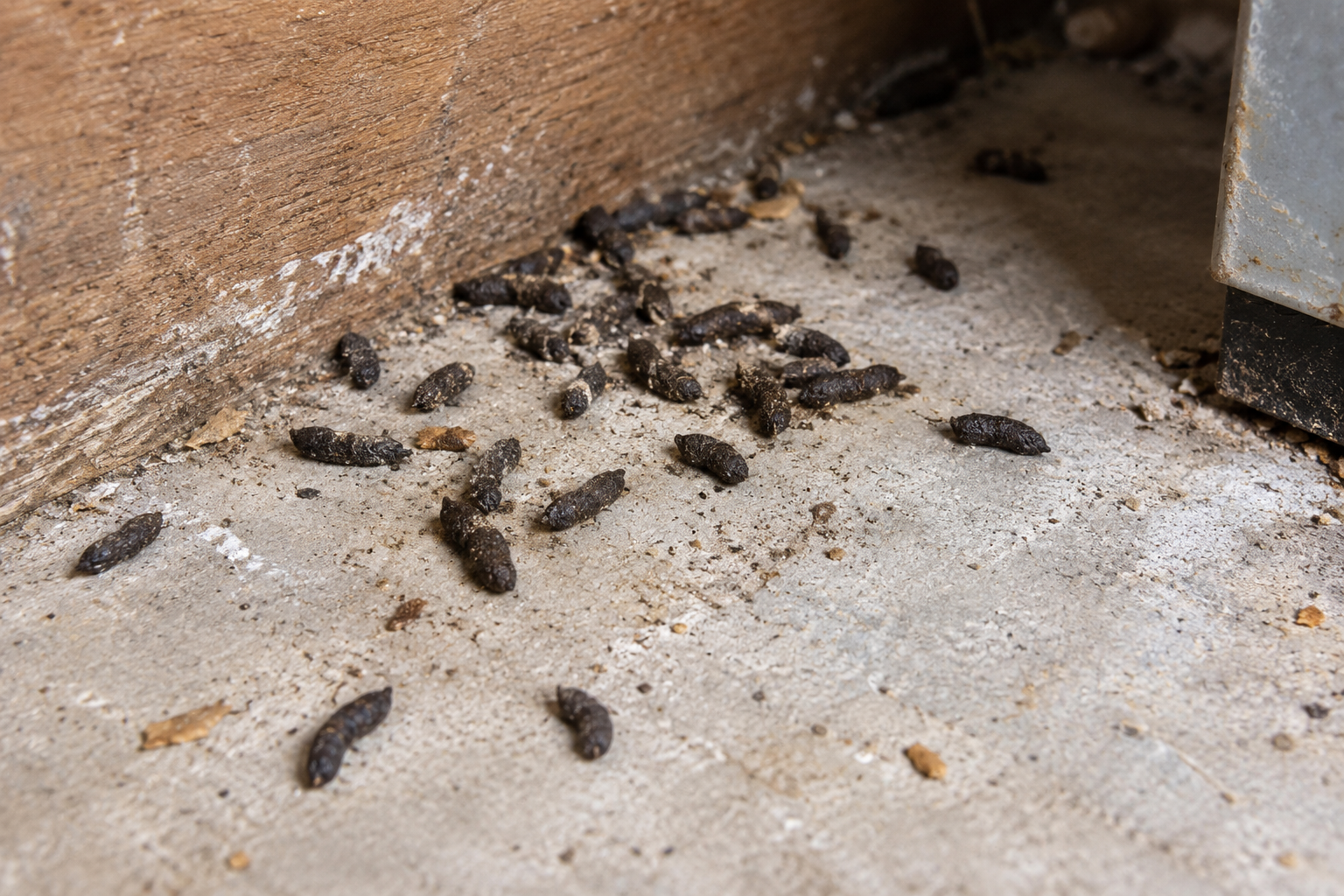
Raccoons often return to the same location to leave droppings. These sites, known as raccoon latrines, may develop on roofs, decks, tree bases, yard features and inside attics. Unlike ordinary yard debris, raccoon feces may contain eggs of the raccoon roundworm Baylisascaris procyonis. This makes identification, limiting exposure and choosing an appropriate cleanup method important.
Raccoon poop cleanup should start by keeping children and pets away, identifying whether raccoons are still using the site and assessing the type of contaminated surface. A small outdoor deposit on a hard surface is different from an established latrine in an attic with contaminated insulation. Public health guidance should determine the precautions used.
Human baylisascariasis is rare, but infection can be severe. The risk involves accidentally swallowing infective eggs from contaminated material. Simply seeing a raccoon does not mean infection has occurred. The following guidance explains the risk without exaggeration and helps homeowners decide when professional wildlife and sanitation services may be appropriate.
What Is a Raccoon Latrine?
A raccoon latrine is a place used repeatedly for defecation. The Centers for Disease Control and Prevention identifies common sites including tree bases, logs, rocks, decks, rooftops and unsealed attics. Repeated use means fresh and old droppings may be present together.
Raccoons can use elevated or sheltered surfaces that homeowners rarely inspect. A roof corner or attic may accumulate material before anyone notices an odor or visible pile. An outdoor latrine may blend with leaves, mulch or soil.
Not every isolated dropping is proof of an active latrine. Repeated piles in one location, especially alongside other raccoon signs, make a latrine more likely. Avoid handling feces to identify the animal. A professional inspection may help distinguish raccoon contamination from other wildlife waste.
Is Raccoon Poop Dangerous?
Raccoon feces can contain eggs of Baylisascaris procyonis, an intestinal roundworm of raccoons. People become infected by accidentally ingesting infective eggs from contaminated hands, soil, objects or other material. The eggs are microscopic, so contamination cannot be confirmed or excluded by looking at the droppings.
The CDC describes human infection as uncommon but potentially serious. In severe cases, migrating larvae may affect the eyes, internal organs or central nervous system. That does not mean every raccoon latrine contains infective eggs or that every exposure leads to disease.
The practical response is to limit contact, practice hand hygiene and follow public health guidance for cleanup. People who think they may have ingested contaminated material, especially young children, should promptly contact a healthcare professional or local public health authority for individualized advice.
Why Does the Age of Raccoon Feces Matter?
Baylisascaris eggs passed in feces are not immediately infective. They need time in the environment to develop. The CDC notes that this process typically takes two to four weeks, depending on environmental conditions.
An old latrine may contain material from different dates, so it is unsafe to assume that a pile is low risk because some droppings look fresh. Infective eggs can remain viable for long periods under suitable conditions. The age and appearance of the feces are not reliable household tests for safety.
This distinction explains why prompt management matters. Preventing continued accumulation and reducing the opportunity for accidental ingestion are useful even when no illness has occurred.
Where Do Raccoon Latrines Form Around Homes?
Common locations include rooftops, roof valleys, decks, patios, tree stumps, logs, rocks and tree bases. Unsealed attics and other sheltered structural areas may also be used. Each location presents different cleanup challenges.
Hard outdoor surfaces may be easier to assess than soil, unfinished wood or insulation. Porous materials can retain contamination or be difficult to treat effectively. A roof adds fall hazards, while an attic may involve restricted access, damaged insulation and uncertainty about whether raccoons remain present.
Sandboxes and child play areas deserve particular attention. The CDC recommends covering sandboxes when not in use. Keep children away from any suspected latrine until the area has been properly evaluated and addressed.
What Should You Do After Finding Raccoon Droppings?
First, stop access to the affected area. Keep children and pets away, and avoid sweeping, vacuuming or handling the droppings without an appropriate plan. Do not shake contaminated objects or track soil from the latrine into the house.
Second, check whether the site is still being used. If raccoons are entering an attic or returning to a roof, removing visible feces alone will not prevent new deposits. Document the location from a safe distance and note signs of active entry.
Third, assess the surface and extent of contamination. A small outdoor deposit is not the same as an attic with extensive droppings and soiled insulation. CDC guidance addresses precautions and cleanup methods, including safe handling and use of heat on suitable surfaces. Heat treatment can create burn and fire hazards and is not appropriate for every material or setting.
Fourth, arrange professional assistance when the site is extensive, elevated, enclosed, structurally complicated or close to areas used by children. Do not assume common disinfectants reliably kill roundworm eggs. Follow the specific guidance for the surface and situation.
Why Ordinary Household Cleaning May Be Inadequate
Raccoon roundworm eggs are resistant to many common environmental conditions and disinfectants. Simply spraying a surface with an everyday cleaner is not a dependable way to establish that it is free of infective eggs.
Surface type also matters. Soil and porous building materials can be more difficult to address than a washable hard surface. Disturbing contaminated insulation or dust without precautions may spread material to adjacent areas.
Professional cleanup is not automatically required for every isolated outdoor dropping, but it may be appropriate when the latrine is large, old, recurrent, difficult to reach or mixed with building materials. A provider should explain what will be removed, what can be cleaned, what must be replaced and the limits of the proposed work.
What If Raccoon Poop Is Found in an Attic?
An attic latrine is both a wildlife entry problem and a contamination problem. The first step is determining whether raccoons are still inside. A female raccoon may have dependent young, so sealing an entrance before checking the space can trap animals and create further damage.
After appropriate animal removal, inspect insulation, wood surfaces, vents, roof edges and stored materials for feces, urine, nesting material and damage. The amount of contamination determines whether localized cleaning or broader material removal is reasonable.
Attic restoration should not be treated as a substitute for wildlife exclusion. If the opening remains accessible, raccoons may return and recreate the contamination. Repairs should follow confirmation that animals are no longer using the opening.
How Does Professional Raccoon Removal Support Cleanup?
An integrated process starts with inspection and species identification. The provider locates activity areas, entry points and possible den sites. When young animals may be present, the plan must account for the family group and applicable wildlife rules.
Removal addresses the animals. Exclusion addresses access. Cleanup addresses waste and contaminated materials. Repairs restore damaged building components. Prevention focuses on attractants such as unsecured trash and pet food.
These are distinct services, and the scope should be clear in a written proposal. Ask whether attic sanitation, insulation replacement, entry repairs and return visits are included rather than assuming all are part of a basic removal visit.
How Can You Prevent Raccoons From Returning?
Use tight fitting trash lids, avoid leaving pet food outdoors overnight, collect fallen fruit when practical and never intentionally feed raccoons. Cover sandboxes and keep outdoor play areas maintained.
Inspect roofline gaps, damaged vents, soffits, crawl space openings and other sheltered access points. Trees, fences and nearby structures may allow raccoons to reach elevated areas, but vegetation management should be sensible and should not create unnecessary damage.
No home can be guaranteed free of wildlife forever. A realistic prevention plan reduces easy access and attractants while encouraging regular observation for new activity.
When Is Professional Raccoon Poop Cleanup Worth Considering?
Consider professional assistance when feces have accumulated over time, the site is on a roof or in an attic, contaminated insulation is present, a raccoon is still entering the structure or the area is used by young children.
Ask how the provider assesses contamination, protects occupants, manages debris, handles affected materials and confirms the animal entry problem has been resolved. For questions about possible human exposure, seek medical or public health advice rather than relying on a wildlife technician for diagnosis.
All City Animal Trapping can help assess raccoon activity and discuss wildlife removal, exclusion and related cleanup needs. The appropriate scope depends on the property and what inspection reveals.
Key Takeaways
- Raccoon latrines are repeatedly used defecation sites, not simply isolated droppings.
- Baylisascaris eggs are microscopic and can become infective after developing in the environment.
- Human infection is rare but can be serious, especially when contaminated material is accidentally swallowed.
- Keep children and pets away from suspected latrines and follow current CDC cleanup guidance.
- Address active raccoon access as well as contamination to reduce recurrence.
Conclusion
Raccoon poop cleanup requires more care than ordinary yard maintenance because latrines can contain Baylisascaris eggs and may accumulate over time. The safest response is to avoid unnecessary contact, follow authoritative cleanup guidance and address any ongoing wildlife activity.
If raccoons are using your roof, attic or other part of the property, our team can discuss an inspection and an appropriate wildlife removal and exclusion plan. Cleanup and repairs should be matched to the actual condition of the site.
Contact All City Animal Trapping to request an inspection
Frequently Asked Questions About Raccoon Poop Cleanup
What is a raccoon latrine?
A location raccoons repeatedly use for defecation, including roofs, decks, tree bases and unsealed attics.
Can you see roundworm eggs in raccoon feces?
No. Baylisascaris eggs are microscopic and cannot be identified by ordinary visual inspection.
Is raccoon roundworm common in humans?
Human infection is rare, but severe disease can occur. Preventing accidental ingestion of infective eggs is the main concern.
How do people become infected?
By accidentally swallowing infective eggs from contaminated soil, hands, objects or other material.
Can I use ordinary disinfectant to kill the eggs?
Do not assume a common household disinfectant reliably inactivates Baylisascaris eggs. Consult CDC guidance for appropriate cleanup methods.
What should I do if raccoon feces are in my attic?
Keep people out of the affected area, avoid disturbing contamination and arrange an assessment of both the wildlife activity and cleanup needs.
When can children use an area after a latrine is removed?
Only after the area has been appropriately assessed and cleaned. Consult public health guidance for the particular surface and exposure concern.