

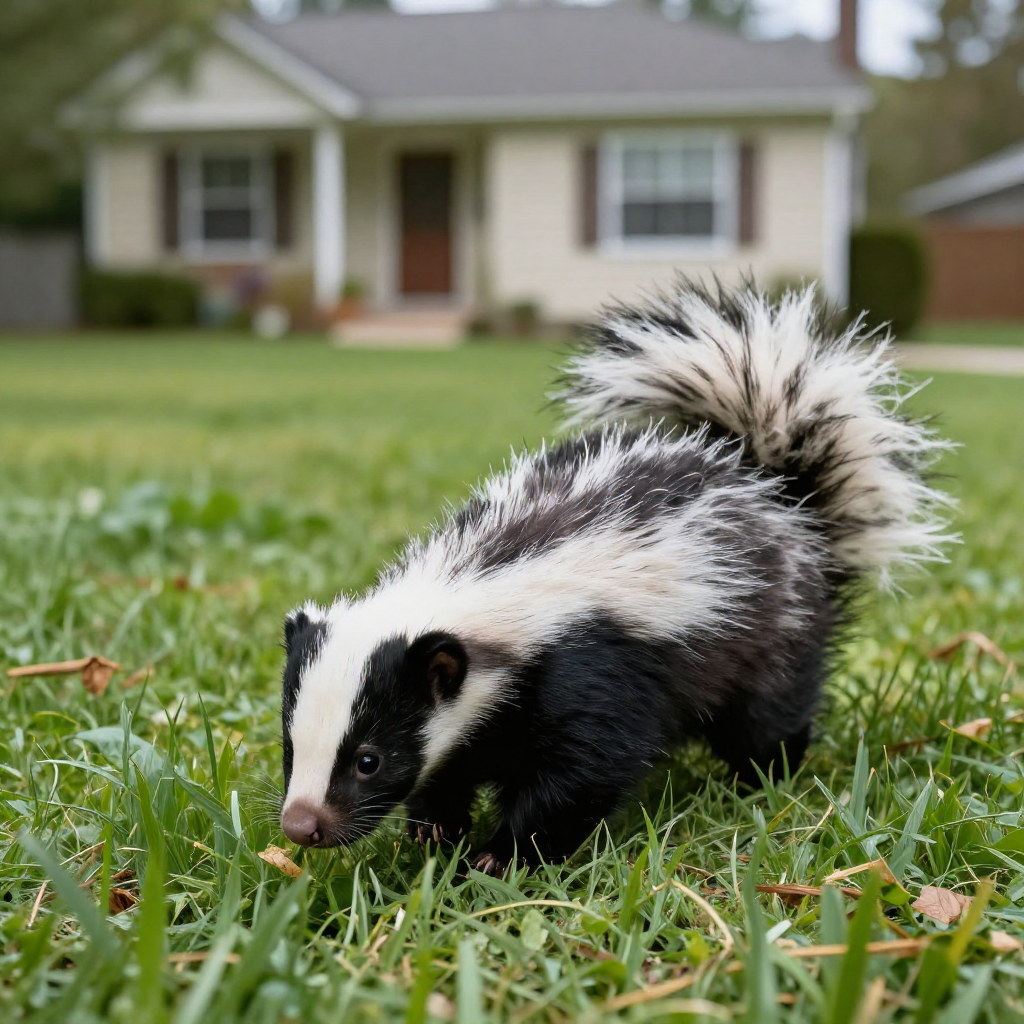
You are sitting in the living room when you hear something moving beneath the floor. At first, it sounds like a faint scratching noise. A few nights later, the sound becomes more noticeable. You might even hear something moving from one side of the house to the other.
It is enough to make you wonder whether an animal has found its way underneath your home.
In California, crawl spaces and other protected areas beneath houses can attract wildlife looking for shelter. Rats, mice, skunks, opossums, and other animals may investigate these spaces, depending on the property and surrounding environment.
Sometimes the animal is simply passing through. Other times, it may have established a nesting or denning area.
At All City Animal Trapping, we understand that hearing unexplained noises beneath your home can be concerning, particularly when you cannot see what is causing them.
Knowing what to look for can help you identify a possible wildlife problem, avoid unnecessary damage, and determine when professional inspection is appropriate.
Why Animals Are Attracted to Spaces Beneath Houses
A crawl space can provide conditions that wildlife naturally seeks.
It is often dark, sheltered, and relatively undisturbed. Depending on the construction, it may also offer access to insulation, plumbing areas, or concealed spaces beneath the floor.
For an animal exploring a residential neighborhood, an open foundation vent or gap beneath siding may look like a convenient place to shelter.
Outdoor conditions can contribute as well.
Properties with dense landscaping, stored materials, fallen fruit, pet food, or nearby open spaces may attract animals that eventually investigate the structure.
However, wildlife activity beneath a house does not necessarily mean the property is poorly maintained.
A damaged vent screen or small opening around a utility pipe can develop gradually and remain unnoticed for a long time.
What Animals Commonly Live Under California Homes?
Several types of animals may use spaces beneath residential structures.
The species involved depends on the location, access points, surrounding habitat, and whether the animal is visiting or actively occupying the space.
Rats and mice
Rodents can use crawl spaces as travel routes, nesting locations, or access points into other parts of a house.
They may move along foundation walls, pipes, framing, and other protected edges.
Possible evidence includes droppings, gnaw marks, nesting material, and scratching sounds.
Rodents can also enter through relatively small gaps, which makes careful inspection important.
Opossums
Opossums may shelter beneath decks, porches, sheds, and other protected structures.
They are generally active at night and may use a sheltered area temporarily or repeatedly.
A homeowner may notice movement near the foundation or see an animal entering beneath a structure after dark.
Because other animals can use similar spaces, identification should be based on more than nighttime activity alone.
Skunks
Skunks may use protected areas beneath structures as den sites.
Homeowners sometimes notice digging near the foundation, repeated nighttime activity, or a strong skunk odor.
However, odor alone does not establish that a skunk is currently living beneath the house.
An inspection should look for active evidence before any exclusion work begins.
Other wildlife
Depending on the property, other small mammals may investigate crawl spaces or sheltered areas.
The important point is that different species require different management approaches.
A trap or exclusion method suitable for one animal may not be appropriate for another.
Correct identification should come before selecting equipment or closing an opening.
1. Scratching or Movement Beneath the Floor
One of the earliest signs of possible crawl space wildlife is unexplained movement beneath the flooring.
The noise may resemble scratching, scurrying, dragging, or light tapping.
Some homeowners hear it only at night. Others notice activity during the day.
The timing can provide useful clues, but it is not enough to identify the animal with certainty.
Why sounds can be misleading
Sound travels through wood framing, pipes, flooring, and wall cavities.
An animal moving beneath one room may sound as though it is directly below another.
The volume can also be deceptive. A relatively small animal moving across loose material may create more noise than expected.
Rather than relying on sound alone, look for physical evidence that supports the suspected location.
2. Unpleasant Odors Coming From Below the House
Unusual odors can be another sign that something is happening beneath the property.
Animal waste, nesting material, moisture, or a deceased animal may contribute to unpleasant smells.
However, crawl spaces can also develop odors from plumbing leaks, standing water, or other moisture-related problems.
This is why identifying the source matters.
A strong odor does not automatically mean there is a dead animal or an active infestation.
If the smell is persistent, a professional inspection can help determine whether wildlife, plumbing, moisture, or another issue is involved.
3. Droppings and Nesting Material
Animal droppings are among the more useful physical clues during an inspection.
Their appearance, size, location, and concentration may help narrow down the species involved.
Nesting material can also provide information.
Rodents may gather shredded paper, insulation, fabric, or other soft materials in protected areas.
However, old droppings or nesting material do not necessarily prove that animals are still present.
Fresh evidence and ongoing monitoring are important when determining whether the problem is active.
A safety reminder about rodent waste
Do not sweep or vacuum dry rodent droppings.
The Centers for Disease Control and Prevention recommends wetting contaminated material with an appropriate disinfectant before cleanup and following its recommended protective precautions.
Disturbing dry waste can release contaminated particles into the air.
4. Damaged Foundation Vents
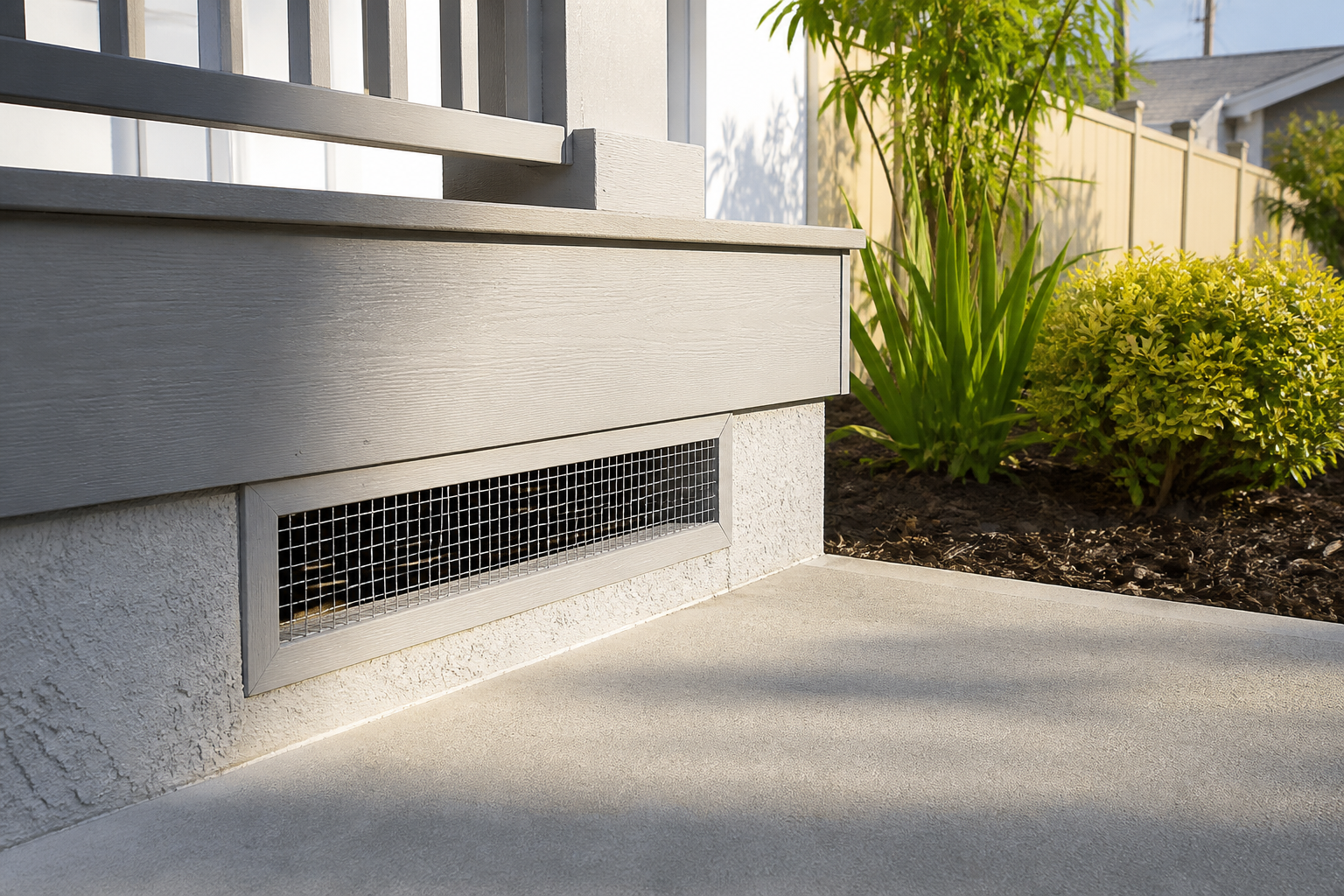
Foundation vents are among the most important areas to inspect when animals are suspected beneath a house.
These openings help provide ventilation in crawl spaces designed to use them.
When screens become damaged, displaced, or missing, animals may gain access.
A vent may appear secure from a distance while having a gap along its frame or lower edge.
What to look for
Inspect accessible vents for torn mesh, bent covers, missing fasteners, visible gaps, and signs of gnawing.
Pay attention to soil disturbance or tracks directly beneath an opening.
Do not permanently cover ventilation openings without considering their intended function.
The appropriate solution is usually to repair the protective barrier while preserving required ventilation.
5. Openings Around Plumbing and Utility Lines
Crawl spaces often contain water pipes, drains, electrical conduits, and other utility connections.
Where these services pass through exterior walls or foundations, gaps can develop around the penetration.
Rodents may use these openings to move between the crawl space and other concealed areas.
An animal does not need to create a new hole if an existing construction gap provides access.
For homeowners experiencing repeated rodent activity, professional rodent proofing in Los Angeles can help address the small openings that allow rats and mice to enter buildings.
The repair material should suit the location and surrounding construction.
6. Disturbed Soil Near the Foundation
Fresh soil disturbance can suggest that an animal has been investigating or using a space beneath a structure.
Look for repeated digging near foundation edges, vents, steps, or openings beneath decks.
However, not every hole beside a house is a wildlife den.
Soil movement can have several causes, including erosion, landscaping activity, and other animals.
A useful inspection considers the shape and location of the opening alongside tracks, droppings, camera observations, and other evidence.
Avoid reaching into an unfamiliar burrow or blocking it before determining whether an animal is inside.
7. Damaged Insulation Beneath the Floor
Some homes have insulation installed between floor joists above the crawl space.
Wildlife may disturb or damage this material while moving through the area or creating sheltered nesting locations.
Signs can include displaced insulation, torn facing materials, nesting debris, or visible contamination.
Moisture and age can also damage insulation, so wildlife should not automatically be blamed for every affected section.
Does all damaged insulation need replacement?
Not necessarily.
The appropriate response depends on the material’s condition, the extent of contamination, and whether the underlying cause has been corrected.
Professional insulation cleaning and replacement services may be relevant when animal activity has also affected the attic or other insulated spaces.
Crawl space insulation should be evaluated according to its own location and condition rather than assuming attic and crawl space repairs are identical.
8. Damage to Pipes, Wiring, and Stored Materials
Wildlife activity can affect materials beyond insulation.
Rodents may gnaw on accessible materials, including some pipe coverings, wiring insulation, and stored belongings.
Nesting activity may also displace lightweight materials or leave waste in protected areas.
Not every damaged pipe or wire is caused by an animal, so the source should be established before repair decisions are made.
If electrical wiring appears damaged, avoid touching it and arrange an appropriate professional evaluation.
If plumbing damage is suspected, the property may also require a licensed plumbing professional.
Wildlife removal and building repair sometimes involve different trades.
9. Why Animals Keep Returning to the Same Crawl Space
A crawl space that offers easy access and shelter can remain attractive even after one animal leaves.
This is especially true when the entry opening remains unchanged.
Another animal may discover the same route, or the original animal may continue using the area if it has not been properly excluded.
Food and water sources around the property can also encourage repeated visits.
Outdoor pet food, unsecured garbage, fallen fruit, and dense vegetation may make the surrounding area more rewarding.
Removing an animal without addressing these conditions can leave the property vulnerable to another conflict.
10. Why You Should Not Seal an Active Crawl Space Opening Immediately
Finding an opening can make homeowners want to close it right away.
However, sealing an occupied space can create additional problems.
Animals may become trapped beneath the home or attempt to find another exit through the structure.
If dependent young are present, blocking the adult’s access can leave them behind.
The appropriate sequence depends on the species and circumstances.
A professional should determine whether the opening is active, identify the animal, and plan removal or exclusion before completing permanent repairs.
11. How Professional Crawl Space Wildlife Removal Works
A professional inspection should begin by identifying the likely species and determining where it is active.
The provider may inspect accessible foundation vents, utility openings, exterior gaps, and other potential routes.
Tracks, droppings, nesting material, damage, and homeowner observations can help guide the investigation.
If trapping is appropriate, equipment should be selected and monitored according to the species and applicable requirements.
Once the active problem is resolved, exclusion repairs can help prevent another animal from using the same opening.
Homeowners who also hear movement overhead may need an animal in attic removal inspection to determine whether the activity extends beyond the crawl space.
The objective is to address the actual route and occupancy rather than treating every sound as an isolated problem.
12. What Happens After the Animals Are Removed?
Removal may solve the immediate wildlife problem, but it does not necessarily restore the affected space.
Droppings, nesting material, damaged insulation, odors, or structural openings may remain.
The next step is to evaluate what needs cleaning, repair, or replacement.
Some properties require only limited work.
Others may have contamination or damage that warrants a more substantial restoration plan.
If wildlife has also entered the roof or attic, attic cleaning and repair may help address related damage in those areas.
Repairs should be based on the actual condition of the property.
How to Help Prevent Animals From Getting Under Your House
Prevention begins with keeping vulnerable openings in good condition.
Inspect accessible foundation vents, exterior door gaps, and utility penetrations periodically.
Repair damaged protective screens and address loose building materials.
Keep garbage secure and avoid leaving accessible pet food outside overnight where practical.
Reduce unnecessary clutter near the foundation and pay attention to repeated digging or animal movement around the same location.
Homeowners can also review the CDC recommendations for sealing rodent entry points for guidance on inspecting and closing common gaps.
These measures help reduce opportunities for rodents and other wildlife, although no single step guarantees that animals will never visit the property.
When Should You Call a Wildlife Removal Professional?
Professional help may be appropriate when scratching noises continue, strong odors develop, droppings repeatedly appear, or an animal is visibly entering beneath the home.
An inspection is also useful when access is difficult or the species cannot be identified confidently.
Crawl spaces can contain electrical hazards, damaged materials, contaminated waste, and limited working room.
Homeowners should avoid entering unsafe or unfamiliar spaces to investigate wildlife.
A professional evaluation can help determine whether trapping, exclusion, repairs, or another approach is needed.
Protect Your Home From Wildlife Activity Beneath the Floor
Animals beneath a house can be difficult to identify because the activity is often hidden.
The first sign may be a noise, an odor, or a damaged foundation vent.
Addressing the problem begins with understanding what animal is involved, how it entered, and whether it is actively using the space.
At All City Animal Trapping, we help homeowners evaluate unwanted wildlife activity and identify practical next steps.
If you suspect an animal is living beneath your home, contact All City Animal Trapping to discuss the problem and request an inspection.
Frequently Asked Questions
1. What animals commonly live under houses in California?
Rats, mice, skunks, opossums, and other wildlife may use crawl spaces or sheltered areas beneath structures, depending on the property and local environment.
2. Why do I hear scratching noises under my floor at night?
The noise may come from rodents or other wildlife moving beneath the house. Plumbing, building movement, and other causes are also possible. Inspection is needed to identify the source.
3. Can animals damage crawl space insulation?
Yes. Wildlife can disturb insulation, create nesting areas, and leave contamination. The extent of damage should be evaluated before deciding whether replacement is necessary.
4. Should I block a hole beneath my house?
Do not permanently block an opening until you know whether animals are actively using it. Closing an occupied route can trap animals inside.
5. Can animals beneath the house get into the attic?
Some animals may move through connected structural openings, wall cavities, or other routes. However, activity beneath the house does not automatically mean the attic is occupied.
6. How can I prevent animals from entering my crawl space?
Inspect and maintain foundation vents, repair damaged screens, address utility gaps, reduce accessible food sources, and investigate repeated animal activity around the foundation.