

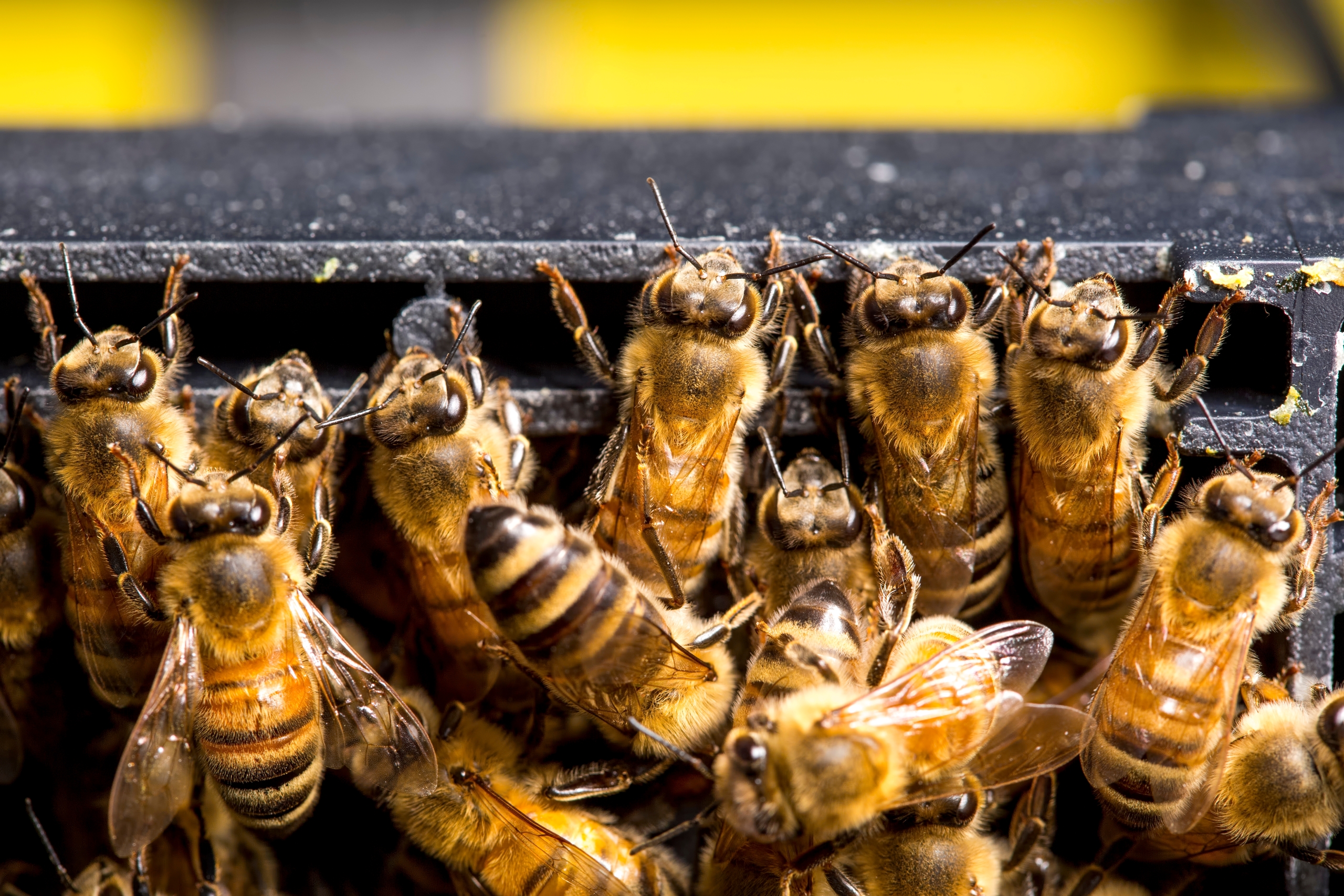
A cluster of bees hanging from a tree branch can look alarming. A steady stream of bees disappearing into a roof edge, wall opening, chimney, soffit, or utility gap is a different situation. Knowing which one you are seeing is the first step toward safe and humane bee removal in Long Beach, CA.
Bees are valuable pollinators, so the goal should never be random spraying or unnecessary destruction. At the same time, a colony established inside a home can create safety and property concerns, especially when the hive is close to doors, patios, play areas, walkways, or occupied rooms.
All City Animal Trapping provides bee removal as part of its Long Beach wildlife control services. A professional inspection can determine whether you are seeing a temporary swarm, an established colony, or another stinging insect that requires a different response.
Quick answer: A temporary honey bee swarm may rest in one place while scout bees search for a new home. An established colony repeatedly sends bees through the same structural opening and may have comb, brood, and stored honey inside. Do not block an active entrance or disturb the cluster. Have the situation identified before removal.
Is It a Bee Swarm or an Established Hive?
UC Integrated Pest Management explains that swarming is a natural form of honey bee colony reproduction. A swarm may gather temporarily on a branch, fence, shrub, or part of a building while scout bees search for a nesting cavity.
A swarm cluster and an established hive should not be treated as the same problem. Temporary clusters can move on. Bees that repeatedly enter a wall, roof, chimney, soffit, or other cavity may be establishing or maintaining a colony inside the structure.
Signs of a Temporary Swarm
- A dense cluster of bees hanging in an exposed location
- The cluster appeared suddenly
- Most bees remain grouped together rather than repeatedly entering a structural opening
- There is no visible comb or long term flight pattern
Signs of an Established Colony
- Bees repeatedly enter and exit the same hole
- Activity continues for days or longer
- Buzzing or humming can be heard from a wall or ceiling
- Comb is visible in an exposed location
- Bee activity is concentrated around a roofline, soffit, chimney, vent, wall void, utility box, or similar cavity
Why Bees Choose Homes and Structures
Honey bees naturally seek protected cavities. Urban homes can provide sheltered spaces behind siding, inside walls, around rooflines, under eaves, in chimneys, or within other voids.
Long Beach has dense residential neighborhoods, mature landscaping, gardens, and year round outdoor activity. When a suitable opening leads to a protected cavity, scout bees may investigate it as a potential nesting site.
Why Complete Hive Removal Matters
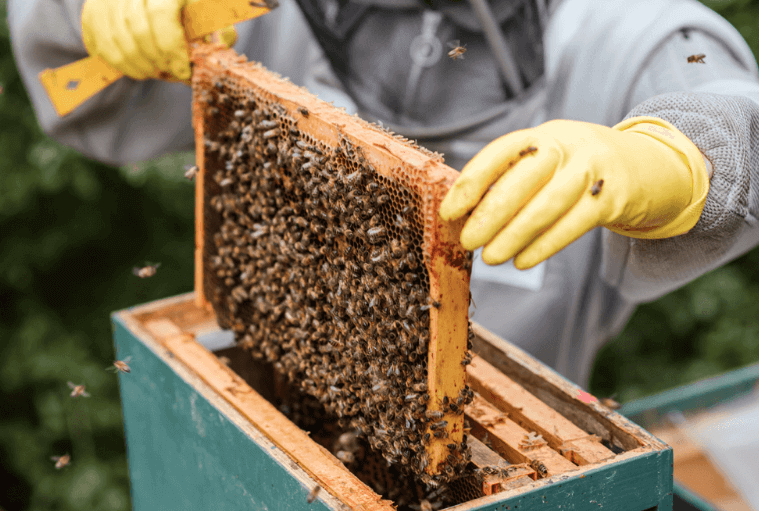
An established colony is more than the adult bees visible at the entrance. Inside the cavity there may be wax comb, developing brood, pollen, and stored honey.
UC IPM warns that killing bees inside a structure without removing the colony materials can create additional problems. Its honey bee removal guidance explains that unattended brood and adult bees can decompose, while stored honey can ferment or leak through walls and ceilings.
For that reason, a complete structural bee job may require locating the colony, opening the affected area when necessary, removing bees and comb, cleaning the cavity, closing the structure, and sealing potential access points.
What Humane Bee Removal in Long Beach Should Include
1. Identification
Confirm whether the insects are honey bees or another stinging species. Treatment and removal options differ.
2. Colony Location
Determine whether the bees are only resting outside or have entered a structural cavity. Established colonies may require careful inspection to determine the extent of comb.
3. Removal Strategy
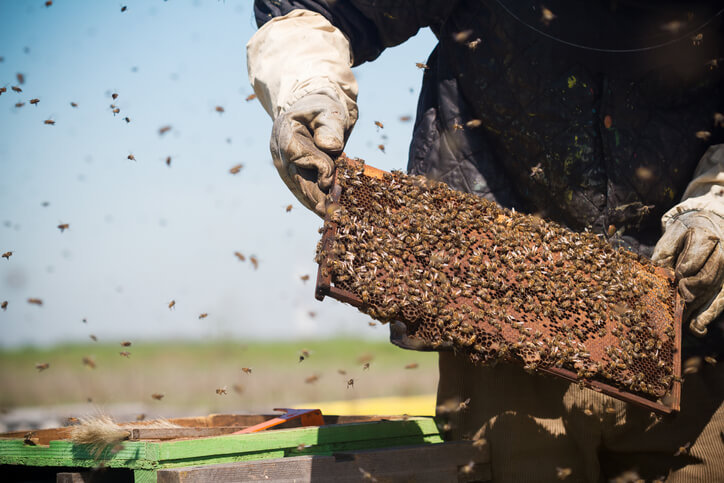
When practical and appropriate, live removal or collaboration with an experienced beekeeper can preserve honey bees. The method depends on accessibility, colony condition, location, and safety.
4. Comb and Honey Removal
If a colony is established inside a structure, removing the colony materials helps reduce odor, leakage, secondary pests, and attraction to future bee scouts.
5. Repair and Exclusion
After the colony is removed, openings leading to suitable cavities should be repaired or sealed so another swarm is less likely to occupy the same space.
What Not to Do Around a Bee Swarm or Hive
- Do not hit, shake, hose, or intentionally disturb a bee cluster.
- Do not seal an active structural entrance while bees are still inside.
- Do not stand directly in the bees’ flight path.
- Keep children and pets away from the immediate area.
- Do not attempt structural hive removal without proper protective equipment and experience.
- Do not assume every flying insect is a honey bee. Wasps and other species require different identification and management.
How to Reduce the Chance of Bees Returning
After a structural colony has been removed, prevention becomes important because residual beeswax odor can attract future scouts.
UC IPM recommends sealing openings that lead to suitable building cavities after extraction. See Preventing Future Invasions for its detailed guidance.
- Repair damaged screens, vents, soffits, fascia, and trim
- Seal appropriate gaps that lead into wall or roof cavities
- Inspect the surrounding side of the building rather than only the original entrance
- Address recurring bee activity early, before a new colony becomes well established
When Bee Activity Is an Urgent Safety Concern
Give bees space and seek professional help when activity is close to an entry door, school or child play area, heavily used patio, walkway, pet area, or occupied interior space. People with a known severe sting allergy should be especially cautious and follow their medical emergency plan if stung.
If anyone develops signs of a severe allergic reaction after a sting, seek emergency medical care.
Professional Bee Removal in Long Beach
All City Animal Trapping lists bee removal among its Long Beach Wildlife Control services and serves communities throughout Los Angeles County. For an active hive or swarm near your home, contact the team for an inspection and service options.
Frequently Asked Questions About Bee Removal in Long Beach
Will a bee swarm leave on its own?
Some temporary honey bee swarm clusters move on after scout bees locate a nesting site. A cluster that is entering a structure or building comb should be professionally assessed.
How can I tell if bees are living inside a wall?
Repeated traffic through the same small opening, ongoing activity over multiple days, and buzzing from the wall or ceiling can indicate an established colony.
Should I plug the hole bees are using?
No. Sealing an active entrance can trap bees inside and may cause them to search for another exit, including into living spaces.
Why should comb be removed from a wall?
Old comb, brood, and honey can create odor, leakage, secondary pest problems, and attraction for future honey bee scouts.
Can honey bees be removed alive?
In some situations, yes. Feasibility depends on colony location, accessibility, safety, and whether an experienced beekeeper or removal professional can perform the work.
How do I keep bees from returning?
After removal, clean the cavity as appropriate and seal potential access points leading to suitable nesting spaces.
Does All City Animal Trapping provide bee removal in Long Beach?
Yes. Bee removal is listed among the services on the company’s Long Beach Wildlife Control page.
Get Help Before a Small Bee Problem Becomes a Structural Hive
The earlier you identify whether you are dealing with a swarm or an established colony, the easier it is to choose an appropriate response. Avoid disturbing the bees or sealing an active opening before the colony is assessed.
For humane bee removal in Long Beach, CA, call All City Animal Trapping at (877) 724 5314 or request a quote online.