

How can you tell if a dead animal is hidden?
A hidden carcass is often discovered because of a change in the home rather than because someone sees the animal. The following signs can point to a dead animal, although they can also have other causes:
- A strong, unusual odor that becomes more noticeable over time
- Flies, maggots, beetles, or other insects gathering in one area
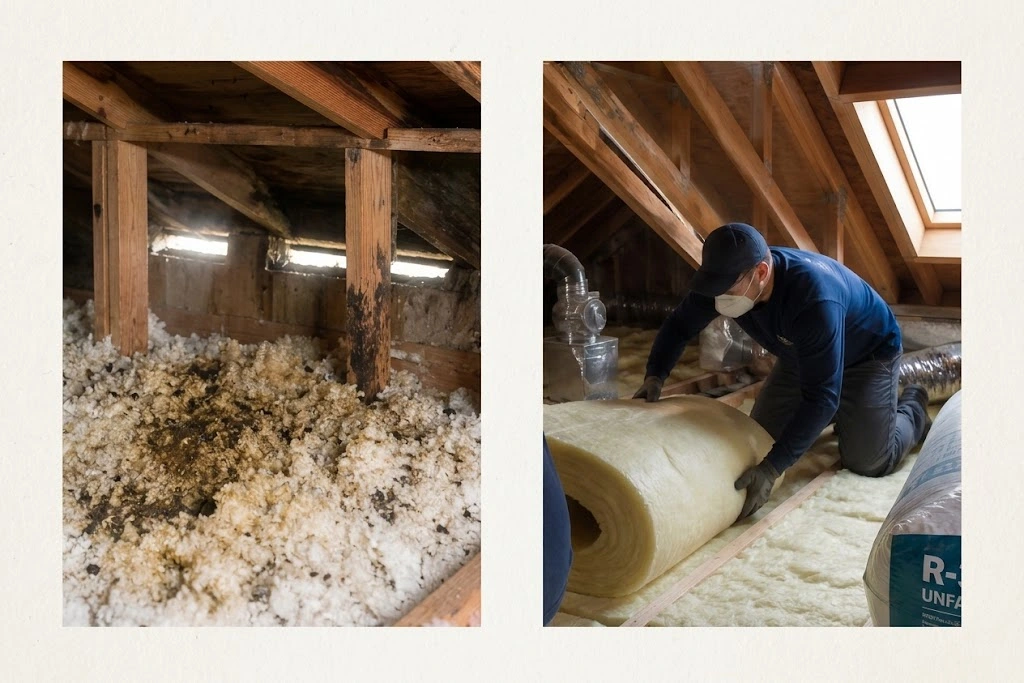
- Stains or damp-looking spots on a ceiling, wall, floor, or insulation
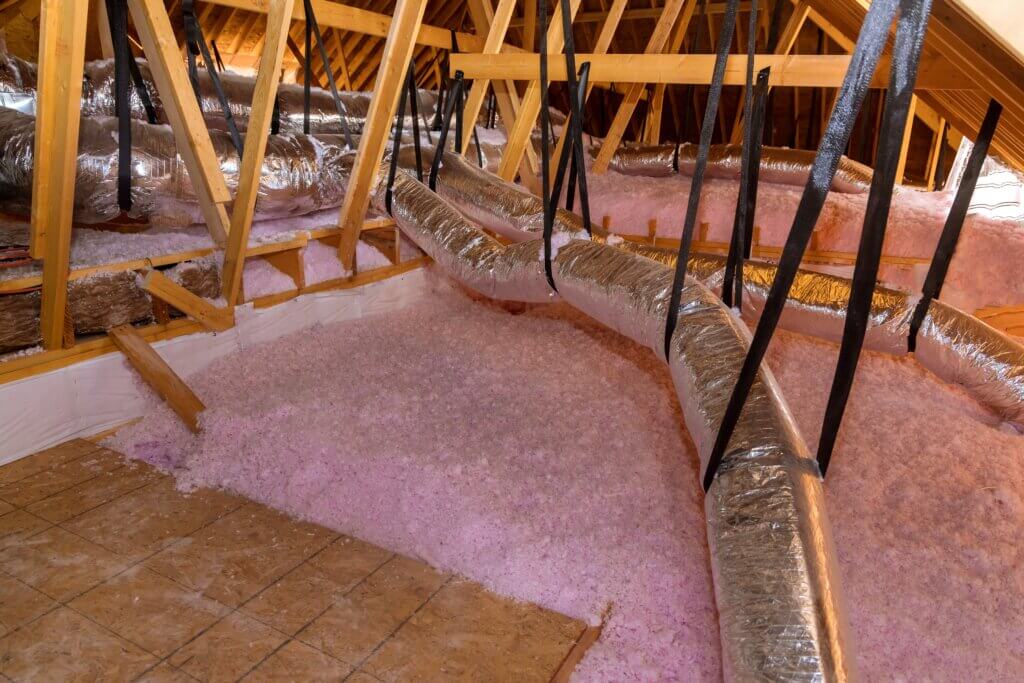
- Scratching or movement in an attic, wall, or crawlspace that suddenly stops
- A smell that seems to come from a vent, wall cavity, under-floor area, deck, or garage
- A pet repeatedly focusing on a location that people cannot safely access
Do not assume that an air freshener has solved the problem. Masking the smell can make the source harder to find while decomposition or contamination continues. If the location is unclear, professional inspection is safer than opening walls or entering a confined crawlspace without the right equipment.
What does professional dead animal removal include?
Professional dead animal removal is more than picking up a visible carcass. A complete response should match the animal’s location and include a plan for safe handling, disposal, cleanup, odor control, and prevention where needed.
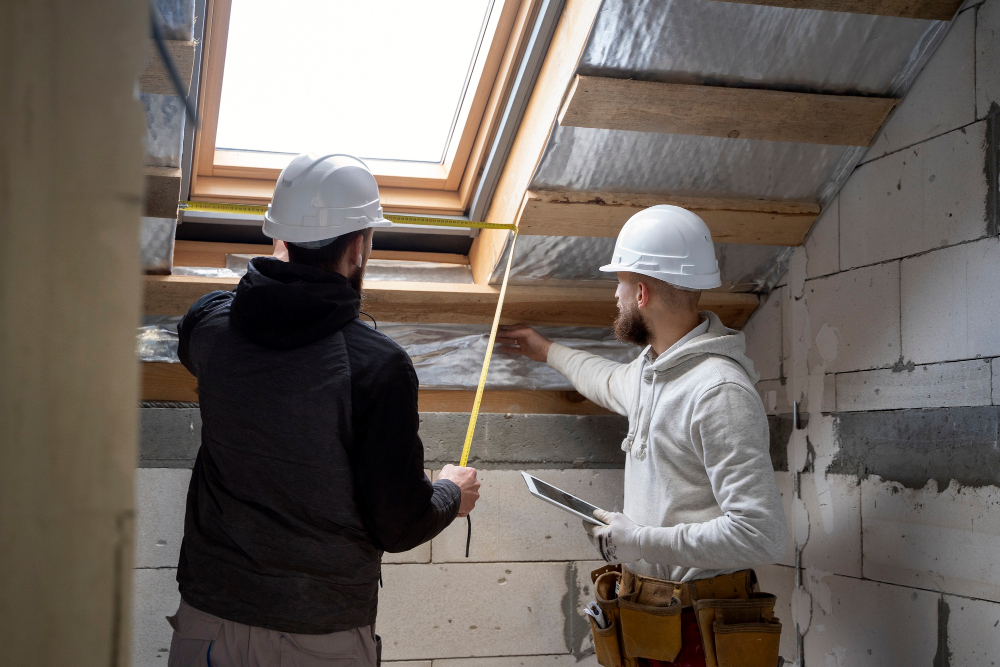
- Inspection and source location. The technician identifies where the odor or remains are coming from and checks whether wildlife is still active nearby.
- Careful removal. Protective equipment and appropriate tools help limit direct contact and reduce the chance of spreading contamination through the property.
- Disposal guidance or service. The disposal method should follow applicable local requirements and the type of animal involved. Do not assume that a carcass can be buried or placed in household waste without checking.
- Cleaning and odor treatment. The affected area may need removal of debris, disinfection, deodorization, or treatment of porous materials. The exact scope depends on what the inspection finds.
- Entry-point review. If wildlife entered through a roofline, vent, soffit, crawlspace opening, or another gap, sealing or repair can reduce the chance of another animal using the same route.
ACAT’s general dead animal removal service page describes locating the source, safe removal, sanitation, odor elimination, and checking entry points. Confirm which services are included in the quote before work begins.