The #1 Rated
Animal Trapping Company
In the US!

Stanton Wildlife Control: Humane Removal, Cleanup & Exclusion

Wildlife problems in Stanton rarely stop at the moment an animal is spotted.
Effective Stanton wildlife control connects safe removal with inspection, cleanup, repairs, and exclusion.

A raccoon in an attic, a rat moving through a wall, a skunk under a deck, or a bat entering through a roof gap can leave behind damage, waste, odor, and a route for the next animal to use.
 
All City Animal Trapping helps residential and commercial property owners address animal activity across Stanton and Orange County. The right first step is a property-specific inspection not a guess based on one noise or one sighting. Request a quote or inspection through ACAT’s contact page or call (877) 724-5314 to discuss the situation.

Should you call Stanton animal services or private wildlife control?

Start by identifying whether the issue involves a domestic animal, an injured or dangerous wild animal, a dead animal in a public area, or wildlife using private property. Public agencies and private wildlife professionals may handle different situations.

Stanton’s animal-services information identifies Westminster Animal Control as the city’s provider for animal-care and shelter services, including dead-animal pickup, cruelty investigations, and pet licensing.

California rules can vary by species and circumstance. The California Department of Fish and Wildlife Human-Wildlife Conflicts Toolkit explains that wildlife-conflict methods are governed by federal, state, and local requirements. A professional should assess the situation before setting traps, sealing an opening, or disturbing a den.

Situation
Best first step
Why the distinction matters
Domestic dog or cat, pet licensing, or a shelter-related question
Use the city’s animal-services contacts.
Domestic-animal and shelter services are different from private wildlife exclusion.
Dead animal pickup in a public area or roadway
 
 
Contact the responsible local agency and avoid handling it.
 
 
Public-property responsibility may not be the same as a private-property removal request.
 
 
Raccoon, rat, bat, skunk, bird, or other wildlife inside a home or business
Request a private wildlife inspection.
The problem may require access-point inspection, removal, sanitation, repair, and exclusion.
 
Bite, scratch, aggressive behavior, or an immediate threat to people
Move people and pets away, call 911 for an emergency, and contact medical or public-health authorities after exposure.
 
Safety and exposure response come before property work. Do not corner or capture the animal yourself.
 
Stanton wildlife control is the inspection-led process of identifying the animal and access point, using an appropriate humane removal or exclusion method, cleaning contamination, repairing damage, and reducing the chance of re-entry. The exact method depends on the species, location, presence of young, property condition, and applicable California rules.
 
In this guide:
 

What signs mean wildlife has entered your Stanton property?

Wildlife activity is not always visible. Many calls begin with a sound, smell, or small exterior gap. Treat repeated evidence as a reason to inspect the property rather than assuming the animal has already left.
 
  • Scratching, thumping, or squeaking at night: activity may be in an attic, wall void, crawlspace, or roofline.
  • Droppings, urine stains, or nesting material: contamination can be present even when no animal is seen.
  • Chewed wiring, torn insulation, or damaged vents: rodents and larger animals can create property and fire concerns.
  • Strong or unusual odor: a dead animal, skunk spray, urine, guano, or a hidden nest may be involved.
  • Fresh digging under a deck, porch, shed, or foundation edge: skunks and opossums may be seeking shelter.
  • Repeated animals entering through the same roof or wall opening: an unsealed access point can keep the cycle going.
A secure roofline and screened vents can help reduce repeat wildlife entry after removal

Which animals can ACAT help with in Stanton?

ACAT’s Stanton page lists service categories including raccoons, rats, mice, bats, skunks, opossums, squirrels, birds and pigeons, coyotes, snakes, gophers, moles, bees, dead animals, odor removal, attic clean and repair, and wildlife repair. Species availability, method, timing, and the need for cleanup or repair are case-specific and should be confirmed during the inspection.
 
  • Raccoons: may use attics, crawlspaces, roofs, chimneys, or yards and can disturb insulation, vents, and structural materials. See ACAT’s raccoon trapping and removal service.
  • Rats and mice: can travel through attics, walls, crawlspaces, garages, and utility openings. See ACAT’s rat trapping and removal service.
  • Bats: need careful exclusion rather than simply sealing an occupied opening. UC IPM explains that bats should not be handled and that all animals must be out before an entry point is permanently sealed. Review UC IPM’s bat-management guidance and ACAT’s bat removal and exclusion service.
  • Skunks and opossums: may shelter under decks, porches, sheds, or homes. Digging, odor, and denning conditions can make exclusion important after removal.
  • Birds and pigeons: may nest in vents, chimneys, eaves, or roof spaces. Removal should account for nesting conditions and the risk of closing an active entry prematurely.
  • Coyotes, snakes, gophers, and moles: can require different safety, trapping, deterrence, or property-protection strategies. Do not approach, feed, corner, or attempt to handle them.


Choosing a service by species alone can miss the real issue. An animal may be using a damaged vent, gap, roofline, or crawlspace opening that must be addressed to prevent another intrusion.

Observed sign
 
 
Areas to inspect
 
 
Useful information to record
 
 
Nighttime scratching or movement
 
 
Attic, ceiling, wall void, crawlspace
 
 
Time of day, exact room, direction of sound, and whether activity repeats
 
 
Droppings or nesting debris
 
 
Attic insulation, vents, garage, shed, under-deck area
 
 
Location, approximate amount, odor, and whether children or pets can access it
 
 
Exterior hole, torn screen, or damaged soffit
 
 
Roofline, eaves, vents, chimney, foundation, deck skirt
 
 
Photos from a safe distance; do not reach into the opening
 
 
Odor without a visible source
 
 
Walls, crawlspaces, attic, under floors, HVAC-adjacent areas
 
 
When the odor is strongest and whether airflow spreads it
 
 
Does Homeowners Insurance Cover Attic Restoration?
Technician sealing a roof vent to prevent raccoon re-entry at a Riverside home

How does Stanton wildlife control work?

Professional Stanton wildlife control usually follows a sequence: inspect the property, identify the animal and access route, select a species-appropriate method, remove or exclude the animal, clean affected areas, repair damage, and verify that entry points are addressed. The goal is a property-specific solution not a trap left without a plan.
  1. Inspection and assessment: The technician documents evidence, likely species, entry points, denning or nesting areas, damage, and contamination. This may include the roofline, attic, crawlspace, walls, vents, decks, sheds, or exterior perimeter.
  2. Plan and scope: The recommended work should explain the removal or exclusion approach, access needs, cleanup, repairs, follow-up, and any limits. If the animal is protected, injured, domestic, or creating an immediate public-safety issue, the correct agency or specialist may be different.
  3. Humane removal or eviction: Trapping, one-way exclusion, deterrence, or another method may be appropriate depending on the species and conditions. Do not assume that every animal can be relocated or that every opening can be sealed immediately.
  4. Cleanup and sanitation: Droppings, urine, nesting material, guano, carcasses, and odor sources may remain after the animal is gone. Contaminated insulation or porous material may need a separate assessment.
  5. Repairs and exclusion: The access point is repaired or reinforced with materials appropriate to the building and animal. The scope may include vents, soffits, fascia, screens, roof details, foundation gaps, or deck skirts.
  6. Follow-up: A final check can confirm that activity has stopped, exclusion points remain secure, and additional cleanup or repair is not needed.

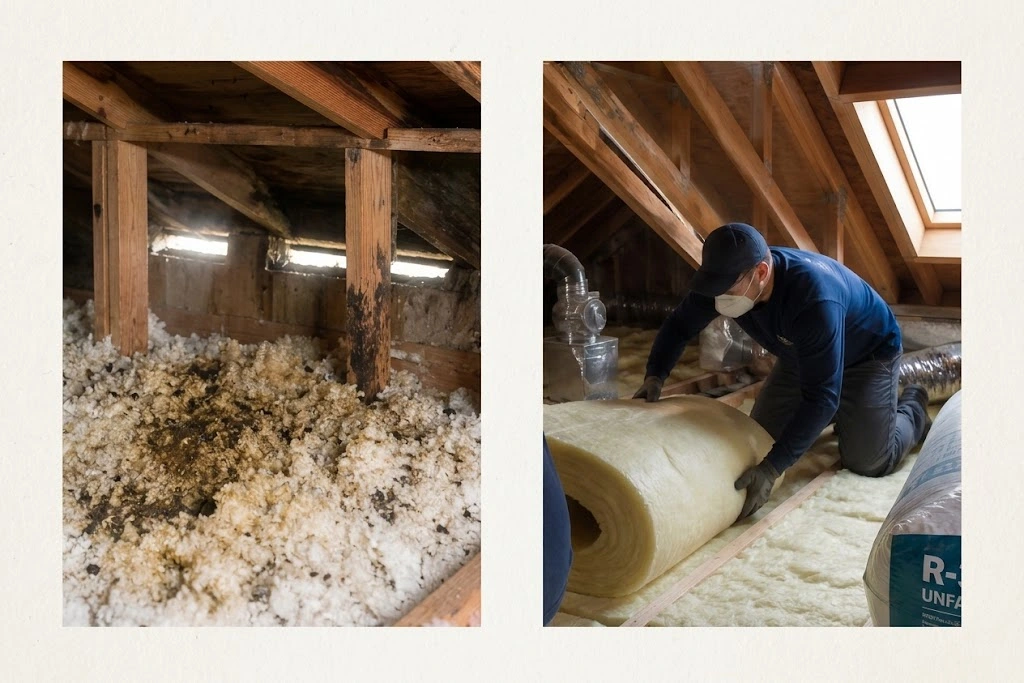
For larger or contaminated areas, ACAT’s attic clean and repair service describes inspection, debris removal, sanitization, insulation work, structural repairs, entry-point sealing, and odor removal as possible parts of restoration. Final scope depends on the property assessment.

What should you do before a technician arrives?

  • Keep children and pets away from the animal, carcass, nest, droppings, and suspected entry point.
  • Do not touch, feed, corner, chase, or attempt to trap a wild animal yourself.
  • Close interior doors when safe to limit movement through the home, but do not block an exit or seal an animal inside a wall, attic, or crawlspace.
  • Record the location, time, sound, odor, and direction of travel from a safe distance. Photos of exterior damage can help if they can be taken without climbing or reaching.
  • Do not sweep or vacuum rodent waste. Follow CDC precautions or ask a qualified professional about the appropriate cleanup.
  • If a person or pet is bitten, scratched, or exposed to saliva, wash the wound promptly and contact a healthcare provider or veterinarian. The California Department of Public Health rabies guidance explains that bites and possible bat exposures need prompt medical advice.
  • For an immediate threat to people, leave the area and contact emergency services. For non-emergency wildlife damage, use the CDFW Living with Wildlife guidance and a local professional to determine the next step.

How can you reduce repeat wildlife problems in Stanton?

  • Keep children and pets away from the animal, carcass, nest, droppings, and suspected entry point.
  • Do not touch, feed, corner, chase, or attempt to trap a wild animal yourself.
  • Close interior doors when safe to limit movement through the home, but do not block an exit or seal an animal inside a wall, attic, or crawlspace.
  • Record the location, time, sound, odor, and direction of travel from a safe distance. Photos of exterior damage can help if they can be taken without climbing or reaching.
  • Do not sweep or vacuum rodent waste. Follow CDC precautions or ask a qualified professional about the appropriate cleanup.
  • If a person or pet is bitten, scratched, or exposed to saliva, wash the wound promptly and contact a healthcare provider or veterinarian. The California Department of Public Health rabies guidance explains that bites and possible bat exposures need prompt medical advice.
  • For an immediate threat to people, leave the area and contact emergency services. For non-emergency wildlife damage, use the CDFW Living with Wildlife guidance and a local professional to determine the next step.
side by side attic image and a person cleaning the attic

Key Takeaways

  • Stanton wildlife control starts with inspection: the species, location, access route, young, damage, and contamination all affect the plan.
  • Public animal services and private wildlife control are not interchangeable: the right contact depends on whether the issue involves a domestic animal, public property, an emergency, or wildlife inside a private structure.
  • Removal alone may not solve the problem: cleanup, repairs, and exclusion reduce odor, contamination, damage, and repeat entry.
  • DIY handling creates avoidable risk: keep people and pets away, do not disturb wildlife, and follow public-health advice after a bite or possible exposure.
  • Cost depends on scope: ask for a written explanation of inspection, removal, trapping, cleanup, repair, exclusion, and follow-up charges.
Attic Clean & Repair Services, Riverside Attic Clean and Repair

Get a Stanton wildlife control plan that solves the source

A wildlife problem in Stanton can begin with a small opening but grow into a larger repair, sanitation, or safety concern. The most useful service plan identifies what is happening, uses an appropriate humane method, and addresses the conditions left behind. All City Animal Trapping’s published service categories include animal removal, attic clean and repair, odor removal, wildlife repair, and animal-proofing options, with the final scope determined by inspection.
Ready to discuss an animal in your attic, crawlspace, wall, roofline, yard, or under-deck area? Contact All City Animal Trapping to request a Stanton wildlife-control inspection or quote or call (877) 724-5314. Share the animal or evidence you have seen, where it is located, and whether anyone or any pet has been exposed.

Frequently Asked Question

For wildlife inside a private attic, crawlspace, wall, roofline, or under a deck, a private wildlife-control inspection is often the most direct route because the work may require removal, access-point repair, cleanup, and exclusion. Stanton’s public animal-services information is still useful for domestic animals, shelter questions, dead-animal pickup, or agency routing. If the animal is injured, aggressive, or connected to a bite, prioritize emergency and public-health guidance.

Do not handle or corner wildlife yourself. Raccoons and skunks can bite or scratch when threatened, and bats should never be handled with bare hands. DIY sealing can also trap an animal or separate young from a mother. Keep people and pets away, document the location from a safe distance, and request a professional assessment. After any bite, scratch, or possible bat exposure, seek prompt medical or veterinary advice.

Yes, ACAT’s Stanton service page lists both mice removal and rat removal, and its rat-service page describes inspection, humane trapping, removal, exclusion, sanitation, and prevention as parts of the possible process. The exact plan depends on where the rodents are traveling, how they entered, how much activity is present, and whether insulation, wiring, ducts, or other areas are contaminated. Ask for the recommended scope after inspection.

A hidden carcass can create a strong odor and attract insects, and locating it may require a careful inspection of wall voids, attics, crawlspaces, or areas under a structure. Avoid opening walls or reaching into unknown spaces yourself. A professional can discuss removal access, sanitation, deodorization, and any repair needed after the carcass is removed. If the dead animal is in a public area or involves a domestic animal, contact the appropriate public agency first.

Response time depends on technician availability, the animal, the property location, access, and whether the situation is an immediate safety emergency. When you call, explain whether the animal is inside a living area, whether damage is active, and whether anyone or any pet has had contact with it. That information helps the provider route the request. Do not promise a same-day or 24-hour response unless ACAT confirms that language for the current service area.

Not necessarily. Trapping may remove the animal that is present, but an open vent, roof gap, damaged screen, foundation opening, food source, or shelter area can attract another animal. Effective wildlife control connects removal with exclusion and property changes. The right sequence matters for bats, nesting animals, and family groups, so the access point should be evaluated before it is sealed or altered.

It can, but the scope should be confirmed in writing. ACAT publishes separate categories for attic clean and repair, wildlife repair, odor removal, decontamination, and animal-proofing, while some work is quoted after inspection. Ask whether the estimate includes droppings or nest removal, disinfection, insulation assessment, odor treatment, structural repairs, exclusion materials, and follow-up. Separating these items makes it easier to compare proposals accurately.

Wash a bite or scratch promptly with soap and running water and seek medical advice right away. Keep pets away from the animal and contact a veterinarian if they were exposed. California Department of Public Health guidance notes that bats can have very small teeth and that a possible bat exposure may require medical advice even when a bite is not obvious. Do not capture the animal yourself; report the incident to the appropriate animal-control or health authority.

Schedule a Stanton Wildlife Control Inspection

All City Animal Trapping provides expert wildlife control services to help Stanton residents protect their homes from unwanted pests. Using humane and efficient trapping methods, our team quickly and safely removes animals while also offering preventative measures to keep your property secure from future invasions. Whether you need emergency help or ongoing wildlife management, All City Animal Trapping is here to ensure your home remains safe and pest-free.

Reviews

Based on over 2000 reviews

Cecily L.
We had such a great experience with All City Animal Trapping. We got the Platinum package, and it was well worth the investment! The team was easy to reach and very responsive. Blake handled everything on site. He was very nice and communicative, showed up on time, and took care of our attic from patching to trapping and everything else. You'd never even know he was here! We're critter free which has given us peace of mind. 100% recommend All City!
Jackie Poles Ran
We really wanted a service that provided live trapping since we didn’t want to kill any animals but we didn’t want them living in our attic either! Pete was great! He was a great communicator and always kept us appraised of what he did and what he recommended. This was at our rental property and he always accommodated our tenants schedule. They are not the cheapest service but they did a great job and I’d definitely use them again.
Eileen C.
Great experience. Kevin was very thorough, patient and professional. He looked through our attic and roof area, fixed the hole in the attic and provided other recommendations.
Angela M.
Unwelcome guests in the attic! Rats! Called All City Animal Trapping, Cole was our technician. He walked around the house and went up into the crawlspace in the attic to assess the entry point. He found an opening in the attic and sealed it off, and set multiple traps. Then he followed up in a week. We caught one! He did a great job, and good attitude. Thank you!