

If skunks keep showing up on your property night after night, there’s a reason — and it’s almost always something your yard is providing that the skunk finds worth coming back for. So what attracts skunks to your yard? The four biggest draws are grubs, shelter, water, and trash. Most residential properties in Southern California offer at least one — which is exactly what attracts skunks to your yard without homeowners realizing it. Once a skunk identifies your yard as a reliable source, it builds that location into its nightly routine and starts treating it as part of its territory.
Grubs are one of the most overlooked skunk attractants — and one of the most reliable. Skunks are natural insectivores with a strong instinct to dig for food just below the soil surface, and a lawn with a grub infestation is essentially a nightly all-you-can-eat situation for them.
The evidence is usually visible before the skunk is. Small cone-shaped holes in the turf, patches of grass that have been rolled back or disturbed overnight, and loose soil along garden borders are all signs a skunk has been digging for grubs. The animal isn’t targeting your lawn specifically — it’s following its nose to a food source that happens to be two inches underground.
Treating a grub infestation removes one of the strongest natural food incentives pulling skunks into your yard. Without the grubs, a skunk that was foraging your lawn every night loses a primary reason to keep returning.
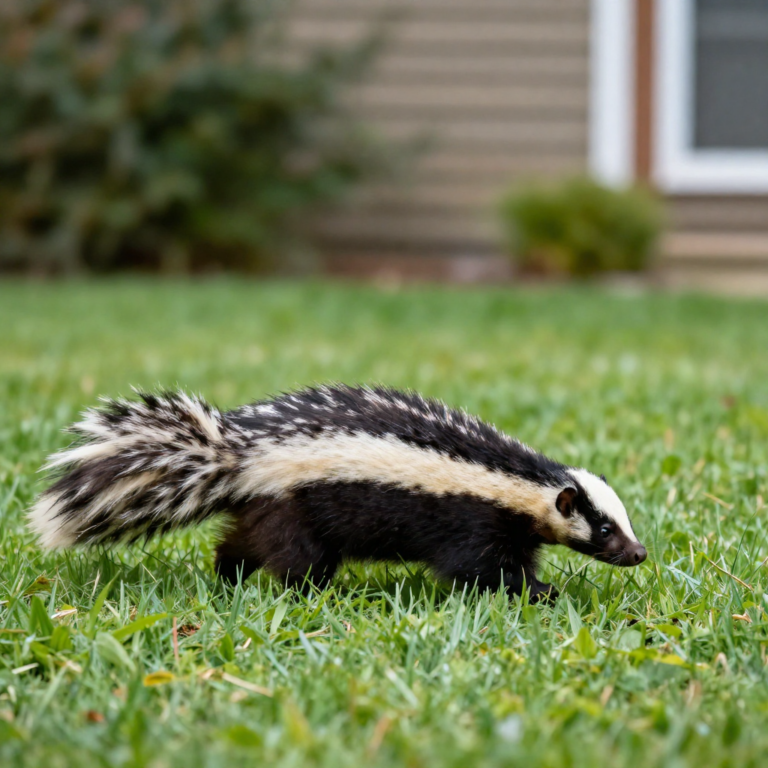
Shelter is often what turns a skunk that’s passing through into one that stays. Once a skunk finds an accessible, enclosed space on your property — a gap under the deck, an uncovered crawl space vent, space beneath a shed — it has everything it needs to establish a den and stop moving on.
Skunks look for dark, dry, secluded spaces to rest during the day and raise their young. Residential structures provide exactly that, often in spaces that go uninspected for months at a time. A gap as small as four inches along a deck skirt or a single broken vent screen is enough for a skunk to squeeze through and set up a den that it may occupy for weeks or months.
The shelter draw is what separates a skunk that forages in your yard from a skunk that lives on your property. As long as accessible enclosed spaces exist around a structure, any skunk in the area is a potential tenant.
Water is a less obvious attractant but a consistent one, especially during dry Southern California summers when natural water sources become scarce. Skunks need regular access to water, and a yard that provides it — through a pet water bowl left outside, a bird bath, a leaky irrigation valve, or even pooling water near a downspout — becomes a reliable stop on a skunk’s nightly route.
Eliminating standing water and bringing in outdoor pet bowls at night removes a draw that most homeowners wouldn’t immediately connect to a skunk problem. It’s a small change that reduces the overall appeal of your property to skunks and other opportunistic wildlife.
Trash is one of the most straightforward attractants and one of the easiest to address. Garbage cans with loose or unsecured lids, recycling bins with food residue, compost piles left open, and food scraps near outdoor eating areas all put strong-smelling organic material into the environment that skunks can detect from a considerable distance.
Skunks are opportunistic feeders and will investigate any persistent food smell in their nightly range. A garbage can that gets knocked over once and provides a food reward is enough to establish a return habit. Compost that includes meat scraps, cooked food, or anything with a strong odor is particularly effective at drawing skunks in from beyond the property line.
Securing trash with bungee cords or locking lids, moving bins to an enclosed space overnight, and keeping compost to plant-based material in a sealed container all reduce the food signal your property sends to passing skunks.
Skunks are resourceful, and a property that offers two or three of these draws is significantly more attractive than one offering just one. A yard with a grub problem, an accessible deck gap, and a loose trash can lid is providing food, shelter, and a fallback food source all at once — that’s a combination that will pull skunks in consistently and keep them there.
Understanding what attracts skunks to your yard is the right long-term prevention strategy, but it doesn’t solve an existing skunk problem. An animal that’s already denning under a structure or has been visiting regularly for weeks needs to be removed before prevention measures can work. Sealing a deck gap with a skunk still inside, or treating a grub problem while a pregnant skunk is already denning under the porch, creates a worse situation than the one you started with.
Based on over 2000 reviews
If skunks are already on your property, the right sequence is removal first, prevention second. At All City Animal Trapping, we handle both sides: we remove the animal safely, treat the odor, seal the entry points, and help you understand what’s drawing skunks to your property so the problem doesn’t cycle back.
We’ve been serving homeowners across Los Angeles, Orange County, Riverside, and San Bernardino for over 20 years, and we’ll beat any competitor’s price.
Call us at (877) 724-5314 for a free consultation and speak with a live trapper today.