

If you’re trying to figure out what’s been pulling a skunk onto your property night after night, the answer is almost always food. Skunks have a strong sense of smell and an appetite that leans heavily toward high-protein, pungent sources. So what food is irresistible to skunks? The list includes tuna, fish, cat food, sardines, eggs, crispy bacon, marshmallows, insects, and grubs — and several of these are probably already present on or around your property without you realizing it. Understanding what draws skunks in is the first step toward understanding why they keep coming back.
Skunks aren’t picky, but they are drawn to smell above almost anything else. The stronger the odor, the more likely a skunk will track it down. High-protein foods — especially ones with a pronounced, penetrating smell — are the most reliable attractants, and they work over a surprisingly long distance on a still night.
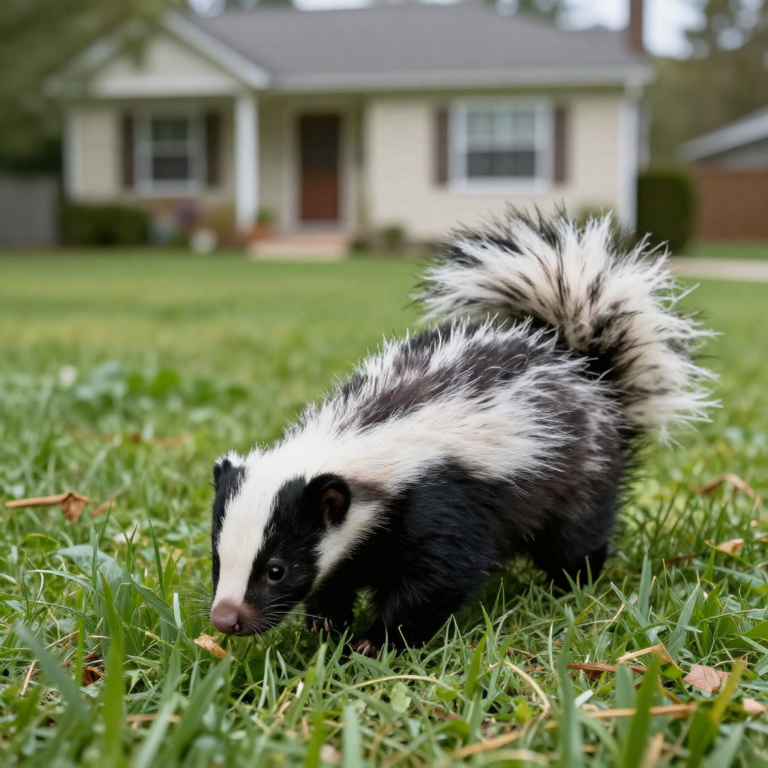
Tuna, sardines, and fish-based cat food are at the top of the list. These are the same baits professional wildlife trappers use when setting live traps for skunks, specifically because skunks find them almost impossible to pass up. The strong, oily smell carries well in open air and draws skunks in from well beyond your fence line.
Cat food left outside overnight is one of the most common reasons skunks become regulars on residential properties. Homeowners who feed outdoor cats don’t always connect the skunk visits to the food bowl sitting on the back porch at 8pm — but that’s exactly what’s happening in most cases. Even an empty bowl with residual food smell is enough to bring a skunk back to check.
Crispy bacon and eggs are also highly effective attractants. The fat and protein content and the strong cooked smell make these hard for skunks to ignore. These are frequently used as bait alternatives when fish-based options aren’t available or when a skunk has become wary of a particular bait over repeated trap checks.
Marshmallows might seem out of place on this list, but they’re a well-known skunk bait in the wildlife removal industry — sweet, soft, and aromatic enough to catch a skunk’s attention. They’re also useful in situations where you want to attract a skunk without drawing other animals that are more strongly motivated by meat-based scents.
Beyond the obvious food sources, skunks are also hunting things that are already present on most residential properties.
Insects and grubs are a massive part of a skunk’s natural diet. Lawns with grub infestations are essentially a nightly feeding station — skunks will dig just below the turf surface to get to them, which is why small conical holes or patches of rolled-back sod showing up overnight are a classic sign of skunk activity. The skunk isn’t damaging your lawn out of spite; it’s following its nose to a food source that’s sitting right there underground.
Fallen fruit, bird seed scattered beneath feeders, and compost with food scraps are also common draws that don’t get addressed until after a skunk problem is already established. To a skunk making its nightly rounds, these are reliable pit stops worth revisiting every evening.
Knowing what food is irresistible to skunks helps explain why removal alone isn’t always a permanent fix. If a skunk is trapped and removed but the food source that drew it in stays in place — the cat food bowl, the grub-heavy lawn, the open compost bin — the next skunk to pass through will find the same reason to stop and stay. Wildlife removal professionals call this the attractant problem, and it’s why exclusion and source elimination matter as much as the trap itself.
Removing the skunk solves the immediate problem. Removing what brought it in prevents the cycle from starting over with a different animal.
Based on over 2000 reviews
At All City Animal Trapping, we don’t just set a trap and leave. We assess what’s attracting skunks to your property, remove the animal humanely, and help identify the conditions that need to change so the problem doesn’t repeat. We’ve been doing this across Los Angeles, Orange County, Riverside, and San Bernardino for over 20 years — and we’ll beat any competitor’s price.
If skunks have been making regular visits to your yard, call us at (877) 724-5314 for a free consultation. Speak with a live trapper today and get ahead of it before the next visit.