

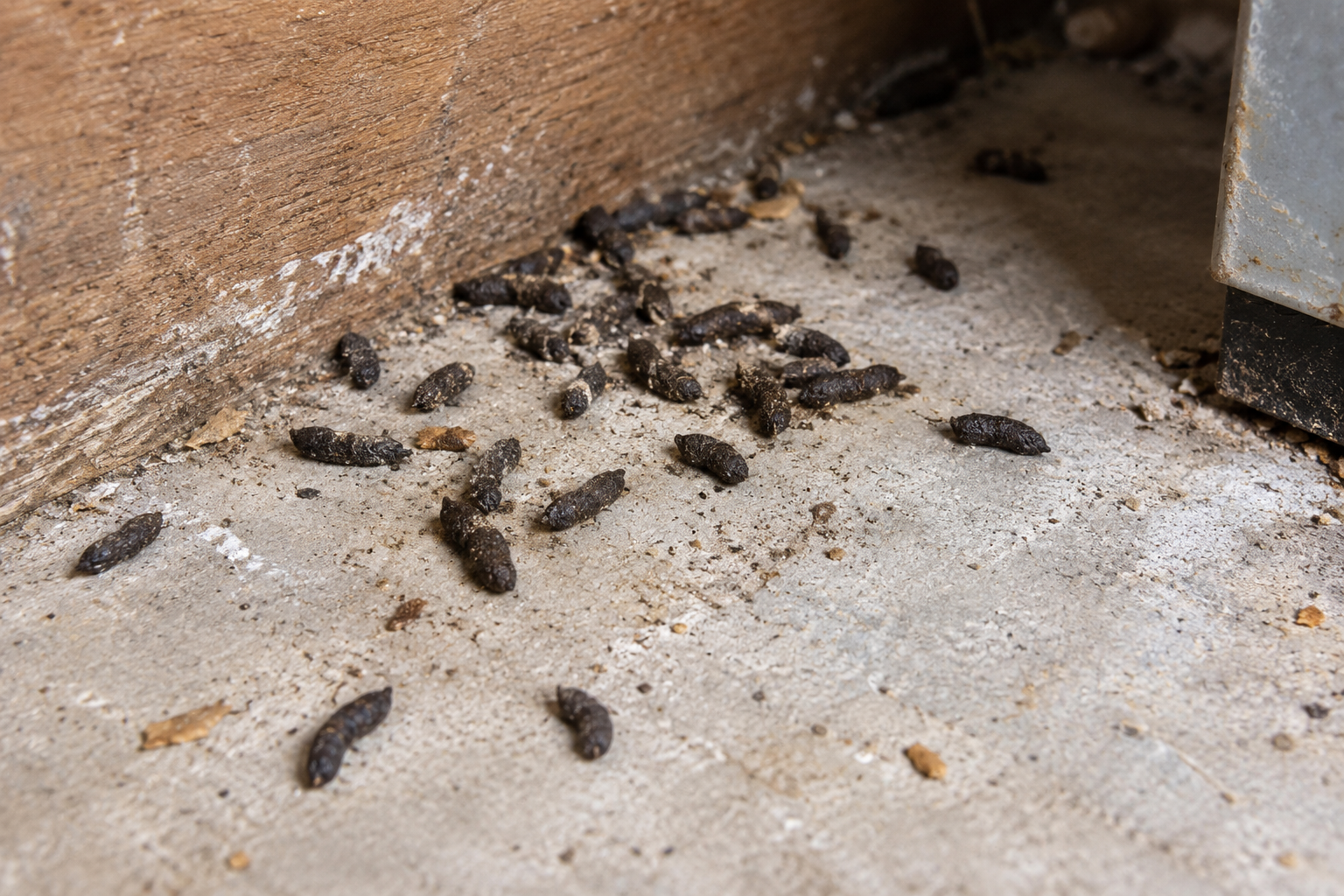
Finding rat droppings in an attic usually means rodents have had access to the space. The droppings may be accompanied by urine, nesting material, gnaw damage, food debris, disturbed insulation, and strong odors. Cleaning the visible waste can be necessary, but the larger goal is to understand whether rats are still present and how they entered.
The safest approach is not to begin with a broom or household vacuum. Public health guidance recommends wet cleanup methods for rodent waste because sweeping or vacuuming dry droppings can cause contaminated particles to become airborne.
What Should You Do If You Find Rat Droppings in Your Attic?
Direct answer: Do not immediately sweep or vacuum dry rodent droppings. Keep people and pets away from the affected area, determine whether the infestation appears active, ventilate when it can be done safely, use gloves, thoroughly wet the contaminated material with an appropriate disinfectant, allow the disinfectant to remain on the material for the required contact time, and then remove it using disposable materials.
The exact cleanup method should follow current CDC guidance and the instructions on the disinfectant label. A large or heavily contaminated attic can require additional precautions and professional help.
Why Rat Droppings in an Attic Matter
Rat droppings are evidence of rodent activity. Their presence does not tell you exactly how many animals are in the attic or whether the infestation is still active, but they confirm that rodents have used the space.
Rodents can contaminate surfaces with feces, urine, and nesting material. Some rodent associated diseases can be transmitted through contaminated environments. For that reason, cleanup is not only a cosmetic task.
Attics can be particularly challenging because insulation is porous, access may be limited, ventilation can be poor, and contamination may spread across areas that are difficult to see.
What Do Rat Droppings Look Like?
Rat droppings are generally larger than mouse droppings, but visual identification alone is not always enough to confirm the species. The size and shape can vary, and old droppings can look different from fresh droppings.
If you are uncertain whether the material came from rats, mice, bats, squirrels, or another animal, consider the full set of evidence. Look at droppings, nesting material, gnawing, sound patterns, entry points, and direct sightings.
Correct identification matters because the removal strategy can differ depending on the animal.
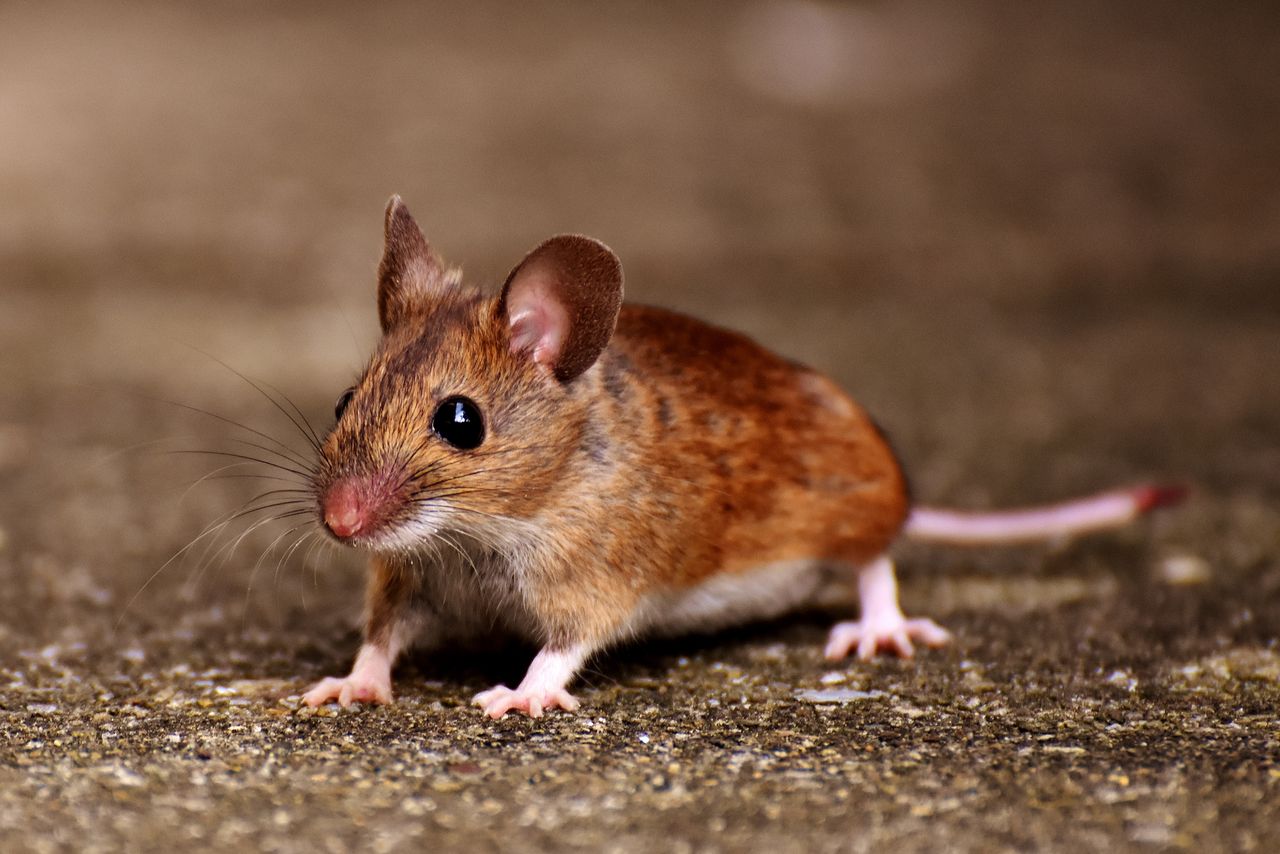
Can You Vacuum Rat Droppings?
Do not vacuum dry, untreated rodent droppings.
The CDC advises against sweeping or vacuuming rodent urine, droppings, or nesting material before appropriate disinfection. The concern is that disturbing dry contamination can send particles into the air.
A wet cleanup approach reduces this risk. The material should be thoroughly wetted with an appropriate disinfectant, left for the recommended contact time, and then wiped up.
A regular household vacuum should not be used as the first step for dry rodent waste.
How to Clean Rat Droppings Based on Public Health Guidance
Step 1: Keep the area controlled
Limit access to the attic while you assess the problem. Keep children and pets away from contaminated areas.
Step 2: Determine whether rodents are still active
Look for fresh droppings, scratching sounds, recently disturbed insulation, gnawing, and other signs. If new evidence continues to appear, the infestation should be addressed before cleanup is considered complete.
Step 3: Ventilate when safe and practical
Public health guidance recommends ventilating enclosed spaces before cleanup when possible. Attics can be difficult to ventilate safely, so the property layout matters.
Step 4: Wear appropriate protective equipment
At a minimum, rubber or plastic gloves are commonly recommended for basic rodent cleanup. Heavy infestations can require additional protective measures.
Step 5: Wet droppings and contaminated areas
Apply an appropriate disinfectant until the waste is thoroughly wet. Do not start by sweeping dry material.
Step 6: Allow the disinfectant to remain for the required contact time
Follow the product label and current CDC guidance. Adequate contact time is important for disinfection.
Step 7: Remove the wet material
Use disposable paper towels or other appropriate disposable materials. Place waste in a suitable bag for disposal according to local requirements.
Step 8: Clean surrounding surfaces
After visible waste is removed, disinfect affected hard surfaces as appropriate.
Step 9: Wash hands
Clean gloved hands before removing the gloves, then wash bare hands thoroughly with soap and water.
What If Rat Droppings Are in Attic Insulation?
Contaminated insulation is more complicated than a hard surface.
Insulation can absorb urine and hold droppings, nesting material, hair, and debris. If contamination is widespread, simply picking up visible droppings may not address the affected material.
CDC guidance notes that contaminated exposed insulation may need to be bagged for removal. The decision to remove insulation depends on the amount and distribution of contamination, the condition of the material, and whether odor or damage remains.
A small isolated area and a heavily contaminated attic are not the same cleanup project.
How Do You Know Whether the Rat Infestation Is Still Active?
Fresh droppings, repeated nighttime noises, new gnaw marks, disturbed insulation, and food damage can indicate ongoing activity.
One useful approach is to document what you see, clean a limited area safely, and monitor whether new evidence appears. If droppings return, the problem is not only historical.
A professional wildlife inspection can also help identify active entry points and determine whether rats are still using the attic.
Why Cleaning Alone Is Not Enough
Imagine cleaning every visible dropping while a roof gap remains open. If rats continue entering the attic, contamination can return.
A complete strategy asks four questions:
- What animal caused the contamination?
- Is the animal still present?
- Where is it entering?
- What cleanup or repair is needed after removal?
Removal, exclusion, cleanup, and restoration are connected steps.
What Other Damage Can Rats Cause in an Attic?
Rats may disturb insulation, gnaw on stored materials, damage flexible components, contaminate surfaces, and create nesting areas. Rodent gnawing can also affect wiring and other building materials.
If electrical wiring appears damaged, it should be evaluated by an appropriately qualified professional. Wildlife removal companies can identify animal damage, but electrical repairs should be handled by the correct trade.
When Does an Attic Need Professional Cleaning?
Professional help is worth considering when droppings cover a large area, insulation is contaminated, dead rodents are present, strong odors persist, access is difficult, the infestation is active, or HVAC components may be affected.
Heavy infestations can require more protective measures than a small cleanup.
Professional attic cleaning may also be appropriate when the homeowner cannot determine which materials can be cleaned and which should be removed.
How to Prevent Rat Droppings From Returning
Cleanup should be followed by prevention.
Inspect the roofline, vents, utility penetrations, doors, garage areas, crawl spaces, foundation openings, and other exterior gaps. Store food securely. Keep garbage containers closed. Avoid leaving pet food outside overnight. Reduce clutter that provides hidden nesting areas.
The goal is not only to remove evidence of the infestation but to reduce the conditions that allowed it.
Frequently Asked Questions About Rat Droppings in the Attic
Are old rat droppings still a concern?
Old droppings should still be handled with appropriate precautions. Do not assume dry material is safe to sweep or vacuum simply because it appears old.
Can I vacuum rat droppings after spraying them?
Follow current CDC cleanup guidance and the instructions for the cleaning method being used. The key safety point is not to vacuum or sweep dry, untreated rodent waste.
Should all attic insulation be replaced after rats?
Not necessarily. The decision depends on the extent of contamination and damage. Localized contamination may be handled differently from widespread urine and feces throughout the attic.
Why do droppings keep appearing after I clean them?
New droppings can indicate that rats are still entering or living in the structure. The property should be inspected for active rodents and accessible entry points.
Can rat droppings cause a strong attic smell?
Yes. Droppings, urine, nesting material, and dead animals can all contribute to odors. Persistent odor after removal may indicate contamination that still needs attention.
When should I call a professional?
Consider professional help when the contamination is extensive, the attic is difficult to access, rodents remain active, insulation is affected, or you are not comfortable performing the cleanup safely.
Conclusion
Rat droppings in an attic should be treated as evidence of a rodent problem, not only as a cleaning issue. The safest response is to avoid dry sweeping or vacuuming, follow current public health guidance, determine whether rats are still present, identify entry points, and address contaminated materials appropriately.
When cleanup, removal, and exclusion are handled together, the homeowner is more likely to solve the underlying problem instead of repeatedly cleaning the same attic.
All City Animal Trapping can inspect attics for rodent activity, identify possible entry points, perform appropriate animal removal, and advise on attic cleaning and repair when contamination is present.
Related Article Suggestions
Humane Rat Removal Los Angeles, Animals in the Attic, Attic Clean and Repair Services, Rat Removal, and The Ultimate Guide to Rat Pest Removal.
Suggested Internal Links
Rat Removal Service, Attic Clean and Repair, Animals in the Attic, Animal Removal Services.