

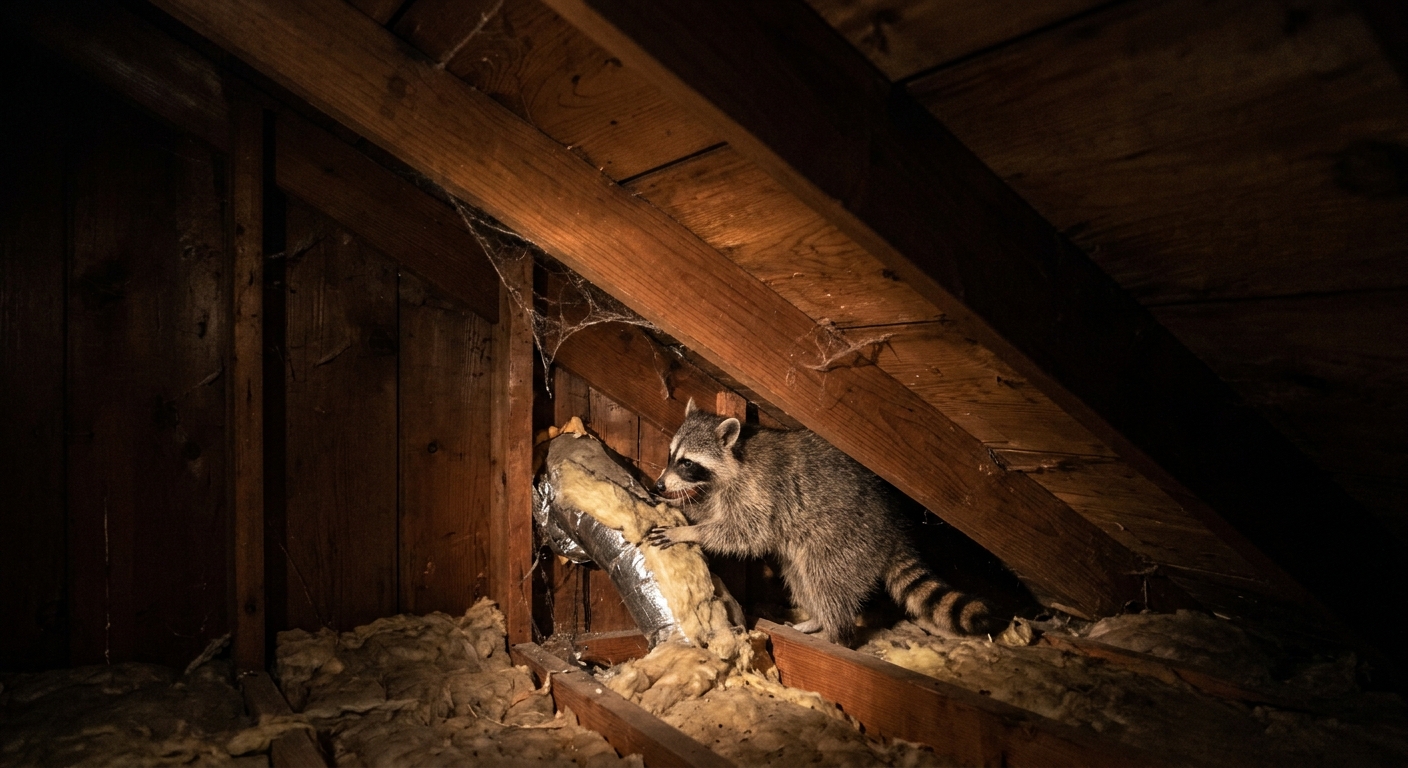
You’re lying in bed when you hear it again. A faint scratching sound comes from somewhere above the ceiling. A few minutes later, there’s another noise, almost like something running across the attic floor.
You turn off the television and listen. The scratching continues.
If this sounds familiar, you may be wondering whether rats, raccoons, squirrels, or another animal have entered your home.
Scratching in your attic at night may be caused by rats, mice, raccoons, or other wildlife moving through insulation, nesting, or searching for food. However, noises alone cannot reliably identify an animal. The timing, location, droppings, entry points, and other evidence must be considered.
At All City Animal Trapping, we help homeowners throughout Los Angeles, Orange County, Riverside, and San Bernardino County investigate attic wildlife problems and determine appropriate removal and prevention methods.
Understanding what those noises might mean is the first step toward protecting your home.
What Animals Make Scratching Noises in the Attic at Night?
Several animals can produce scratching, running, or thumping noises inside an attic.
The sound often depends on the animal’s size, behavior, and the materials beneath it.
1. Rats
Rats are one possible explanation for scratching sounds at night.
Roof rats are capable climbers that may reach attics using trees, fences, and other elevated structures.
Once inside, they may move along beams, explore insulation, or gnaw building materials.
Common signs include small droppings, gnaw marks, nesting debris, and scratching or running noises.
Rats are often active after dark, making nighttime sounds particularly noticeable.
If you suspect rodents, our rat removal services can help identify possible entry points and assess the activity.
2. Mice
Mice may produce lighter scratching and scurrying sounds.
Because they are small, they can enter through openings that homeowners might overlook.
They may nest in insulation, stored materials, and concealed building spaces.
The sounds can be difficult to distinguish from those made by rats, particularly when heard through drywall or insulation.
3. Raccoons
Raccoons are considerably larger than rats or mice.
Their movement may produce heavier footsteps, thumping, or dragging sounds.
A raccoon may enter an attic through a damaged vent, soffit, or another vulnerable roofline opening.
Some raccoons use attics as sheltered denning locations.
If a mother has dependent young, removal must be planned carefully.
4. Squirrels
Squirrels can produce scratching, running, and gnawing noises.
However, they are generally more active during daylight hours, particularly around morning and late afternoon.
Hearing activity during the day may make squirrels one possibility, although timing alone is not conclusive.
5. Opossums
Opossums may enter sheltered building areas and produce heavier movement sounds.
They are often active at night.
Their presence should be confirmed through inspection rather than assumed from the noise.
6. Birds or bats
Fluttering, chirping, or squeaking near roof openings may suggest birds or bats.
These animals require different assessment and exclusion methods.
Some species have legal protections, so homeowners should not attempt to seal occupied openings without identifying the animal.
Can You Identify an Attic Animal by the Sound?
Sounds can provide useful clues, but they are not definitive evidence.
| Sound | Possible explanation |
|---|---|
| Light scratching and rapid scurrying | Rats or mice |
| Heavy footsteps or thumping | Raccoons or opossums |
| Daytime running and gnawing | Squirrels |
| Fluttering or chirping | Birds |
| High-pitched squeaking near roof openings | Bats or other wildlife |
| Repeated chewing or scraping | Rodents or other animals |
These are possibilities, not reliable species identifications.
Insulation, ceiling materials, and the size of the attic can change how sounds travel.
An animal moving across a wooden beam may sound much larger than it actually is.
For this reason, a professional inspection is more useful than relying on noise descriptions alone.
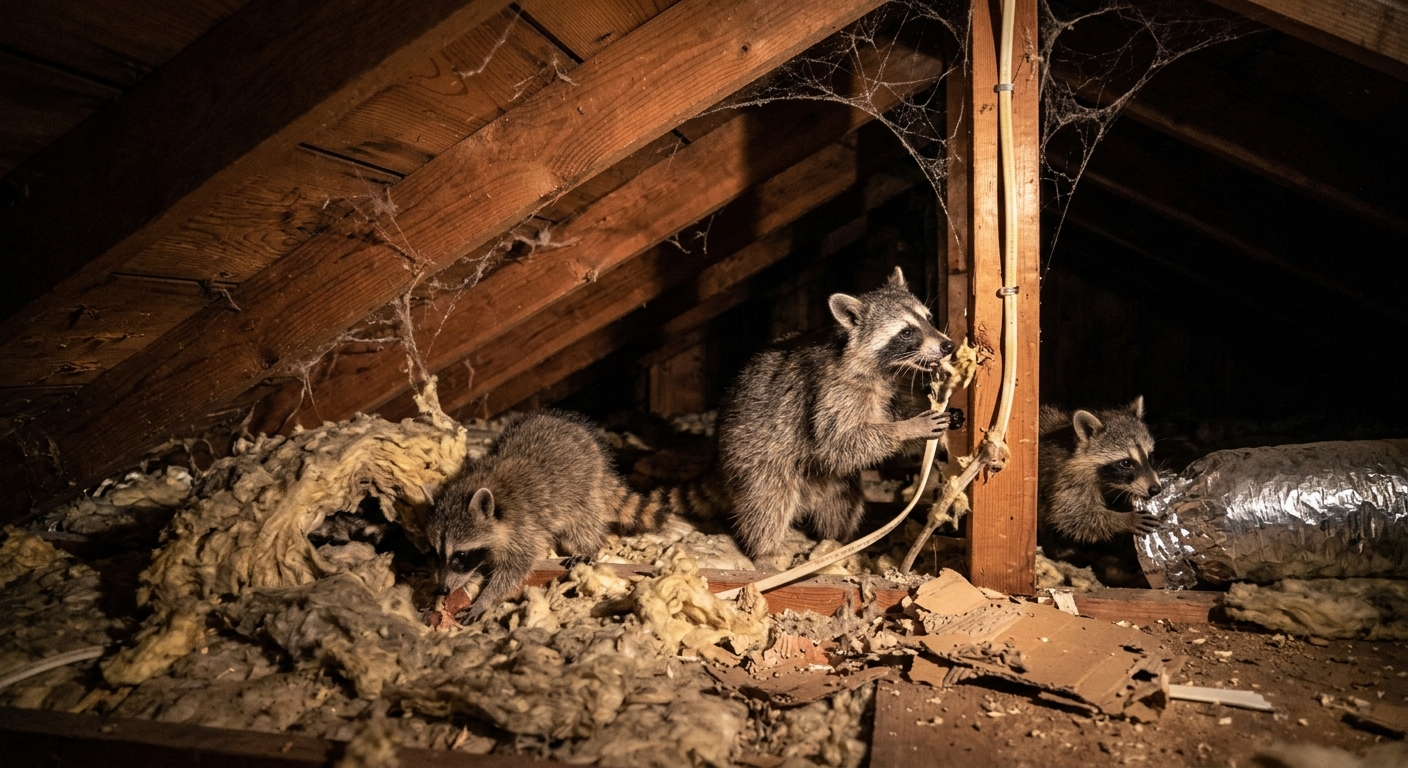
Why Do Animals Enter Attics?
An attic can provide shelter from weather, predators, and human disturbance.
Animals may discover access points around a home’s exterior and begin using the space.
Damaged roof vents
Vent covers can become damaged or deteriorate over time.
A vulnerable vent may provide an entry point for climbing wildlife.
Gaps around eaves and soffits
Loose or damaged materials near the roofline may create accessible openings.
Overhanging branches
Tree branches and nearby structures can help climbing animals reach the roof.
Openings around utility lines
Gaps around pipes, cables, and other penetrations may allow smaller animals to enter.
Existing nesting opportunities
Insulation, stored materials, and concealed spaces can provide suitable nesting locations.
The problem is not necessarily poor housekeeping.
Even a well-maintained home can experience an animal intrusion when an exterior opening becomes accessible.
Is Scratching in the Attic Dangerous?
The level of risk depends on the animal, the location, and the extent of activity.
Some intrusions cause relatively little damage. Others can create electrical, structural, or sanitation concerns.
Electrical wiring damage
Rodents may gnaw wiring and insulation around electrical components.
If wiring damage is suspected, have a qualified electrician inspect it.
Contaminated insulation
Animal droppings, urine, and nesting materials may contaminate insulation.
The extent of contamination determines whether cleaning or replacement is necessary.
Damage to vents and roof materials
Larger animals may exploit damaged openings or disturb vulnerable materials.
Sanitation concerns
Wildlife waste may create health concerns, particularly when disturbed without appropriate precautions.
The CDC advises homeowners not to sweep or vacuum rodent droppings before appropriate disinfection because doing so can disperse contaminated particles into the air.
What Should You Do When You Hear Scratching in Your Attic?
Hearing an animal above your ceiling does not mean you should immediately climb into the attic.
A cautious approach can help you avoid injury and prevent the problem from becoming worse.
Step 1: Record when the noise occurs
Notice whether the activity happens at night, early in the morning, or throughout the day.
Write down the approximate time and location.
This information can help guide an inspection.
Step 2: Observe from a safe location
Look for visible damage around accessible exterior areas.
Do not climb onto the roof or enter unstable attic spaces.
Step 3: Avoid disturbing the animal
Do not attempt to corner, grab, or chase an unidentified wild animal.
Wildlife may react defensively when frightened.
Step 4: Do not immediately seal the opening
Blocking an entry point while animals remain inside may trap them.
If dependent young are present, premature exclusion can create additional problems.
Step 5: Arrange an attic inspection
A professional can evaluate the evidence, identify likely species, and determine appropriate next steps.
Our animal-in-attic removal service provides information about inspection, removal, exclusion, and attic cleanup.
Why You Should Not Ignore Repeated Attic Noises
An isolated sound does not necessarily mean wildlife is living inside the building.
However, repeated scratching in the same area deserves attention.
Animals may begin using an attic regularly after discovering a sheltered space.
Over time, ongoing activity can contribute to contamination, nesting debris, or damage.
Rodents may also continue using accessible entry points unless those openings are addressed.
Early inspection can help distinguish between occasional activity and an established intrusion.
It may also reduce the amount of work required to resolve the problem.
How Professional Attic Animal Removal Works
A complete removal plan should address both the animal and the conditions that allowed it to enter.
Inspection and identification
We begin by reviewing the noises, sightings, and other signs reported by the homeowner.
Accessible attic and exterior areas are evaluated for evidence of activity.
Entry-point assessment
We look for vulnerable vents, roofline openings, gaps, and damaged exterior materials.
Removal planning
The recommended approach depends on the animal species, location, and applicable wildlife requirements.
Trapping may be appropriate in some situations. Other cases may require exclusion or another method.
Wildlife removal
Removal should consider household safety, animal welfare, and the possibility of dependent young.
Exclusion repairs
Once the affected space is confirmed clear, vulnerable openings can be protected.
Cleanup and restoration
If animals have contaminated insulation or damaged building materials, additional work may be appropriate.
Our attic cleaning and repair services can help homeowners address wildlife-related attic conditions.
How to Prevent Animals From Entering Your Attic
Prevention begins with identifying and maintaining vulnerable areas around the building.
Inspect roof vents
Check for visible deterioration or damaged covers from a safe location.
Maintain soffits and fascia
Loose or damaged exterior components should be evaluated and repaired.
Trim vegetation where appropriate
Branches that provide easy access to rooflines may need maintenance.
Secure food sources
Keep garbage containers closed and avoid leaving pet food outside overnight.
Inspect utility penetrations
Openings around cables, pipes, and other exterior penetrations may require suitable protection.
Schedule follow-up inspections when needed
If noises continue after removal, further assessment may be necessary.
Preventive maintenance cannot eliminate wildlife from the surrounding environment, but it can make your home less accessible.
Why Attic Wildlife Problems Need Different Solutions
One of the biggest mistakes homeowners make is assuming that every scratching sound requires the same type of trap.
Rats, raccoons, squirrels, and bats have different behaviors and management requirements.
A method suitable for rodents may be inappropriate for a raccoon family.
Likewise, excluding bats can involve special timing and legal considerations.
Identifying the species before selecting a method helps reduce unnecessary risk.
It also prevents homeowners from spending money on a solution that does not address the actual problem.
Scratching in the Attic in Los Angeles and Southern California
Wildlife problems can occur in both densely developed neighborhoods and properties near natural habitats.
In Los Angeles County, animals may find shelter around older rooflines, garages, and residential attics.
In Orange County, landscaped properties and neighborhoods near parks or open spaces can provide wildlife travel routes.
Riverside and San Bernardino County properties may also experience animal activity around attics, rooflines, and outdoor structures.
However, location alone does not identify the animal responsible.
A property-specific inspection remains the most useful way to determine what is causing the noise.
Key Takeaways
-
Scratching in the attic at night may indicate rats, mice, raccoons, or other wildlife.
-
Noise timing and sound patterns provide clues but cannot confirm the species.
-
Animals often enter through damaged vents, roofline gaps, and other accessible openings.
-
Repeated activity may create contamination or property damage.
-
Avoid sealing openings before confirming that animals are no longer inside.
-
Professional inspection, appropriate removal, and exclusion can help reduce repeat intrusions.
Frequently Asked Questions
What animal scratches in the attic at night?
Rats, mice, raccoons, and other wildlife may produce scratching sounds at night. Identifying the animal requires additional evidence, such as droppings, entry points, and inspection findings.
Why do I hear scratching in my ceiling only at night?
Some animals, including rats and raccoons, are often active after dark. However, nighttime noise alone does not confirm which species is present.
Can rats make loud noises in the attic?
Yes. Rats may produce scratching, running, and gnawing sounds. Building materials can amplify these noises, making a small animal sound larger.
Should I put traps in my attic?
Trapping should be based on correct species identification and an appropriate removal plan. Improper trap placement can create safety and animal welfare problems.
Will attic animals leave on their own?
Some animals may use an attic temporarily, while others establish regular shelter. Repeated activity should be investigated rather than assuming the animal will leave permanently.
Is it safe to enter an attic with animal droppings?
Attics can contain electrical hazards, unstable walking surfaces, and contaminated materials. Avoid disturbing droppings or entering an unsafe space. Professional assessment may be appropriate.
How do I stop scratching noises in my attic permanently?
The most effective approach is to identify the animal, address the intrusion appropriately, confirm the space is clear, and repair accessible entry points. No method can guarantee that wildlife will never return.
Conclusion: Stop Scratching Noises in Your Attic by Finding the Cause
Scratching noises in the attic can be frustrating, especially when they interrupt your sleep.
However, the noise itself is only one part of the problem.
Understanding which animal is responsible, how it entered, and whether the property has vulnerable openings is essential to choosing the right solution.
At All City Animal Trapping, we help Southern California homeowners investigate attic wildlife activity, determine appropriate removal methods, and address conditions that may contribute to repeat intrusions.
If you are hearing scratching, running, or thumping above your ceiling, contact All City Animal Trapping or call (877) 724-5314 to discuss your situation and request an inspection.