

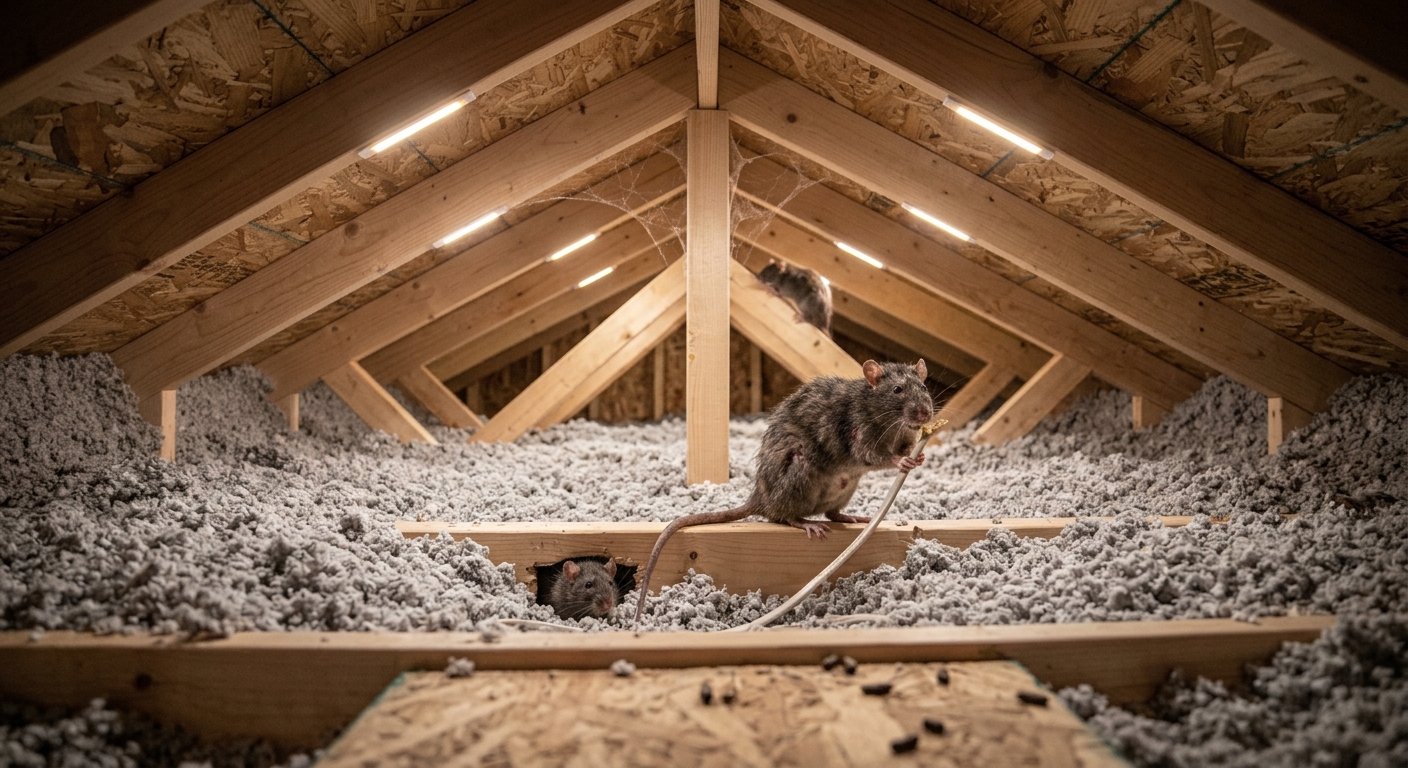
You hear scratching in your ceiling at night. A few days later, you discover small droppings in the attic or notice something has been chewing on stored materials.
Your first question may be simple: How did rats get into my attic?
Many homeowners assume rats can only enter through large holes or severely damaged areas. In reality, rodents can exploit surprisingly small openings, particularly where exterior materials have deteriorated or were not properly sealed.
Rats can enter attics through damaged roof vents, gaps around eaves and soffits, openings near utility lines, roof-to-wall connections, and other vulnerable building components. Roof rats are skilled climbers and may reach these openings using trees, fences, or nearby structures.
At All City Animal Trapping, we help homeowners throughout Los Angeles, Orange County, Riverside, and surrounding Southern California communities investigate rodent activity, identify possible access points, and develop appropriate removal and prevention plans.
Understanding how rats enter your attic is an important step toward preventing recurring infestations.
Why Do Rats Enter Attics?
Attics can provide favorable conditions for rodents.
They are generally sheltered from weather, have limited human activity, and may contain insulation or other materials suitable for nesting.
Rats may enter while searching for shelter, nesting locations, or access to other parts of a building.
Shelter from weather
An attic can provide a protected environment compared with exposed outdoor spaces.
Nesting opportunities
Insulation, cardboard, paper, and other materials may be used for nesting.
Reduced disturbance
Many attic spaces are rarely entered, allowing rodent activity to continue unnoticed.
Access to other building areas
Rats may move through wall cavities and structural spaces while exploring the property.
Nearby food and water
Outdoor pet food, garbage, fallen fruit, and accessible water sources may attract rodents to a property.
Even when food is not stored in the attic itself, rats may use the attic as shelter while traveling elsewhere to feed.
9 Common Ways Rats Get Into Your Attic
A rat entry point is not always obvious from the ground.
Some openings are hidden behind roofline materials, beneath damaged vents, or around building penetrations.
Here are nine areas that deserve attention during an attic rodent inspection.
1. Damaged Roof Vents
Roof vents allow air to circulate through attic spaces.
When vent covers become damaged, loose, or deteriorated, rodents may exploit the openings.
Plastic components and poorly secured screens can be vulnerable in some situations.
What to look for
Signs may include visible gaps, damaged screening, disturbed materials, or evidence of rodent movement near the vent.
How to prevent access
Have damaged vents repaired or protected using suitable materials that maintain the required airflow.
Do not block ventilation openings completely.
2. Gaps Around Soffits and Eaves
Soffits and eaves are common areas to inspect when rodents are entering an attic.
These building components connect roof edges to exterior walls.
If materials become loose or damaged, gaps may develop.
Why rats use these openings
Roof rats can climb and explore elevated building edges.
A vulnerable opening near the eaves may provide access to attic spaces.
How to prevent access
Inspect accessible roofline areas for deteriorated materials.
Repairs should restore the building envelope without interfering with ventilation or drainage.
3. Openings Around Utility Lines
Electrical cables, plumbing lines, communication cables, and other utilities may pass through exterior walls or roof-adjacent areas.
If penetrations are not properly protected, rodents may exploit surrounding gaps.
Common problem areas
Potential vulnerabilities include:
-
Openings around cable penetrations.
-
Gaps near plumbing pipes.
-
Deteriorated seals around utility connections.
-
Unprotected openings where services enter the building.
How to prevent access
Suitable repairs depend on the type of penetration and the surrounding materials.
Electrical and specialized utility components should be evaluated by qualified professionals when necessary.
4. Roof-to-Wall Connections
Some homes have roof sections that meet exterior walls or other roof surfaces.
These connections can contain concealed gaps if flashing or adjacent materials become damaged.
Roof rats may investigate these areas while traveling along the roofline.
Warning signs
Look for visible deterioration, displaced materials, or recurring activity near the same section of the roof.
Prevention
A roofing professional can evaluate vulnerable flashing and repair damaged components.
Avoid attempting roof repairs without proper equipment and experience.
5. Damaged Fascia Boards
Fascia boards run along roof edges and support or cover parts of the roofline.
Over time, wood deterioration, weather exposure, or damage can create openings.
Rodents may exploit these weaknesses.
How to identify the problem
Visible gaps, damaged wood, and openings behind exterior trim may indicate vulnerabilities.
How to prevent access
Damaged materials should be repaired or replaced as appropriate.
Simply covering an opening without addressing the underlying deterioration may not provide a durable solution.
6. Openings Around Chimneys
Chimneys and surrounding roof connections may contain vulnerable gaps.
Deteriorated flashing or damaged materials can create access routes near the attic.
Important distinction
An opening around a chimney is different from an opening inside an active flue.
Chimney systems require appropriate clearances and ventilation.
Prevention
Have suspected chimney-related openings assessed by a qualified professional.
Do not install improvised barriers that interfere with safe chimney operation.
7. Gaps Around Attic Access Structures
Some properties have exterior attic access panels, maintenance openings, or adjoining structural spaces.
If these areas are damaged or do not close securely, rodents may exploit them.
What to inspect
Look for poorly fitting panels, damaged covers, and gaps around accessible exterior openings.
Prevention
Repair damaged components and ensure access panels close securely while retaining their intended function.
8. Openings Near Garage Rooflines
Attached garages can provide additional routes into a home.
A rodent may enter through a vulnerable garage opening and then access connected structural spaces.
The exact route depends on the building design.
Common vulnerabilities
Potential problems include gaps around garage doors, damaged exterior panels, and openings where garage rooflines connect to the house.
Prevention
Inspect the garage exterior and adjoining building areas.
Repairs should address the actual access route rather than assuming the attic is the only entry point.
9. Tree Branches and Nearby Structures That Provide Roof Access
Tree branches do not create holes in the attic by themselves.
However, they may help roof rats reach vulnerable roofline openings.
Fences, trellises, and adjoining structures can also provide elevated travel routes.
Why this matters
Roof rats are skilled climbers.
Reducing easy roof access may help, but it does not replace repairing building openings.
Prevention
Maintain vegetation where practical and inspect roofline areas for damage.
Avoid unsafe trimming near power lines or other hazards.

How Small of a Hole Can a Rat Enter?
Rats can exploit relatively small openings, although the minimum size varies with the animal’s age, body size, and the shape of the opening.
A commonly used rodent-proofing guideline is to investigate gaps around half an inch or larger for potential rat entry.
Smaller openings may also deserve attention, particularly where materials are soft or damaged.
The important point is that a gap does not need to look large to be a potential rodent entry point.
Homeowners should not rely on visual estimates alone.
A professional inspection can help identify vulnerable areas and determine suitable repairs.
How Do You Know Rats Are Already in Your Attic?
Identifying entry points is important, but homeowners should also look for evidence of active rodent activity.
Scratching and running sounds
Rats may produce scratching, scurrying, and gnawing noises.
Roof rats are often active at night, so sounds may be more noticeable after dark.
However, noises alone cannot confirm the species.
Droppings
Rat droppings may appear along travel routes, near nesting areas, or around stored materials.
Do not handle unfamiliar droppings without appropriate precautions.
Gnaw marks
Rats may chew wood, plastic, and other vulnerable materials.
Suspected damage to electrical wiring should be evaluated by a qualified electrician.
Nesting materials
Shredded insulation, paper, or other materials may indicate nesting activity.
Grease marks
Rodents may leave dark rub marks along frequently used routes.
Unusual odors
Urine and contaminated nesting materials may create unpleasant smells.
Visible entry damage
Damaged vents, gnawed openings, or disturbed exterior materials may indicate a possible access route.
If several signs appear together, a professional inspection can help determine whether the infestation is active.
Why Rats in the Attic Should Not Be Ignored
Rodent activity can create several property maintenance and sanitation concerns.
The severity depends on the number of animals, the location, and how long the problem has continued.
Electrical hazards
Rats may gnaw electrical wiring.
Damaged wiring can create a potential fire hazard.
If you suspect electrical damage, have a qualified electrician assess the system.
Insulation contamination
Rodents may leave droppings, urine, and nesting materials in attic insulation.
Contaminated materials may require professional cleaning or replacement.
Damage to stored belongings
Cardboard, fabric, and other stored materials may be damaged by gnawing or nesting.
Repeated infestation
Removing rodents without addressing accessible entry points may allow additional animals to enter.
Health concerns
Rodent waste can pose health risks when handled or disturbed improperly.
The Centers for Disease Control and Prevention recommends specific precautions when cleaning areas contaminated by rodents.
For guidance, see the CDC’s instructions for cleaning up after rodents.
Can You Seal Rat Entry Points While Rats Are Still Inside?
Sealing every visible opening immediately may seem like a good idea.
However, it can create additional problems if rats remain inside the attic.
Trapped animals may continue moving through structural spaces or attempt to gnaw new openings.
They may also die in inaccessible areas, creating odor and sanitation problems.
A coordinated approach is preferable.
First, confirm the activity
Determine whether rodents are present and identify likely access routes.
Second, develop a control plan
The appropriate removal method should be selected based on the property and extent of activity.
Third, confirm the affected area is clear
Before completing permanent closure, the removal process should establish that the affected space is no longer occupied.
Fourth, complete exclusion repairs
Repair vulnerable openings using suitable materials.
Fifth, monitor for continued activity
Follow-up helps determine whether additional entry points remain.
Our rat removal services can help homeowners assess rodent problems and plan appropriate removal and exclusion.
Why DIY Rat Trapping May Not Solve the Problem
Trapping may reduce rodent activity, but it does not automatically resolve an infestation.
If the original access points remain open, new rodents may enter.
Poor trap placement can also make control less effective.
Some homeowners use repellents or ultrasonic devices hoping to drive rats away.
However, these approaches should not be treated as substitutes for identifying entry points and implementing an appropriate rodent control plan.
The most important long-term steps are removing the existing infestation, addressing accessible openings, and reducing attractants.
How Professional Rat Removal and Exclusion Works
At All City Animal Trapping, we focus on understanding how rodents are using the property before recommending a solution.
Step 1: Attic inspection
We assess accessible attic areas for signs of rodent activity, nesting materials, droppings, and damage.
Step 2: Exterior entry-point assessment
We look for vulnerable roof vents, soffits, fascia, utility penetrations, and other potential access routes.
Step 3: Rodent control planning
The recommended approach depends on the property conditions and the extent of the problem.
Step 4: Removal and monitoring
Appropriate rodent control methods are implemented, with follow-up as needed.
Step 5: Exclusion recommendations
Once the affected space is confirmed clear, vulnerable openings can be addressed.
Step 6: Cleanup assessment
Rodent contamination may require cleaning or replacement of affected materials.
Our attic cleaning and repair services can help homeowners evaluate wildlife-related attic damage and sanitation needs.
How to Rat-Proof Your Attic
Rat-proofing focuses on reducing opportunities for rodents to enter and remain in the building.
Maintain roof vents
Repair damaged covers and protect vulnerable openings without blocking ventilation.
Inspect soffits and fascia
Address deterioration and visible gaps around roof edges.
Protect utility penetrations
Use suitable materials around vulnerable openings.
Maintain vegetation
Trim branches where practical and reduce easy access to rooflines.
Secure garbage
Keep outdoor waste containers closed.
Store food properly
Use suitable containers for pet food and other materials that may attract rodents.
Reduce clutter
Organized storage spaces make signs of activity easier to detect.
Monitor for new openings
Weather, repairs, and building deterioration can create new vulnerabilities over time.
Rat-proofing is an ongoing maintenance process rather than a one-time guarantee.
Roof Rats vs. Norway Rats: Which Is More Likely to Enter an Attic?
Roof rats and Norway rats have different tendencies, although either may enter buildings.
| Characteristic | Roof rats | Norway rats |
|---|---|---|
| Typical movement | Strong climbers | More commonly ground-oriented |
| Common shelter areas | Attics, elevated spaces, vegetation | Burrows, ground-level areas, lower structures |
| Access routes | Trees, fences, rooflines | Ground-level gaps and foundation areas |
| Attic activity | Often associated with roof rats | Possible, but less characteristic |
These patterns can help guide an inspection, but they do not confirm the species.
Correct identification should rely on physical evidence rather than location alone.
Rat Entry Points in Southern California Homes
Rat problems can occur throughout Southern California, but the contributing conditions vary by property.
Los Angeles County
Homes with mature landscaping, older roofline materials, or accessible attic spaces may develop rodent entry problems.
Orange County
Residential properties with trees, fences, and landscaped yards may provide travel routes for roof rats.
Riverside County
Rodents may exploit building openings around attics, garages, and exterior utility penetrations.
San Bernardino County
Properties with vulnerable roof vents, stored materials, or accessible exterior openings may experience rodent activity.
These examples describe possible risk factors, not confirmed infestation rates.
The most useful approach is inspecting the individual property.
How to Prevent Rats From Returning After Removal
A successful rodent control plan should reduce the conditions that allowed the infestation to develop.
The most important steps include repairing entry points, maintaining exterior building materials, and reducing food and water sources.
Continue monitoring the attic and surrounding areas for new activity.
If scratching noises, droppings, or gnaw marks return, further inspection may be necessary.
For additional guidance on identifying wildlife activity above your ceiling, see our animal-in-attic removal services.
Key Takeaways
-
Rats may enter attics through damaged vents, soffits, fascia, utility openings, and other vulnerable areas.
-
Roof rats can use trees, fences, and nearby structures to reach rooflines.
-
Small gaps may be sufficient for rodent entry.
-
Scratching noises, droppings, gnaw marks, and nesting materials can indicate an infestation.
-
Sealing openings before resolving active rodent activity can create additional problems.
-
Trapping alone may not prevent new rats from entering.
-
Effective prevention combines rodent control, exclusion, and ongoing maintenance.
Frequently Asked Questions About Rats Entering Attics
How do rats get into an attic?
Rats may enter through damaged roof vents, gaps around soffits, openings near utility lines, and other vulnerable building components. Roof rats can climb trees and structures to reach elevated entry points.
Can rats climb walls to reach the attic?
Yes. Rats are capable climbers, although climbing ability depends on the surface and species. Roof rats may also use trees, fences, and nearby structures to reach the roofline.
How small of a hole can a rat fit through?
Rats can exploit relatively small openings. Gaps around half an inch are commonly treated as potential rat entry points, although actual access depends on the animal and opening.
Will rats leave the attic on their own?
Rats may continue using an attic if it provides suitable shelter and remains accessible. Repeated activity should be investigated rather than assuming the animals will leave permanently.
Should I seal attic holes before trapping rats?
Avoid sealing every opening without first determining whether rodents remain inside. Removal and exclusion should be coordinated to prevent animals from becoming trapped.
Can rats enter through roof vents?
Yes. Damaged or inadequately protected roof vents can provide potential entry points. Repairs must preserve the vent’s intended airflow.
What is the best way to keep rats out of an attic?
An effective approach combines identifying and addressing entry points, removing active rodents, reducing attractants, and monitoring for renewed activity.
Conclusion: Stop Rats From Entering Your Attic by Addressing the Entry Points
Finding rats in your attic is frustrating, but removing the animals is only part of the solution.
The long-term priority is understanding how they entered.
Damaged vents, roofline gaps, utility openings, and accessible climbing routes may all contribute to the problem.
At All City Animal Trapping, we help Southern California homeowners investigate rodent activity, identify vulnerable entry points, and develop appropriate removal and exclusion plans.
If you suspect rats are entering your attic, contact All City Animal Trapping to discuss your situation and request an inspection.