

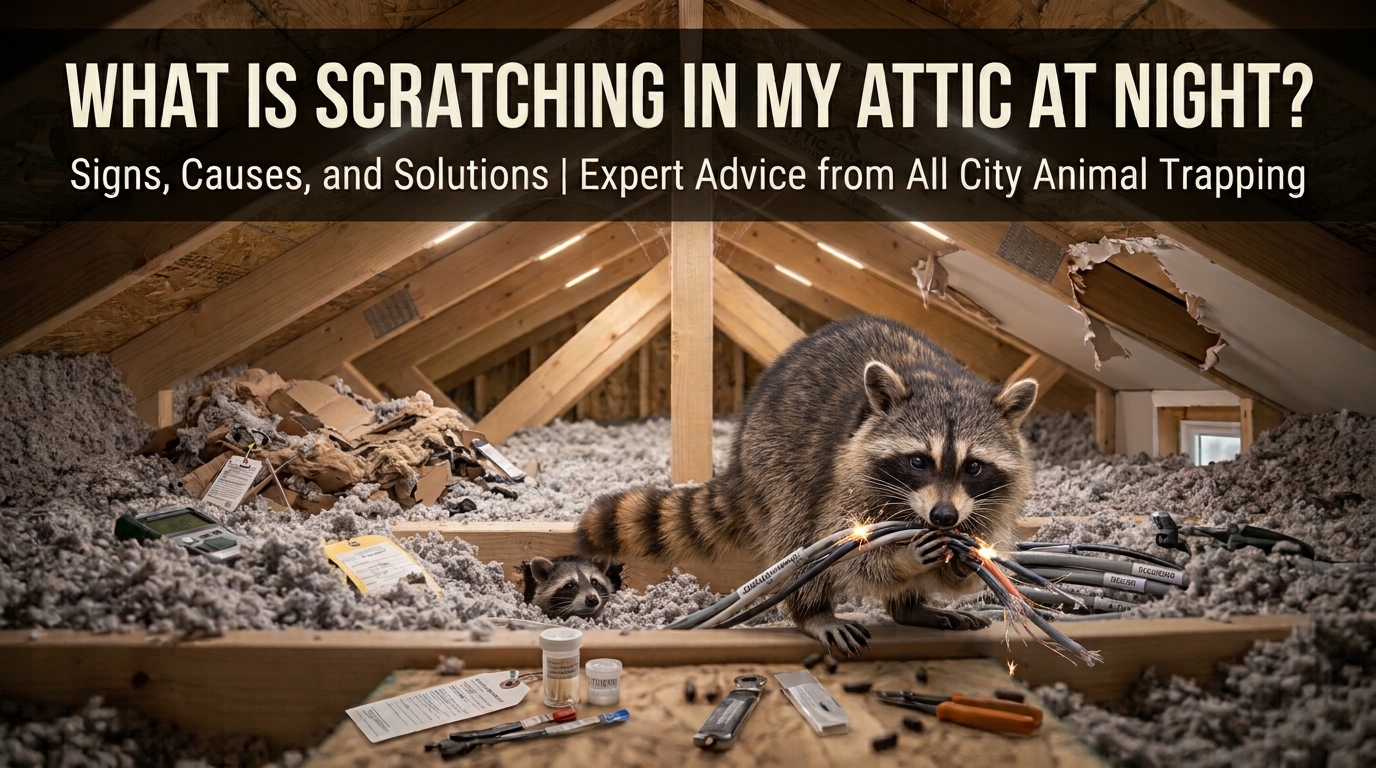
You hear heavy footsteps above your ceiling late at night. Sometimes there is scratching near the roofline. Other times, you hear a loud thump that sounds too heavy to be a mouse or rat.
A few days later, you notice a damaged roof vent or insulation that appears to have been disturbed.
Could a raccoon be living in your attic?
Raccoons are adaptable wild animals that can climb trees, fences, and buildings. In residential neighborhoods, they may investigate attics, chimneys, and other sheltered spaces while searching for a secure place to rest or raise their young.
Common signs of a raccoon in the attic include heavy movement noises, damaged roof vents, disturbed insulation, droppings, and repeated raccoon activity near the roof. However, these signs do not confirm the species on their own. A proper inspection is needed to distinguish raccoons from other wildlife.
At All City Animal Trapping, we help homeowners throughout Los Angeles, Orange County, Riverside, and surrounding Southern California communities investigate raccoon activity and determine appropriate removal and prevention methods.
If you suspect a raccoon has entered your attic, understanding its behavior can help you avoid unsafe removal attempts and prevent additional damage.
Why Do Raccoons Enter Attics?
Raccoons are opportunistic animals that investigate places offering shelter and protection.
An attic can provide several features that make it attractive.
Protection from weather
Attics are enclosed spaces that may provide shelter from rain, wind, and other outdoor conditions.
A quiet location
Many attics experience little human activity.
This makes them attractive as resting areas or temporary shelter.
Potential denning space
Female raccoons may use protected spaces to raise their young.
An attic can become a den if the animal finds an accessible opening.
Existing roof damage
Loose vents, deteriorated soffits, and damaged fascia may create openings large enough for raccoons to investigate.
Nearby food sources
Raccoons may visit properties where garbage, pet food, fallen fruit, or other food sources are accessible.
An animal may shelter in one location while traveling elsewhere to feed.
Understanding these conditions is important because removing a raccoon does not automatically prevent another one from using the same opening.
7 Signs You May Have a Raccoon in Your Attic
Raccoons can remain hidden in attic spaces, especially when homeowners rarely enter them.
The following signs may suggest their presence.
1. Heavy footsteps or thumping sounds
Raccoons are larger than rats and mice.
Their movement across attic framing may create heavier footsteps, thumps, or dragging sounds.
Activity may be particularly noticeable at night.
However, the size of an animal cannot be reliably determined from sound alone.
2. Scratching near the roofline
A raccoon may scratch or disturb materials while moving through an opening.
Repeated scratching near a vent or eave may indicate activity around an access point.
3. Damaged roof vents
Raccoons can exploit damaged or inadequately secured roof vents.
An opening may show displaced screening, bent materials, or other visible damage.
4. Disturbed attic insulation
Raccoons may compress, move, or tear insulation while traveling or establishing shelter.
Nesting areas may contain displaced materials.
5. Animal droppings
Raccoon droppings may be present in or around occupied attic spaces.
Droppings should not be handled without appropriate precautions.
6. Repeated sightings near the roof
Seeing a raccoon climb onto the roof repeatedly may indicate that it is investigating or using an opening.
A single sighting does not confirm that an animal lives in the attic.
7. Sounds from young animals
If dependent young are present, homeowners may hear vocalizations or movement from a denning area.
These sounds can be difficult to identify without an inspection.
If you notice several of these signs, professional assessment can help determine whether raccoons are responsible.
What Does a Raccoon Sound Like in the Attic?
Homeowners often describe raccoon activity as heavier than ordinary rodent noises.
Possible sounds include:
-
Heavy footsteps.
-
Thumping across ceiling framing.
-
Scratching near roof openings.
-
Dragging or shifting materials.
-
Occasional vocalizations.
Raccoons are often active after dark, but they can also move during daylight hours.
Sound patterns are useful clues, not definitive proof.
For example, a squirrel running across a wooden beam may sound larger than expected.
A professional inspection considers sounds alongside droppings, damage, entry points, and other physical evidence.
Is Having a Raccoon in Your Attic Dangerous?
A raccoon occupying an attic can create property damage and sanitation concerns.
The severity depends on how long the animal has been present and the condition of the affected area.
Damage to insulation
Raccoons may compress, tear, or contaminate insulation.
This can affect its condition and may require cleaning or replacement.
Damage to vents and roof materials
Raccoons may exploit existing weaknesses in roofline components.
Damaged openings can also create maintenance concerns if they expose the building to weather.
Droppings and sanitation risks
Raccoon feces can contain infectious organisms, including the roundworm Baylisascaris procyonis.
Exposure to infective roundworm eggs can cause serious illness, although human infections are uncommon.
The CDC advises avoiding contact with raccoon feces and taking appropriate precautions during cleanup.
For more information, see the CDC’s guidance on preventing raccoon roundworm infection.
Possible aggressive reactions
Raccoons may bite or scratch when cornered or threatened.
A raccoon protecting dependent young may also react defensively.
Homeowners should avoid attempting to capture or handle an unfamiliar wild animal.
Odor problems
Droppings, urine, and nesting debris may create unpleasant odors.
A raccoon that dies inside a concealed space can also cause a persistent smell.
These concerns make proper identification and a coordinated removal plan important.
What Should You Do if You Find a Raccoon in Your Attic?
Finding a raccoon in the attic does not mean you should immediately climb inside or attempt to chase it out.
A cautious approach can reduce risks to people and animals.
Step 1: Keep your distance
Do not approach, corner, or attempt to handle the raccoon.
Keep children and pets away from the affected area.
Step 2: Avoid entering the attic
An occupied attic may contain contaminated materials, exposed wiring, or unstable walking surfaces.
Entering the space may also frighten the animal.
Step 3: Do not seal the entry point immediately
Closing an opening while a raccoon remains inside may trap it.
If dependent young are present, premature exclusion can separate them from the mother.
Step 4: Observe activity from a safe location
Note when and where the raccoon appears.
Repeated movement near the same roof opening may help identify an access route.
Do not climb onto the roof to investigate.
Step 5: Arrange a wildlife inspection
A professional can evaluate the signs, assess possible entry points, and determine an appropriate removal plan.
Our raccoon removal services can help homeowners investigate raccoon activity and possible building access points.
What if a Mother Raccoon Has Babies in the Attic?
One of the most important considerations in attic raccoon removal is the possibility of dependent young.
Female raccoons may use sheltered spaces as dens during the breeding season.
Young raccoons may remain dependent on their mother while they develop.
Removing the adult without checking for offspring can leave young animals behind.
This can create animal welfare concerns, odors, and additional cleanup problems.
Signs that young raccoons may be present
Possible clues include repeated adult activity near a den opening, vocalizations from a concealed space, and nesting activity.
However, these signs are not conclusive.
Why timing matters
Removal methods should consider whether young animals are present and whether they can leave safely.
The appropriate approach depends on the circumstances and applicable wildlife regulations.
Why DIY exclusion is risky
Sealing a den opening without checking for dependent young may prevent the mother from returning.
A professional assessment can help determine how to address the situation without creating unnecessary harm.
How Do Raccoons Get Into Attics?
Raccoons are strong climbers and may reach rooflines using trees, fences, and nearby structures.
Once on the roof, they may investigate vulnerable openings.
Damaged roof vents
Loose or deteriorated vent covers may provide access.
Openings around soffits
Damaged soffit materials can create gaps near the roofline.
Loose fascia boards
Deteriorated fascia may expose openings beneath roof edges.
Chimney openings
Unprotected or damaged chimney components may provide shelter or access, depending on the structure.
Existing roof damage
Raccoons may exploit openings created by weather damage or deteriorated materials.
The entry point should be identified before permanent repairs are completed.
Why Trapping Alone May Not Solve a Raccoon Problem
Capturing or removing a raccoon addresses the immediate animal concern.
However, the building may remain accessible.
For example, a raccoon may enter through a damaged roof vent.
If the vent is not repaired, another animal may discover the same opening.
This is why professional wildlife management should include an entry-point assessment.
Exclusion reduces opportunities for reentry
Exclusion involves protecting vulnerable openings using suitable materials.
Repairs must preserve building functions
Ventilation, drainage, and other building requirements must remain intact.
The attic must be confirmed clear
Permanent closure should occur only after the affected space is confirmed unoccupied.
Prevention reduces attractants
Securing garbage, removing accessible pet food, and maintaining vegetation may help reduce wildlife visits.
A complete plan addresses both the animal and the conditions that allowed it to enter.
How Professional Raccoon Removal Works
At All City Animal Trapping, we focus on understanding the wildlife problem before recommending a removal method.
Step 1: Initial consultation
We review the homeowner’s observations, including noises, sightings, odors, and visible damage.
Step 2: Property inspection
Accessible attic and exterior areas are evaluated for signs of raccoon activity.
Step 3: Species confirmation
We assess the evidence to determine whether raccoons or another animal may be responsible.
Step 4: Den and entry-point assessment
Potential access routes are evaluated.
The possibility of dependent young is considered.
Step 5: Removal planning
The recommended approach depends on the animal’s location, site conditions, and applicable regulations.
Trapping may be appropriate in some situations, while other circumstances may call for exclusion or a different method.
Step 6: Wildlife removal
Removal should account for household safety and animal welfare.
Step 7: Exclusion recommendations
Once the affected space is confirmed clear, vulnerable openings can be addressed.
Step 8: Cleanup and damage assessment
Contaminated insulation, droppings, and damaged materials may require attention.
Our attic cleaning and repair services can help homeowners evaluate wildlife-related attic damage and sanitation needs.
How Much Does Raccoon Removal From an Attic Cost?
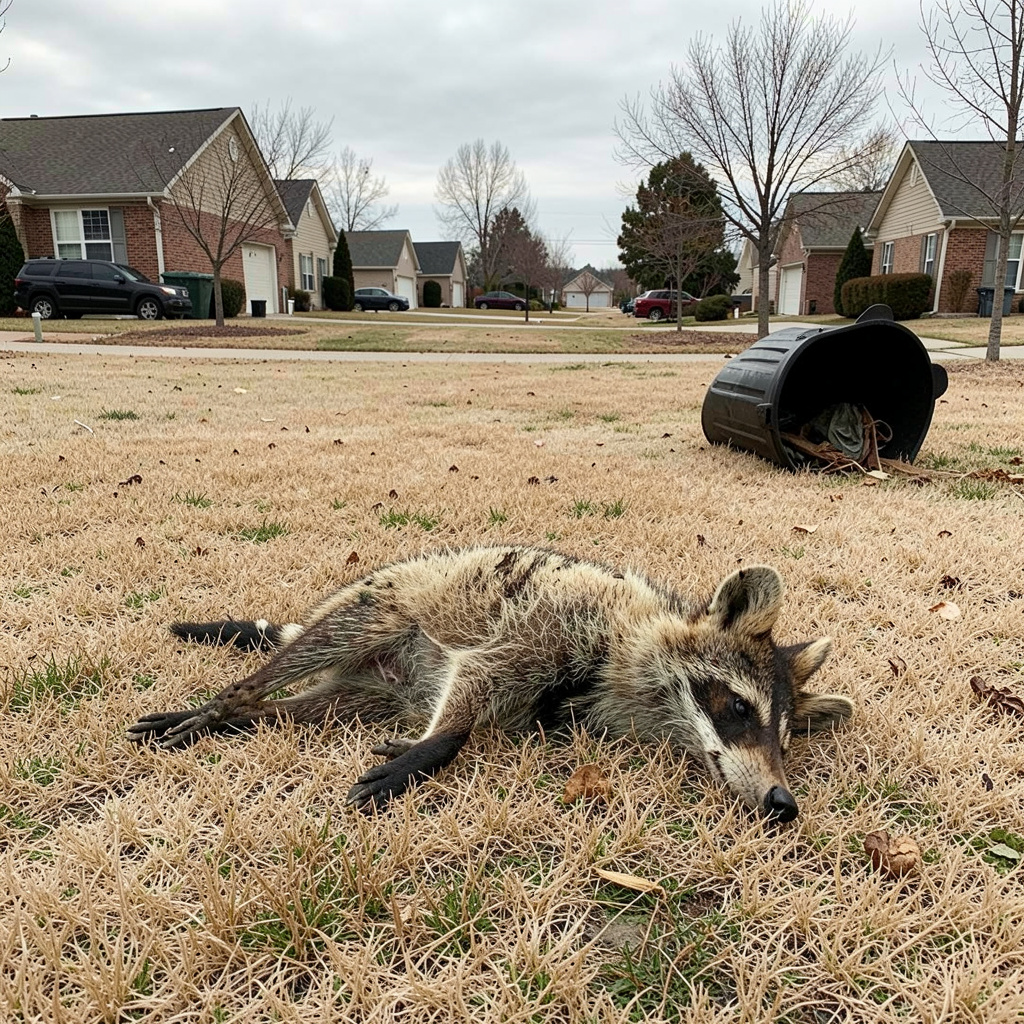
The cost of raccoon removal varies depending on the property and the circumstances.
A single raccoon using an accessible exterior shelter is different from a raccoon family occupying a difficult-to-reach attic.
Factors that may affect the scope include:
-
The number of raccoons.
-
Whether dependent young are present.
-
The location of the den.
-
Accessibility of the affected area.
-
The removal method required.
-
The number of entry points.
-
Follow-up requirements.
-
Exclusion repairs.
-
Cleanup and damage restoration.
An inspection can help determine the appropriate work.
When reviewing estimates, ask whether the service includes removal only or also covers entry-point assessment, repairs, follow-up, and cleanup.
Avoid relying on a price quote that does not explain what work is included.
How to Prevent Raccoons From Returning to Your Attic
Prevention begins with reducing access to the building and limiting attractants around the property.
Maintain roof vents
Inspect visible vent covers for deterioration or damage.
Have vulnerable components repaired using appropriate materials.
Repair soffits and fascia
Loose or damaged roofline materials should be evaluated and repaired.
Maintain tree branches
Trim branches where practical, especially when they provide easy access to rooflines.
Do not attempt unsafe trimming near power lines.
Secure garbage
Use containers with secure lids.
Remove outdoor pet food
Avoid leaving pet food accessible overnight.
Collect fallen fruit
Fruit beneath trees may attract raccoons and other wildlife.
Inspect exterior openings
Look for damage around rooflines, chimneys, and other vulnerable areas.
Do not attempt to close an opening while animals may still be inside.
Monitor for renewed activity
Repeated sightings near the same opening may indicate that additional assessment is needed.
Prevention cannot eliminate wildlife from the surrounding environment, but it can reduce opportunities for animals to enter your home.
Raccoons in Attics Across Southern California
Raccoon problems can occur in urban, suburban, and residential areas throughout Southern California.
The contributing conditions vary by property.
Los Angeles County
Homes near parks, hillsides, and landscaped areas may encounter raccoons traveling through residential neighborhoods.
Orange County
Properties with mature trees, accessible rooflines, and nearby open spaces may provide opportunities for raccoons to investigate buildings.
Riverside County
Residential areas and properties near natural habitats may experience raccoon activity around outdoor structures and rooflines.
San Bernardino County
Homes with accessible attic openings or sheltered exterior areas may experience wildlife intrusions.
These examples describe possible conditions, not confirmed infestation rates.
A property-specific inspection is more useful than assuming that a particular neighborhood has a raccoon problem.
How to Tell if the Raccoon Has Left Your Attic
A quiet attic does not necessarily mean an animal has permanently left.
Raccoons may spend time outside the den while searching for food.
Before sealing an entry point, it is important to establish whether the space remains occupied.
A professional may evaluate activity patterns, physical evidence, and other appropriate indicators.
The assessment should also consider whether dependent young are present.
If the attic is confirmed clear, vulnerable openings can be repaired.
Follow-up monitoring may help identify renewed activity.
Raccoon Removal vs. Raccoon Prevention
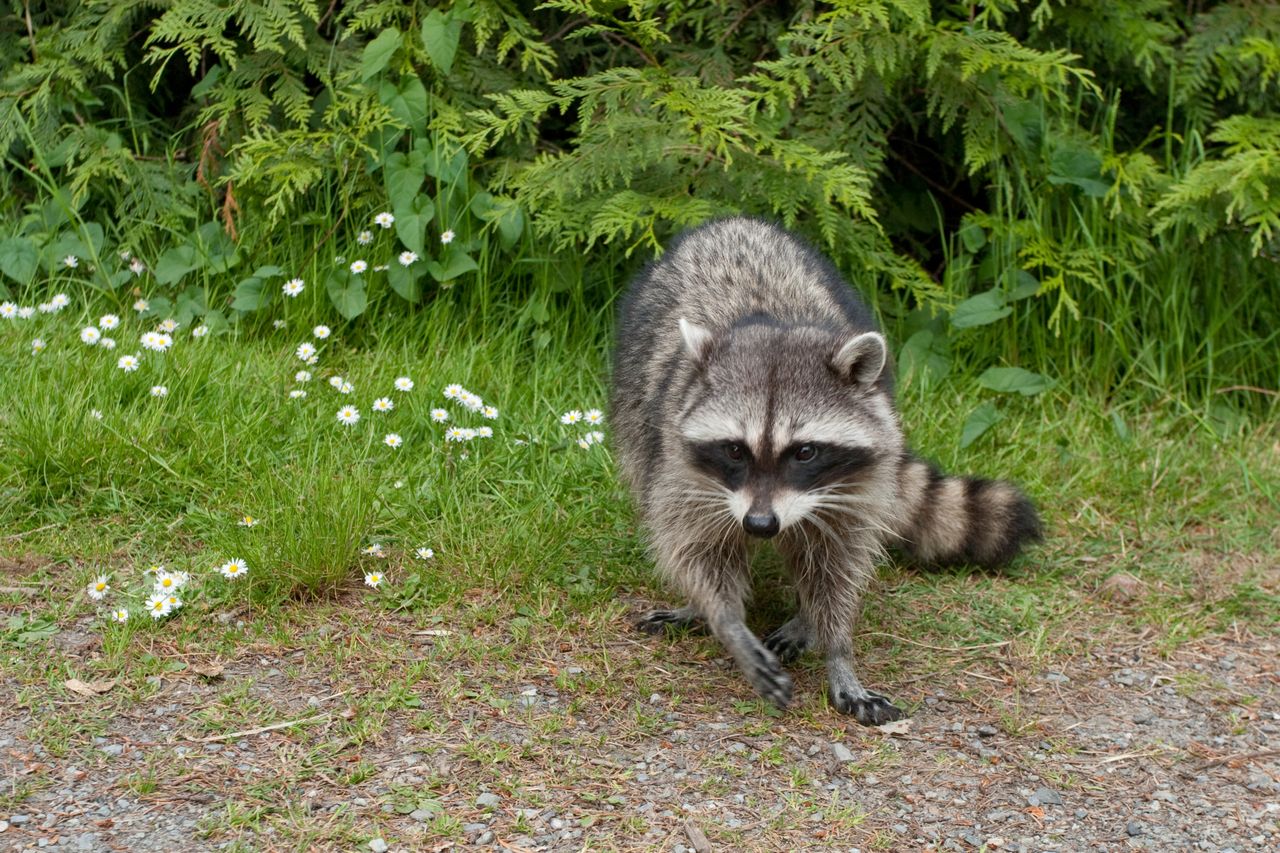
Removal and prevention serve different purposes.
Raccoon removal addresses an animal currently occupying an unwanted location.
Raccoon prevention focuses on reducing opportunities for future intrusions.
A complete approach may involve both.
For example, removing a raccoon from an attic without repairing the damaged vent may leave the same access route available.
Similarly, securing garbage may reduce attractants but will not necessarily remove an animal already living inside the building.
Both the immediate wildlife concern and the property conditions should be considered.
For broader guidance about animals occupying roof spaces, visit our animal-in-attic removal services.
Key Takeaways
-
Heavy footsteps, scratching, droppings, and damaged roof vents may indicate a raccoon in the attic.
-
Sounds alone cannot confirm the species.
-
Raccoons may use attics as sheltered dens, including when raising young.
-
Raccoon droppings can create sanitation concerns.
-
Avoid handling wildlife or entering a potentially contaminated attic.
-
Do not seal openings until the space is confirmed clear.
-
Removal, exclusion, and prevention work together to reduce repeated intrusions.
Frequently Asked Questions About Raccoons in Attics
How do I know if a raccoon is in my attic?
Possible signs include heavy movement noises, damaged roof vents, disturbed insulation, droppings, and repeated raccoon activity near the roof. Professional inspection can help confirm the species.
Are raccoons in the attic dangerous?
Raccoons may bite or scratch when threatened, and their droppings can present sanitation risks. They may also damage insulation and vulnerable building components.
Will a raccoon leave my attic on its own?
A raccoon may leave temporarily to search for food, but that does not mean it has abandoned the den. If dependent young are present, the situation requires additional care.
Can I seal the hole while the raccoon is outside?
Sealing an opening without confirming the attic is clear may trap young animals or other wildlife inside. A proper assessment should come first.
What time of night are raccoons most active?
Raccoons are generally most active after dark, although their activity patterns vary. They may also move during daylight hours.
How much does raccoon attic removal cost?
Costs depend on the number of animals, accessibility, removal method, possible dependent young, entry-point repairs, and cleanup needs.
How do I stop raccoons from coming back?
Identify and repair vulnerable entry points after the space is confirmed clear. Securing garbage, removing outdoor food, and maintaining roofline components can also help.
Conclusion: Address a Raccoon in Your Attic Before the Problem Gets Worse
A raccoon in the attic can create noise, property damage, and sanitation concerns.
However, attempting to remove the animal without understanding its behavior may create additional risks.
The appropriate approach begins with confirming the species, identifying how the animal entered, and determining whether dependent young are present.
At All City Animal Trapping, we help Southern California homeowners investigate raccoon activity, evaluate potential entry points, and develop removal and prevention plans.
If you suspect a raccoon is living above your ceiling, contact All City Animal Trapping to discuss your situation and request an inspection.