


Finding a skunk near your home can be concerning, especially when it starts digging beneath your deck, visiting your yard every night, or sheltering underneath your house. While skunks are generally not aggressive toward people, they can spray when threatened, and attempting to remove one without proper preparation can create an unpleasant and potentially dangerous situation.
For homeowners in Los Angeles, Orange County, Riverside, and surrounding Southern California communities, skunks are among the wildlife species that may take advantage of sheltered spaces around residential properties.
A professional skunk trapper helps homeowners identify skunk activity, determine whether removal is necessary, and develop a safe approach to trapping, exclusion, and prevention. The right solution depends on the animal’s behavior, the location of its den, and whether dependent young may be present.
At All City Animal Trapping, we help homeowners and property managers investigate skunk activity and determine practical wildlife removal solutions. Our approach considers the animal, the property, and the conditions that may be attracting skunks in the first place.
What Does a Professional Skunk Trapper Do?
A professional skunk trapper provides wildlife management services for situations involving unwanted skunks around homes and buildings.
Although the term skunk trapper suggests that trapping is always required, professional skunk management often involves more than capturing an animal.
An appropriate service begins by determining whether a skunk is actually living on the property or simply passing through.
A skunk that occasionally visits a garden may not require removal. However, an animal that repeatedly enters a crawlspace or establishes a den beneath a deck may justify professional intervention.
Skunk identification and property inspection
The first step is to look for evidence of skunk activity.
This may include digging, repeated sightings, a musky odor, or signs of an animal entering a sheltered opening.
An inspection can help distinguish skunk activity from that of other animals, including opossums, raccoons, and rodents.
Skunk trapping and removal
When trapping is appropriate and legally permitted, a professional can determine suitable methods based on the property and circumstances.
The process must account for the risk of spraying, bites, and unintended capture of other animals.
Wildlife exclusion
Exclusion focuses on preventing skunks from accessing vulnerable spaces after they are confirmed unoccupied.
This may involve protecting openings beneath decks, sheds, or foundations.
Prevention recommendations
Removing accessible food sources, maintaining landscaping, and addressing structural openings can help reduce future skunk activity.
The goal is to address both the immediate concern and the reasons the animal was attracted to the property.
Why Do Skunks Come Into Residential Yards?
Skunks are adaptable mammals that can live near developed neighborhoods.
They often search for food after sunset and spend daylight hours resting in protected locations.
A residential yard may provide food, water, and shelter without the homeowner realizing it.
Insects and grubs in the lawn
Skunks eat a variety of foods, including insects and other invertebrates.
They may dig shallow holes while searching for grubs in lawns and garden beds.
Outdoor pet food
Pet food left outdoors overnight can attract skunks and other wildlife.
Even small amounts of leftover food may encourage repeated visits.
Fallen fruit and food scraps
Fruit beneath trees, unsecured garbage, and accessible compost materials can provide additional food sources.
Open spaces beneath structures
Raised decks, porches, sheds, and crawlspaces may offer sheltered places to rest or establish a den.
Dense landscaping
Vegetation around foundations and outdoor structures can provide cover.
A skunk may use these areas while moving between feeding locations.
Understanding these attractions is an important part of long-term prevention.
How Can You Tell If a Skunk Is Living on Your Property?
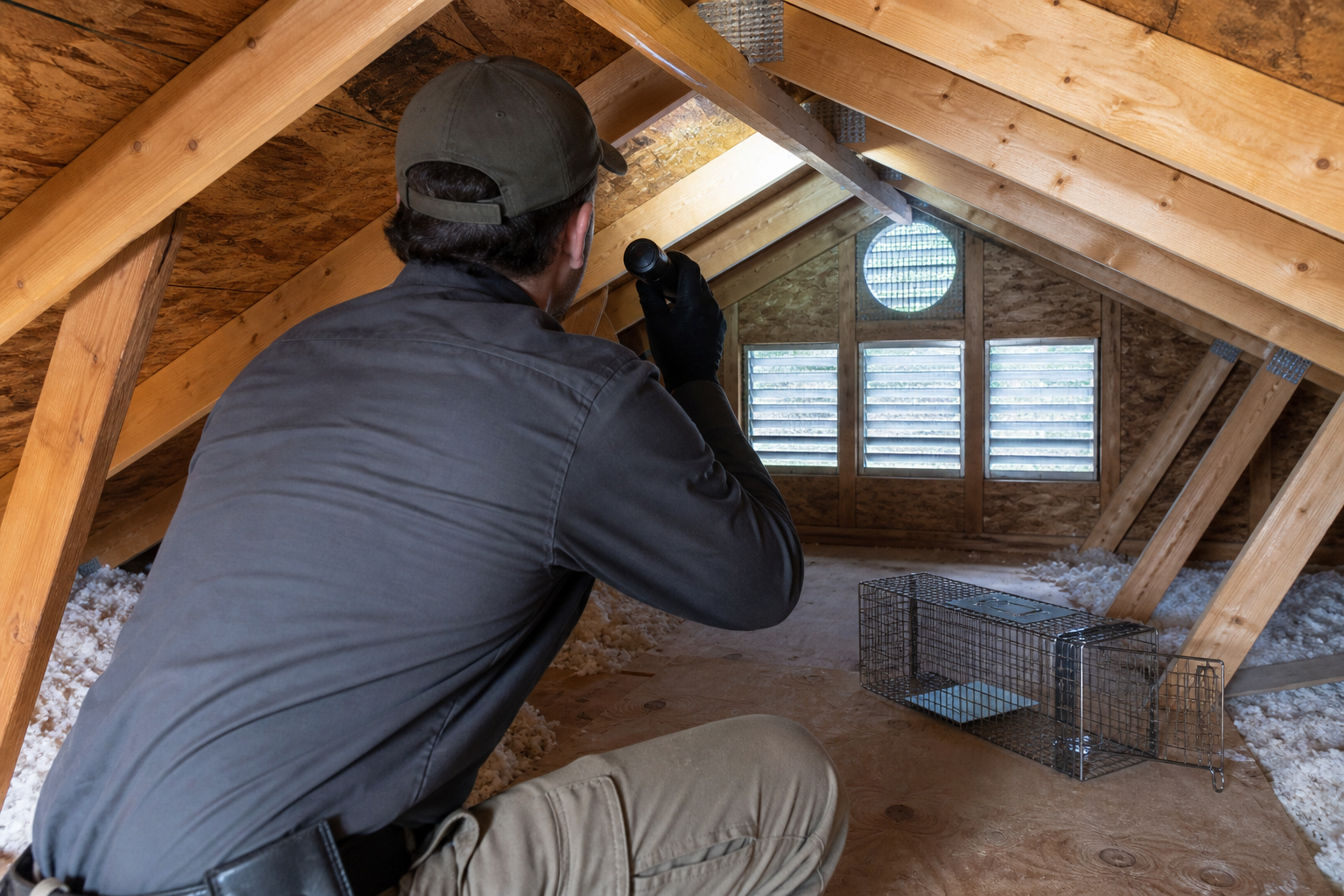
A single skunk sighting does not necessarily mean you have a den.
Skunks may travel through several properties while searching for food.
However, repeated signs near a specific structure can indicate that an animal is using the location regularly.
Repeated sightings near the same opening
If a skunk consistently emerges from beneath a deck or shed around dusk, it may be using that space as shelter.
Observe from a safe distance.
Do not approach the entrance to investigate.
A strong musky odor
Skunks have a distinctive odor, but smelling a skunk does not always mean it has sprayed or established a den.
The smell may come from an animal passing nearby.
Small holes in the yard
Skunks may leave shallow feeding holes while searching for insects.
Other animals can create similar disturbances, so digging alone is not conclusive.
Disturbed soil around a foundation
Loose soil or evidence of digging near an opening may indicate animal activity.
Noises beneath a deck or crawlspace
Rustling or movement beneath a structure can suggest wildlife presence.
An inspection helps identify the species before removal begins.
If you suspect a skunk has established a den, our animal removal services can help you arrange an assessment.
What Should You Do When You Find a Skunk Near Your Home?
The safest initial response is to avoid disturbing the animal.
Skunks generally prefer to avoid confrontation, but they may spray when frightened or cornered.
Keep children and pets away
Prevent pets from approaching the skunk or investigating its shelter.
Dogs are particularly likely to encounter skunks when exploring yards at night.
Give the skunk an escape route
Do not corner the animal or block its path.
If a skunk is moving through the yard, allow it to leave without interference.
Avoid loud or aggressive attempts to scare it away
Chasing, spraying water, or throwing objects can provoke defensive behavior.
Do not seal an occupied den
Closing an opening while a skunk is inside may trap it.
If young animals are present, exclusion can separate them from their mother.
Request professional help when activity continues
If the skunk repeatedly uses the same sheltered location, an inspection can help determine whether removal is appropriate.
Will a Skunk Spray When Trapped?
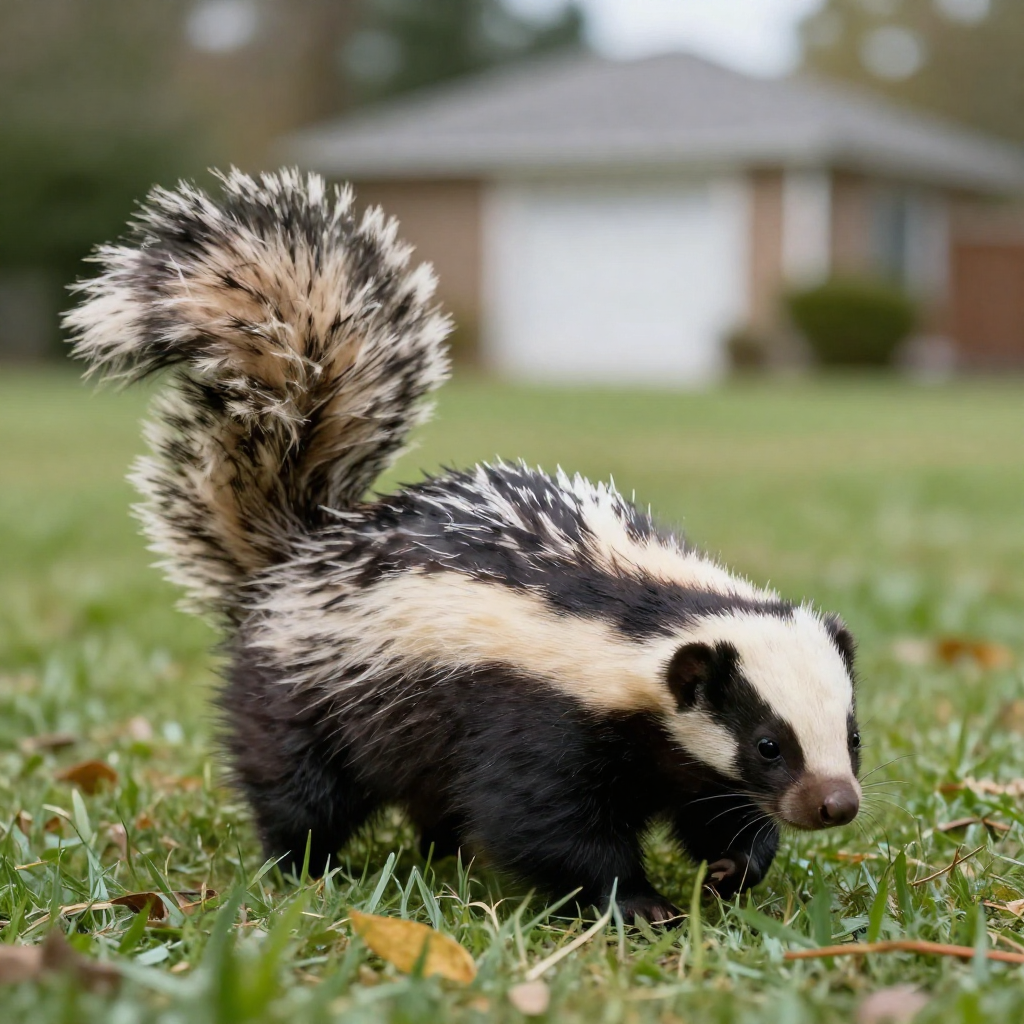
Skunks use their spray primarily as a defensive mechanism.
They may display warning behaviors when they feel threatened, including raising their tails, stamping their feet, or changing their posture.
However, warning behavior is not guaranteed.
A skunk confined in a trap may feel threatened by nearby people or animals.
This is one reason inexperienced homeowners should avoid approaching or handling trapped skunks.
What happens if a skunk sprays near the house?
Skunk spray can produce a strong odor that may linger on clothing, outdoor surfaces, and other materials.
It can also irritate the eyes and sensitive tissues.
If a person experiences significant eye irritation or other concerning symptoms after exposure, seek medical advice.
If a pet is sprayed and develops eye irritation, vomiting, or unusual behavior, contact a veterinarian.
Avoid using harsh chemicals or untested home remedies on animals.
Why DIY Skunk Trapping Can Be Risky
Homeowners sometimes purchase a cage trap after discovering skunk activity.
However, capturing a skunk is not the same as safely resolving the problem.
Risk of spraying
A trapped skunk may become frightened when approached.
The confined space can make the animal feel unable to escape.
Bites and scratches
Skunks are wild animals and may bite or scratch when handled.
Capturing the wrong animal
An improperly placed trap may capture a non-target animal, creating additional handling concerns.
Separating a mother from her young
Female skunks may use sheltered dens while raising their offspring.
Capturing an adult without checking the den can leave dependent young behind.
Wildlife trapping regulations
California has rules governing wildlife trapping and handling.
Homeowners should not assume that a captured skunk can be released at any location.
The California Department of Fish and Wildlife provides guidance on living with wildlife and responding to conflicts.
A professional assessment can help determine the appropriate response for the species and circumstances.
How Professional Skunk Trapping and Removal Works
A professional skunk removal plan should be based on the actual conditions of the property.
At All City Animal Trapping, we begin by understanding the reported activity and the location where the animal may be sheltering.
Step 1: Inspect the property
We review sightings, odors, digging, and other signs of wildlife activity.
We also evaluate accessible areas around decks, sheds, foundations, and crawlspaces.
Step 2: Identify the den or activity area
The inspection helps determine whether the skunk is simply visiting or using a specific location as shelter.
Step 3: Consider dependent young
When a skunk appears to be using an established den, the possibility of young animals must be considered before exclusion or trapping.
Step 4: Determine the appropriate removal method
The recommended approach depends on the animal, property conditions, and applicable regulations.
Trapping may be appropriate in some cases, while exclusion or another strategy may be preferable.
Step 5: Address entry points
Once the area has been confirmed clear, vulnerable openings may need protective barriers or repairs.
Step 6: Recommend prevention measures
We review conditions that may attract skunks, including accessible food sources and sheltered areas.
The aim is to reduce the likelihood of repeated activity.
Can Skunks Live Under Decks and Crawlspaces?
Yes. Skunks may use protected spaces beneath decks, porches, sheds, and raised foundations.
These locations can provide shade, shelter, and limited disturbance.
A homeowner may notice the problem after seeing an animal enter the same opening repeatedly.
Why these spaces are attractive
An open space beneath a deck can resemble a natural sheltered den.
If the area is quiet and accessible, a skunk may begin using it regularly.
Why sealing the opening too early is dangerous
An adult may be away searching for food while young remain inside.
Closing the opening without confirming that the den is empty can trap animals.
How exclusion helps
Appropriate exclusion barriers can protect vulnerable openings after the space has been cleared.
The installation should account for soil conditions, drainage, ventilation, and the structure’s design.
Are Skunks Dangerous to People and Pets?
Skunks usually avoid people, but they can defend themselves when threatened.
Their spray can cause significant discomfort, and bites or scratches may create additional health concerns.
Skunks are also among the wildlife species associated with rabies in the United States.
That does not mean every skunk carries rabies.
However, direct contact with an unfamiliar wild animal should be avoided.
The Centers for Disease Control and Prevention’s rabies information explains the importance of avoiding wildlife exposure and seeking appropriate care after a possible rabies exposure.
If someone is bitten or scratched by a skunk, wash the wound and seek medical advice promptly.
If a pet has direct contact with a skunk, consult a veterinarian.
Do not approach an animal that appears disoriented, unusually aggressive, or unable to move normally.
How to Prevent Skunks From Returning
Removing a skunk does not automatically prevent another animal from using the same shelter.
Long-term prevention focuses on access points and attractants.
Secure trash containers
Keep garbage containers closed and avoid leaving food waste accessible overnight.
Bring pet food indoors
Remove leftover pet food after feeding.
Maintain the yard
Trim dense vegetation where appropriate and monitor areas where animals may shelter.
Collect fallen fruit
Remove fruit that has accumulated beneath trees.
Protect vulnerable openings
After confirming that the space is empty, consider appropriate barriers around decks, sheds, and crawlspaces.
Monitor for new digging
Fresh soil disturbance near protected openings may indicate renewed wildlife activity.
If animals are entering enclosed building spaces, our animal-in-attic removal services can help investigate additional access concerns.
How Much Does Professional Skunk Removal Cost?
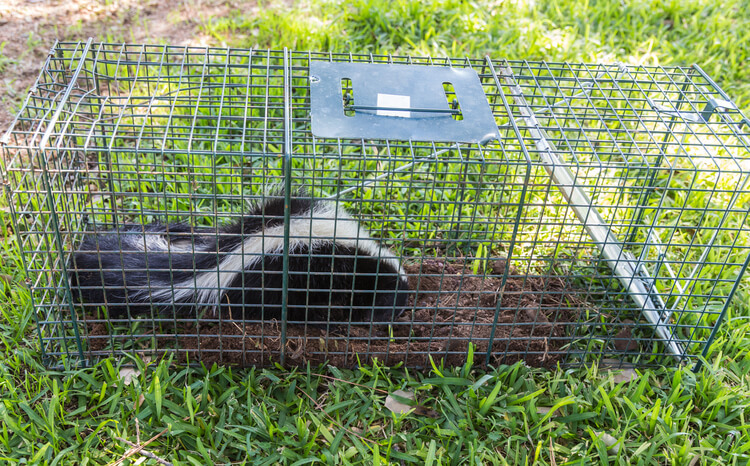
Skunk removal costs vary depending on the property and the situation.
A skunk passing through a yard may require only prevention advice, while an established den beneath a difficult-to-access structure may involve more extensive work.
Factors affecting the scope include:
-
The location and accessibility of the animal.
-
Whether a den is established.
-
The possibility of dependent young.
-
The removal method required.
-
The number of vulnerable openings.
-
Whether exclusion barriers or repairs are necessary.
-
Any related contamination or damage.
An inspection helps determine the work needed before a service plan is recommended.
When Should You Call a Professional Skunk Trapper?
Professional help is appropriate when a skunk repeatedly enters beneath your deck, uses a crawlspace as shelter, or creates ongoing encounters with pets.
You should also seek assistance when you suspect young animals are present or when the shelter is difficult to access.
A single skunk crossing your yard may not require removal.
However, recurring den activity deserves attention, especially when the opening is close to a frequently used outdoor area.
At All City Animal Trapping, we help Southern California property owners assess skunk activity and determine appropriate removal and prevention measures.
Key Takeaways
-
Skunks are often attracted by food sources and sheltered spaces around homes.
-
A single sighting does not necessarily mean a skunk has established a den.
-
Never corner a skunk or attempt to frighten it out of an enclosed space.
-
DIY trapping can create spraying, bite, and animal welfare risks.
-
Dependent young must be considered before trapping or exclusion.
-
Long-term prevention involves securing food sources and protecting vulnerable openings.
Frequently Asked Questions About Skunk Trapping
What does a professional skunk trapper do?
A professional skunk trapper identifies skunk activity, evaluates den locations, determines appropriate removal methods, and recommends exclusion and prevention measures.
Can I trap a skunk myself?
DIY trapping can create safety and legal concerns. A trapped skunk may spray or bite, and California wildlife rules may apply.
Will a skunk spray if it is trapped?
A skunk may spray when frightened or cornered. Trapping can increase defensive behavior if the animal feels threatened.
How do I know if a skunk is living under my deck?
Repeated sightings near the same opening, digging, odors, and movement beneath the structure may indicate a den. An inspection is needed to confirm occupancy.
Will skunks leave on their own?
Some skunks may use a shelter temporarily and move on. Others may establish a den, particularly when raising young.
What attracts skunks to my property?
Common attractants include insects, outdoor pet food, fallen fruit, accessible garbage, and sheltered openings beneath structures.
How do I keep skunks from returning?
Secure food sources, maintain the yard, monitor for digging, and install appropriate exclusion barriers after the space has been confirmed empty.
Conclusion: Get Professional Skunk Trapping Help in Southern California
Finding a skunk beneath your home or repeatedly visiting your yard can be stressful, especially when children and pets use the outdoor space.
The safest solution begins with understanding why the animal is there and whether removal is necessary.
At All City Animal Trapping, we help homeowners and property managers throughout Los Angeles, Orange County, Riverside, and surrounding Southern California communities investigate skunk activity and plan appropriate wildlife removal and prevention measures.
If you are dealing with a skunk beneath your deck, near your crawlspace, or around your property, contact All City Animal Trapping to request an inspection and discuss your options.