

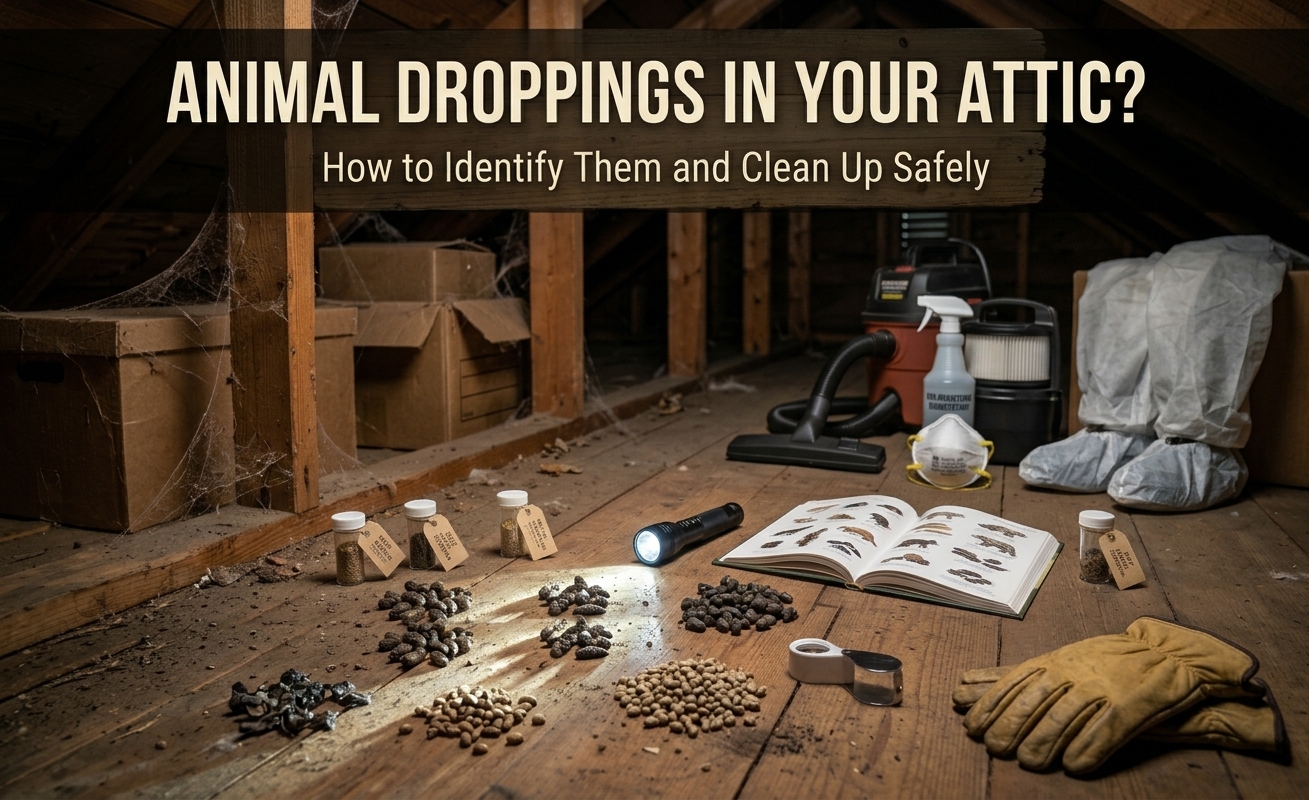
You open your attic access panel and notice dark pellets scattered across the insulation. Maybe there is a strange smell, disturbed nesting material, or evidence that something has been moving above the ceiling.
Your first question is likely: What animal left these droppings?
Your second question may be even more important: Is it safe to clean them up?
Finding animal waste in an attic can indicate current or previous wildlife activity. Rats, mice, raccoons, squirrels, bats, and other animals may leave droppings in roof spaces. However, identifying the animal from waste alone is not always reliable.
If you find animal droppings in your attic, avoid touching, sweeping, or vacuuming them before identifying the likely contamination and selecting appropriate cleanup precautions. Rodent waste can release contaminated particles when disturbed, while raccoon feces may contain roundworm eggs that require specialized handling.
At All City Animal Trapping, we help homeowners throughout Los Angeles, Orange County, Riverside, and surrounding Southern California communities investigate attic wildlife problems and assess cleanup and repair needs.
This guide explains how different types of animal droppings may appear, what health concerns to consider, and when professional attic cleaning may be appropriate.
Why Do Animals Leave Droppings in Attics?
Attics can provide shelter, nesting materials, and protection from weather.
Wildlife may enter through damaged roof vents, openings around eaves, loose soffits, or other vulnerable building components.
Once inside, animals may move through insulation, establish nesting areas, or use the space repeatedly.
Droppings can accumulate along travel routes and near sheltering areas.
The amount of waste depends on the species, number of animals, and duration of activity.
A small amount of droppings does not necessarily indicate a current infestation. The waste may remain after an animal has left.
However, fresh-looking waste, new noises, gnaw marks, or repeated sightings may suggest ongoing activity.
A property inspection can help distinguish historical contamination from an active wildlife problem.
How to Identify Animal Droppings in Your Attic
Animal droppings vary in size, shape, texture, and location.
These characteristics may provide clues, but they should not be treated as definitive identification.
Some species produce waste that looks similar, and droppings may change appearance as they dry.
General visual identification guide
| Possible animal | Common appearance | Additional clues |
|---|---|---|
| Mouse | Small, dark, rice-like pellets | Fine gnaw marks, nesting debris |
| Rat | Larger elongated pellets | Gnawing, rub marks, attic movement |
| Raccoon | Larger tubular or segmented droppings | Heavy movement, denning areas |
| Squirrel | Small elongated pellets that may resemble rat waste | Daytime movement, gnawed materials |
| Bat | Small dark pellets that may crumble into insect fragments | Roosting evidence, staining near openings |
| Bird | Waste often containing a white urate portion | Feathers, nesting material, bird activity |
These descriptions are general identification clues, not a substitute for professional assessment.
Do not pick up or break apart droppings to examine their contents.
1. Rat Droppings in the Attic
Rats are one possible source of attic contamination.
Roof rats are capable climbers and may enter through damaged roofline openings.
Their droppings are generally larger than mouse droppings, although size varies.
Common signs of rat activity
Possible indicators include:
-
Elongated dark droppings.
-
Scratching or running sounds.
-
Gnaw marks on stored materials.
-
Disturbed insulation.
-
Nesting debris.
-
Grease marks along travel routes.
Rats may contaminate insulation and storage areas while moving through the attic.
Are rat droppings dangerous?
Rodent waste can carry pathogens and may create health risks when disturbed improperly.
The CDC recommends specific precautions before cleaning areas contaminated by rodents.
Importantly, homeowners should not sweep or vacuum rodent droppings before appropriate disinfection because doing so can disperse contaminated particles.
For detailed guidance, review the CDC’s instructions for cleaning up after rodents.
If you suspect an active infestation, our rat removal services can help assess rodent activity and potential entry points.
2. Mouse Droppings in the Attic
Mouse droppings are typically smaller than rat droppings.
They may appear as dark, rice-like pellets near nesting areas, stored belongings, or travel routes.
Where mouse droppings may appear
Mice may leave waste around:
-
Attic insulation.
-
Stored cardboard boxes.
-
Wall openings.
-
Nesting materials.
-
Structural framing.
-
Accessible storage spaces.
Why identification can be difficult
Young rats and adult mice may produce droppings that are difficult for an untrained observer to distinguish.
Other evidence, such as gnaw marks and entry-point size, can help guide identification.
What should homeowners do?
Avoid handling the waste directly.
If droppings are widespread or accompanied by other signs of activity, an inspection can help determine whether rodents remain inside.
3. Raccoon Droppings in the Attic
Raccoons may enter attics through damaged vents, soffits, or other roofline openings.
They may use sheltered areas as dens, particularly when raising young.
Raccoon droppings are generally larger than rodent pellets and may be tubular or segmented.
However, appearance alone does not confirm the species.
Why raccoon feces require special caution
Raccoons can carry the roundworm Baylisascaris procyonis.
Its eggs may be shed in raccoon feces and can become infectious after a period in the environment.
Accidental ingestion of infective eggs can cause serious illness, although human infections are uncommon.
Raccoons may also repeatedly deposit waste in particular locations, creating concentrated contamination.
Should you clean raccoon droppings yourself?
Avoid disturbing suspected raccoon feces, particularly in enclosed attic spaces.
Specialized cleanup methods may be required because ordinary household cleaning techniques do not reliably eliminate roundworm eggs.
If you suspect raccoon contamination, seek appropriate professional guidance.
The CDC’s raccoon roundworm prevention guidance explains why exposure prevention is important.
Our raccoon removal services can help homeowners investigate possible raccoon activity.
4. Squirrel Droppings in the Attic
Squirrels may enter attics through damaged roof vents and openings around eaves.
Their droppings can resemble those of rats.
Signs that may suggest squirrels
Squirrels are generally more active during daylight hours.
Homeowners may notice running or scratching noises in the morning or afternoon.
Other signs may include:
-
Gnawed materials.
-
Disturbed insulation.
-
Nesting debris.
-
Activity near roofline openings.
Can squirrel droppings be identified by shape?
Dropping appearance can provide clues, but overlap between species makes visual identification uncertain.
A professional inspection should consider the entire pattern of activity.
5. Bat Droppings in the Attic
Bat droppings, commonly called guano, may accumulate beneath roosting areas.
They can resemble small rodent droppings.
One distinguishing characteristic is that bat guano may contain insect fragments.
However, homeowners should not crush or handle droppings to test this characteristic.
Why bat guano needs careful handling
Large accumulations of bat guano may create sanitation concerns.
Disturbing contaminated materials can also create airborne dust.
In some environments, fungal contamination associated with bird or bat droppings may pose a histoplasmosis risk.
Are bats protected?
Bat management may involve species-specific wildlife protections and timing considerations.
Exclusion should be planned carefully to avoid trapping animals inside.
Professional assessment is recommended when bats may be roosting in a building.
6. Bird Droppings in the Attic
Birds may enter through damaged vents, roof openings, or other accessible spaces.
Their droppings often contain a white urate component.
Other signs of bird activity
Homeowners may notice:
-
Feathers.
-
Nesting materials.
-
Chirping.
-
Fluttering.
-
Waste beneath roosting areas.
Why removal requires care
Some bird species and active nests are legally protected.
Removal and exclusion should account for the species and applicable regulations.
Avoid sealing occupied openings without confirming that animals and dependent young are no longer present.
Are Animal Droppings in the Attic Dangerous?
Animal waste can create health and sanitation concerns, but the level of risk varies.
Not every dropping contains a pathogen, and the presence of waste does not automatically mean someone has been exposed to disease.
The primary concerns include contamination, direct contact, and the possibility of disturbing infectious material.
Rodent-associated pathogens
Rodents can carry organisms capable of causing disease.
Improper cleaning may increase exposure risks.
Raccoon roundworm
Raccoon feces may contain roundworm eggs.
This is a particular concern when contaminated materials are handled without suitable precautions.
Airborne dust
Dry waste and contaminated nesting materials may release dust when disturbed.
Allergens and irritation
Animal waste and nesting debris may contribute to unpleasant indoor conditions and irritation.
Contaminated insulation
Insulation may absorb urine or become mixed with droppings and nesting materials.
The appropriate response depends on the type and extent of contamination.
Can Animal Droppings Affect Indoor Air Quality?
Attic contamination can potentially affect indoor conditions, particularly if contaminated dust or odors move into occupied spaces.
However, the presence of droppings in an attic does not automatically mean indoor air is unsafe.
The actual risk depends on several factors.
Amount of contamination
A few isolated droppings present a different situation from widespread accumulation.
Location
Waste near accessible storage areas or openings into living spaces may create different exposure concerns.
Building conditions
Air leakage between the attic and occupied rooms may influence whether odors or particles move through the building.
Disturbance
Cleaning, construction, or movement through contaminated materials can increase airborne dust.
An inspection can help determine whether contamination is localized or extensive.
Should You Vacuum Animal Droppings in the Attic?
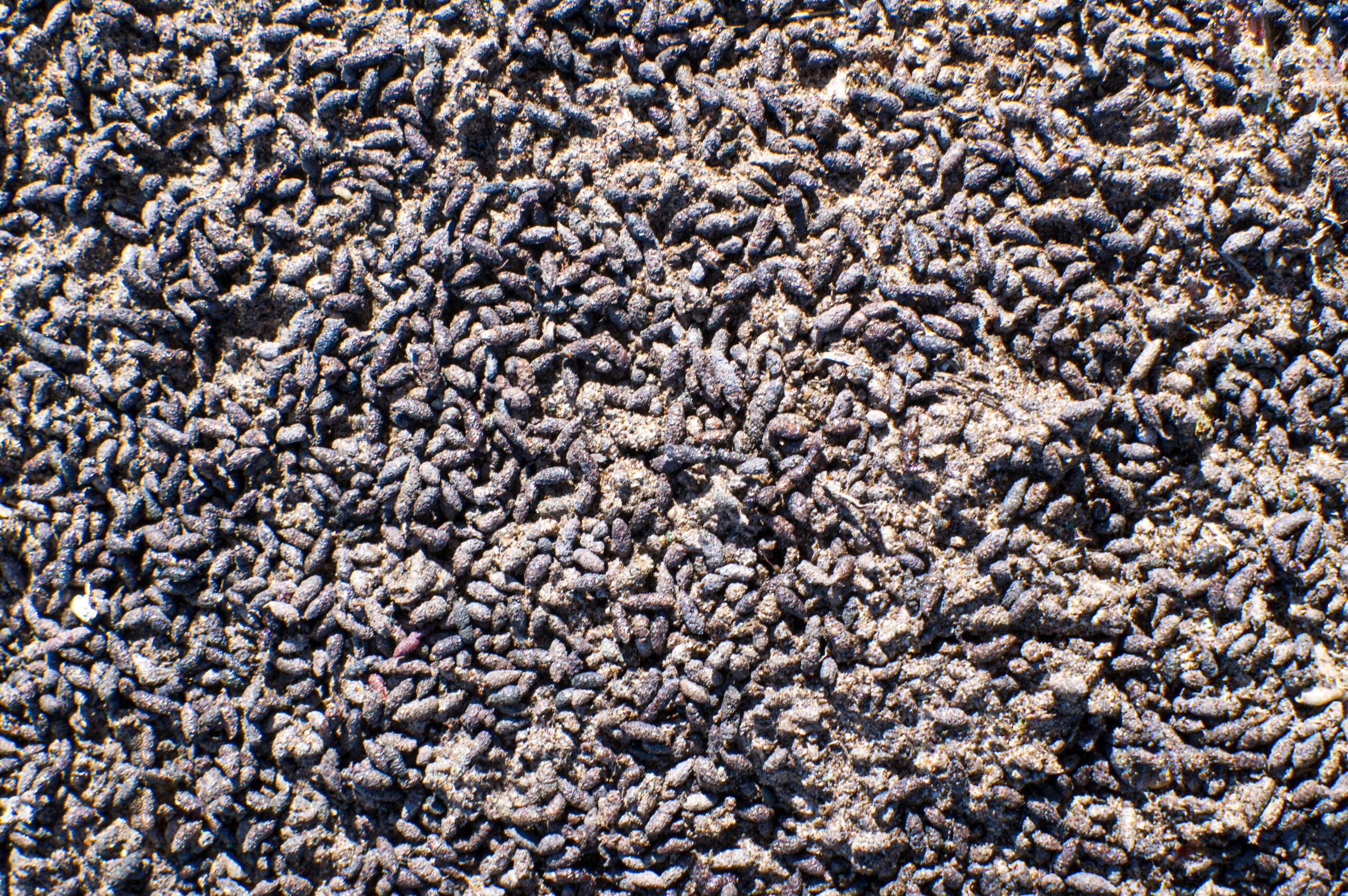
For suspected rodent droppings, do not use an ordinary household vacuum or sweep the waste while dry.
The CDC warns that these actions may disperse contaminated particles into the air.
For limited rodent contamination, CDC guidance includes ventilating the area where appropriate, using suitable protective equipment, wetting contaminated surfaces with an appropriate disinfectant, and following the recommended contact time before removal.
However, attic cleanup can be more complicated than cleaning a small accessible surface.
Insulation, difficult access, extensive contamination, and uncertainty about the animal species may require professional assessment.
Suspected raccoon latrines and large accumulations of bat or bird waste should not be treated as routine rodent cleanup.
Do not use a household vacuum as a substitute for specialized remediation.
When Does Attic Insulation Need to Be Replaced?
Not every wildlife intrusion requires complete insulation replacement.
The decision depends on the extent of contamination and damage.
Localized contamination
If waste is limited to a small accessible area, targeted cleaning or material removal may be appropriate.
Widespread droppings
Extensive contamination across attic insulation may require more substantial remediation.
Urine contamination
Insulation affected by urine may retain odors and contamination.
Nesting damage
Animals may tear, compress, or displace insulation while nesting.
Moisture concerns
Wet or deteriorated insulation may require separate evaluation.
The appropriate scope should be based on inspection findings rather than assuming every attic requires complete restoration.
Our attic cleaning and repair services can help homeowners evaluate wildlife-related attic contamination and damage.
How Professional Attic Wildlife Cleanup Works
A complete attic cleanup plan should consider both the contamination and the animal activity that caused it.
Step 1: Identify the likely animal
The type of waste and other evidence can help determine which wildlife species may have occupied the attic.
Step 2: Confirm whether activity is ongoing
Cleanup should be coordinated with appropriate wildlife removal or rodent control.
Otherwise, contamination may continue after the initial cleaning.
Step 3: Assess the affected materials
The inspection considers insulation, nesting debris, stored belongings, and accessible structural surfaces.
Step 4: Develop a contamination-specific plan
Different animal wastes may require different precautions.
Raccoon feces, rodent droppings, and bat guano should not automatically be handled using identical procedures.
Step 5: Remove or treat affected materials
The appropriate work depends on the contamination and the materials involved.
Step 6: Address vulnerable entry points
After animals are confirmed absent, openings can be repaired to reduce future intrusions.
Step 7: Monitor for renewed activity
Follow-up may be appropriate if scratching, droppings, or other signs continue.
Why Wildlife Removal Should Come Before Final Attic Restoration
Cleaning an attic while animals continue entering the space may lead to repeated contamination.
For example, a homeowner might replace damaged insulation without repairing the opening used by rats.
If rodents continue entering, the new insulation may become contaminated.
This is why removal, exclusion, and cleanup should be coordinated.
Animal removal
The immediate wildlife problem is addressed.
Entry-point assessment
Potential access routes are identified.
Exclusion
Vulnerable openings are protected once the space is confirmed clear.
Cleanup
Affected materials are cleaned, removed, or repaired as appropriate.
Monitoring
The property is observed for renewed signs of activity.
For more information about identifying wildlife above your ceiling, see our animal-in-attic removal services.
How Much Does Animal Dropping Cleanup Cost?
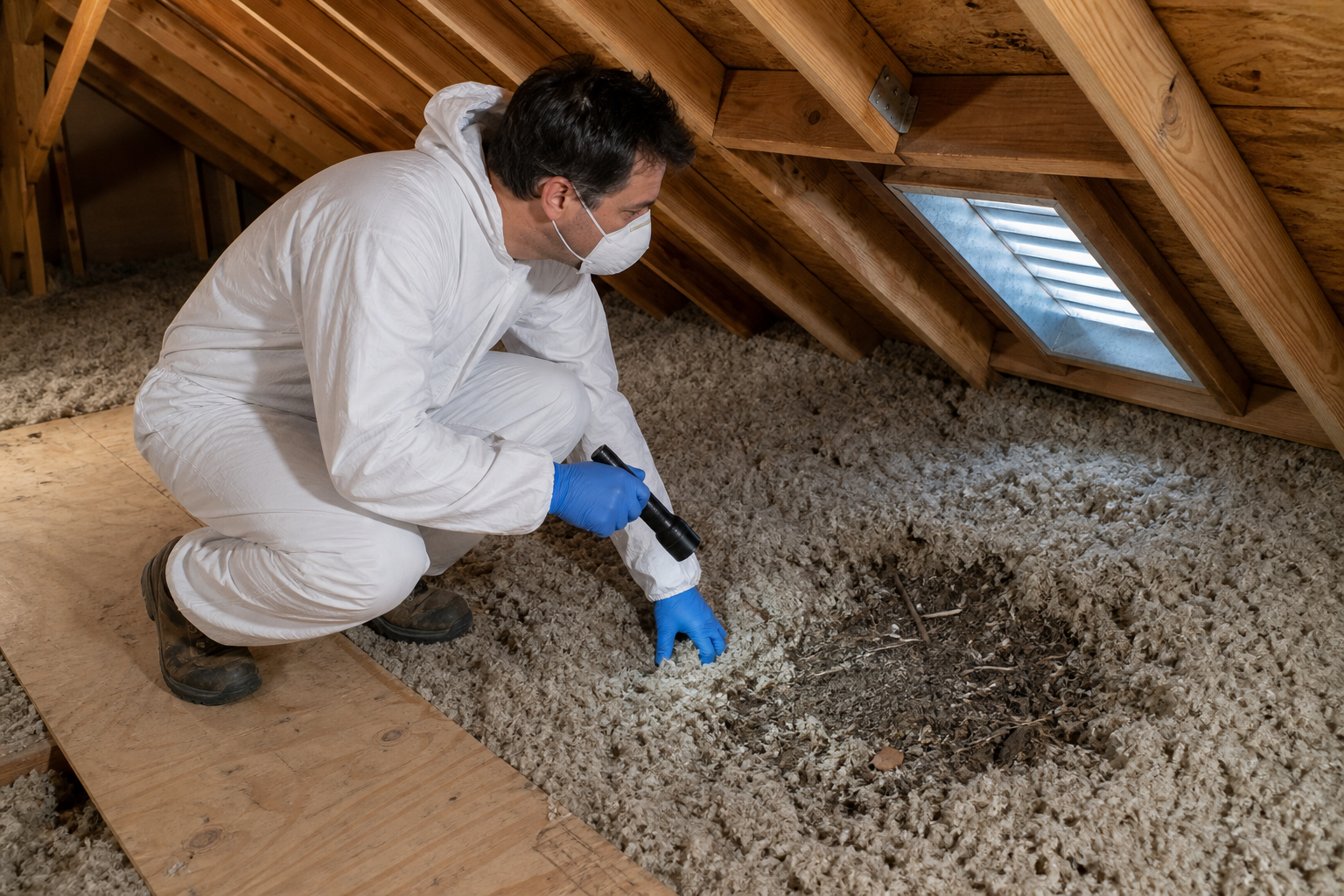
Cleanup costs vary depending on the property and the contamination.
A small amount of rodent waste on an accessible surface is different from extensive contamination throughout attic insulation.
Factors that may affect the scope include:
-
The animal species.
-
The amount of waste.
-
The size of the affected area.
-
Accessibility of the attic.
-
Insulation condition.
-
Whether nesting materials are present.
-
The cleanup precautions required.
-
Removal and exclusion needs.
-
Repairs or restoration.
A professional inspection can help determine whether targeted cleaning or more extensive work is appropriate.
When reviewing estimates, ask which materials will be cleaned, removed, or replaced and whether wildlife exclusion is included.
How to Prevent Animal Droppings From Returning
Preventing future contamination begins with reducing wildlife access.
Maintain roof vents
Repair damaged covers and vulnerable openings.
Inspect soffits and fascia
Address deterioration around roof edges.
Protect utility penetrations
Use suitable materials around accessible gaps.
Maintain landscaping
Reduce easy climbing access where practical.
Secure garbage and food
Keep trash containers closed and avoid leaving pet food outside overnight.
Monitor for attic noises
Repeated scratching or movement may indicate renewed wildlife activity.
Schedule inspections when needed
If droppings reappear after cleanup, additional assessment may be necessary.
The goal is not simply to remove visible waste, but to address the conditions that allowed animals to enter.
Animal Droppings in Southern California Attics
Attic wildlife contamination can occur throughout Southern California.
The specific risks depend on the animal and property conditions.
Los Angeles County
Homes with accessible roofline openings, mature landscaping, or older building materials may experience rodent and wildlife activity.
Orange County
Properties near landscaped areas, parks, and open spaces may encounter animals investigating attics and exterior openings.
Riverside County
Rodents and other wildlife may exploit vulnerable attic vents, utility openings, and roofline components.
San Bernardino County
Properties with accessible attics and damaged exterior materials may experience wildlife intrusions.
These examples describe possible conditions rather than confirmed infestation rates.
A property-specific inspection is the most useful way to identify the source of contamination.
Key Takeaways
-
Animal droppings in an attic may come from rats, mice, raccoons, squirrels, bats, or birds.
-
Dropping appearance provides clues but does not reliably confirm the species.
-
Rodent waste should not be swept or vacuumed while dry.
-
Raccoon feces can contain roundworm eggs that require special precautions.
-
Not every attic contamination problem requires complete insulation replacement.
-
Cleanup should be coordinated with wildlife removal and entry-point repairs.
-
Preventing reentry helps reduce the chance of repeated contamination.
Frequently Asked Questions About Animal Droppings in Attics
How can I tell what animal is pooping in my attic?
Dropping size, shape, location, and associated evidence may provide clues. However, waste from different species can look similar, so identification should consider other signs of activity.
Are animal droppings in the attic dangerous?
They can pose sanitation and health risks, particularly when contaminated materials are disturbed improperly. The risk depends on the species, amount of waste, and exposure conditions.
Can I vacuum rat droppings in my attic?
The CDC advises against sweeping or vacuuming rodent droppings while dry because contaminated particles may become airborne. Follow appropriate cleanup guidance or seek professional assistance.
How do I know if the droppings are from a raccoon?
Raccoon droppings are generally larger than rodent pellets and may be tubular or segmented. However, appearance alone is not reliable, and suspected raccoon waste requires special caution.
Do I need to replace all attic insulation after an animal infestation?
Not necessarily. The decision depends on the extent of contamination, urine exposure, nesting damage, and insulation condition.
Will animal droppings disappear on their own?
No. Droppings and contaminated nesting materials can remain after animals leave. Appropriate cleaning may be necessary.
How do I prevent animals from contaminating my attic again?
Identify and address entry points after the space is confirmed clear, reduce attractants, and monitor for renewed activity.
Conclusion: Identify the Animal and Address Attic Contamination Safely
Finding animal droppings in your attic can be unpleasant, but the most important step is determining what caused the contamination.
Different wildlife species present different cleanup considerations.
Rodent waste, raccoon feces, bat guano, and bird droppings should not automatically be treated in the same way.
At All City Animal Trapping, we help Southern California homeowners investigate wildlife activity, evaluate attic contamination, and develop appropriate removal, exclusion, and cleanup plans.
If you have discovered animal droppings, damaged insulation, or signs of wildlife activity above your ceiling, contact All City Animal Trapping to discuss your situation and request an inspection.