

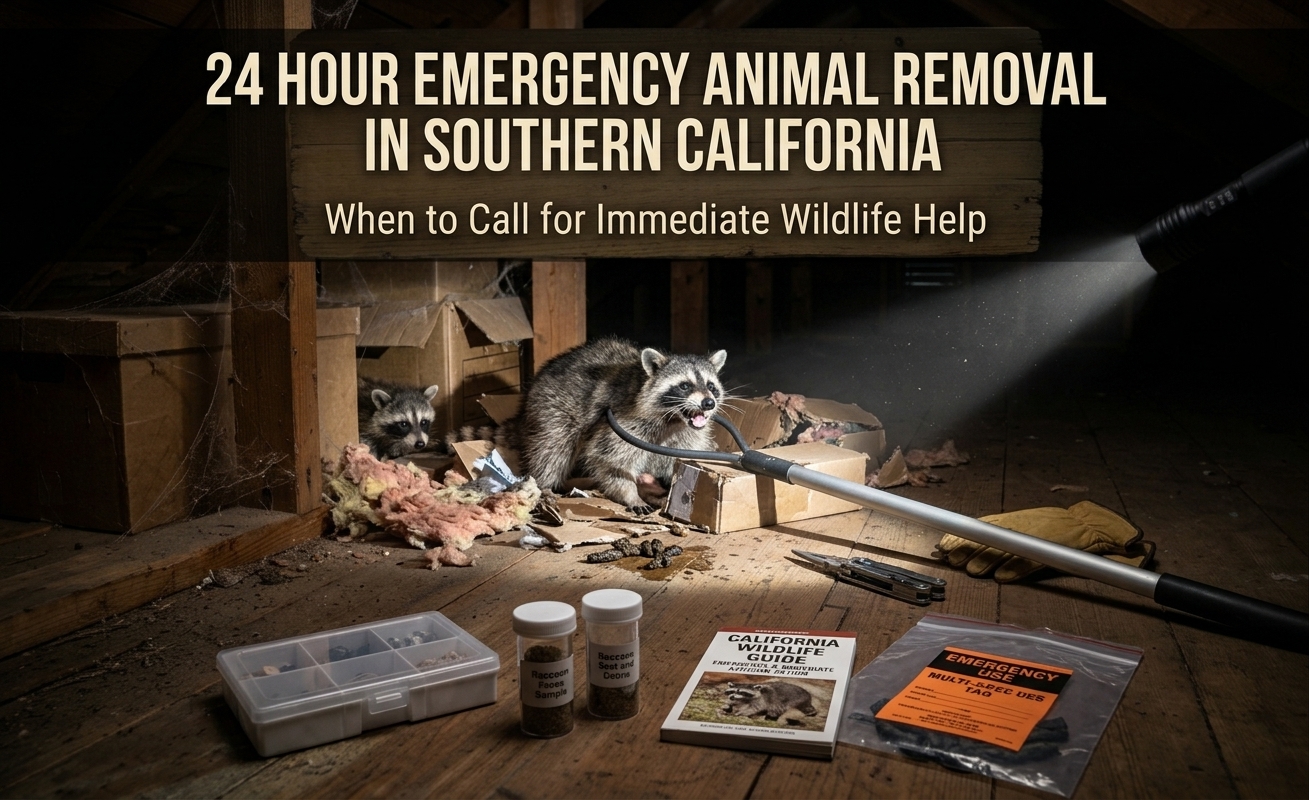
Hearing an animal moving inside your walls at midnight, discovering a raccoon in your garage, or finding a skunk beneath your porch can quickly turn an ordinary evening into a stressful situation.
Wildlife problems do not always happen during normal business hours. Animals may enter homes overnight, become trapped inside enclosed spaces, or create safety concerns when people and pets encounter them unexpectedly.
When this happens, knowing who to call and what to do while waiting for assistance can make a significant difference.
All City Animal Trapping provides 24-hour emergency animal removal services throughout Southern California. We help homeowners, landlords, and property managers respond to urgent wildlife problems involving unwanted animals in homes, attics, crawlspaces, garages, and other areas of a property.
Our emergency animal removal services focus on identifying the animal, assessing the immediate situation, selecting an appropriate removal method, and helping property owners understand how to prevent future intrusions.
If you need urgent wildlife assistance, contact All City Animal Trapping at (877) 724-5314.
What Is Emergency Animal Removal?
Emergency animal removal is a wildlife management service intended for situations that require prompt professional assessment or intervention.
Unlike a routine wildlife inspection, an emergency service request may involve an animal inside an occupied room, a potentially dangerous encounter, or an animal trapped somewhere it cannot safely escape.
Examples include:
-
A raccoon entering an occupied home.
-
A wild animal trapped inside a garage.
-
A skunk occupying a frequently used entrance.
-
Wildlife entering a bedroom or living area.
-
An animal trapped inside an accessible building space.
-
A suspected wildlife intrusion creating an immediate safety concern.
-
An urgent animal problem at a commercial property.
Not every wildlife sighting is an emergency.
An animal passing through a backyard may simply be moving through the area.
However, when wildlife enters an occupied building or creates a direct safety concern, professional assistance may be appropriate.
Why 24 Hour Animal Removal Services Matter
Wildlife activity often occurs outside ordinary working hours.
Some animals, including rats, raccoons, skunks, and opossums, are commonly active after dark.
As a result, homeowners may discover problems late at night or early in the morning.
Wildlife emergencies can happen overnight
An animal may enter through an open door, damaged vent, or vulnerable building opening.
If it becomes trapped, it may panic and attempt to escape.
Homeowners may not know which animal is responsible
Scratching noises, movement, and unusual sounds can be difficult to identify.
An incorrect assumption may lead to an unsafe response.
Pets may encounter wildlife
Dogs and cats may approach unfamiliar animals, increasing the possibility of bites, scratches, or defensive spraying.
Property damage can continue
Animals occupying attics or enclosed spaces may disturb insulation, gnaw materials, or damage vulnerable building components.
Waiting may not be appropriate in every situation
An animal inside an occupied room presents a different concern from an animal traveling through a yard.
A 24-hour wildlife removal provider gives property owners a professional contact when an urgent situation arises.
7 Situations That May Require Emergency Animal Removal
Understanding which situations need immediate attention can help homeowners respond appropriately.
1. A wild animal enters your living space
Finding a raccoon, opossum, or another wild animal inside an occupied room can be alarming.
Avoid approaching or attempting to capture it.
Move people and pets away from the area.
If possible, close an interior door to separate the animal from occupied spaces without approaching it or blocking a safe exit.
Contact a professional for assistance.
2. A raccoon becomes trapped inside your home
Raccoons can climb and may enter through vulnerable openings.
If a raccoon becomes trapped inside a room, garage, or other enclosed space, it may react defensively.
Do not attempt to corner it or force it into a trap.
Our raccoon removal services can help homeowners investigate raccoon problems and appropriate removal options.
3. An animal is trapped in a garage
Garages may attract wildlife because they provide shelter and access to stored materials.
An animal may enter through an open garage door and become confused or unable to find an exit.
Keep children and pets away.
Do not attempt to handle the animal directly.
4. A skunk is near a frequently used entrance
A skunk beneath a porch or near a doorway can create problems when people or pets must pass nearby.
Skunks generally avoid confrontation but may spray when frightened.
Do not corner the animal or block its route.
If the skunk is occupying a den, the possibility of dependent young must also be considered.
5. Wildlife enters an attic or crawlspace
Scratching, thumping, or movement sounds may indicate animal activity.
Not every attic noise requires emergency intervention.
However, a situation involving an animal entering an occupied space, becoming trapped, or creating an immediate hazard may warrant urgent assistance.
Our animal-in-attic removal services can help identify the animal and assess potential access points.
6. A bat is found inside an occupied room
A bat inside a home requires special caution.
Do not touch the bat with bare hands.
If someone may have had direct contact with the bat, or if a bat was discovered in a room where a person was sleeping, seek prompt advice from a healthcare professional or local public health authority about possible rabies exposure.
Do not release the bat before receiving appropriate public health guidance if exposure is suspected.
7. A wild animal behaves unusually
Wildlife that appears disoriented, paralyzed, unusually aggressive, or unable to move normally may require assistance from animal control or another appropriate authority.
Avoid direct contact.
Do not assume that unusual behavior confirms rabies, but treat the situation cautiously.
If a person has been bitten or scratched, seek prompt medical advice.
What Should You Do During a Wildlife Emergency?
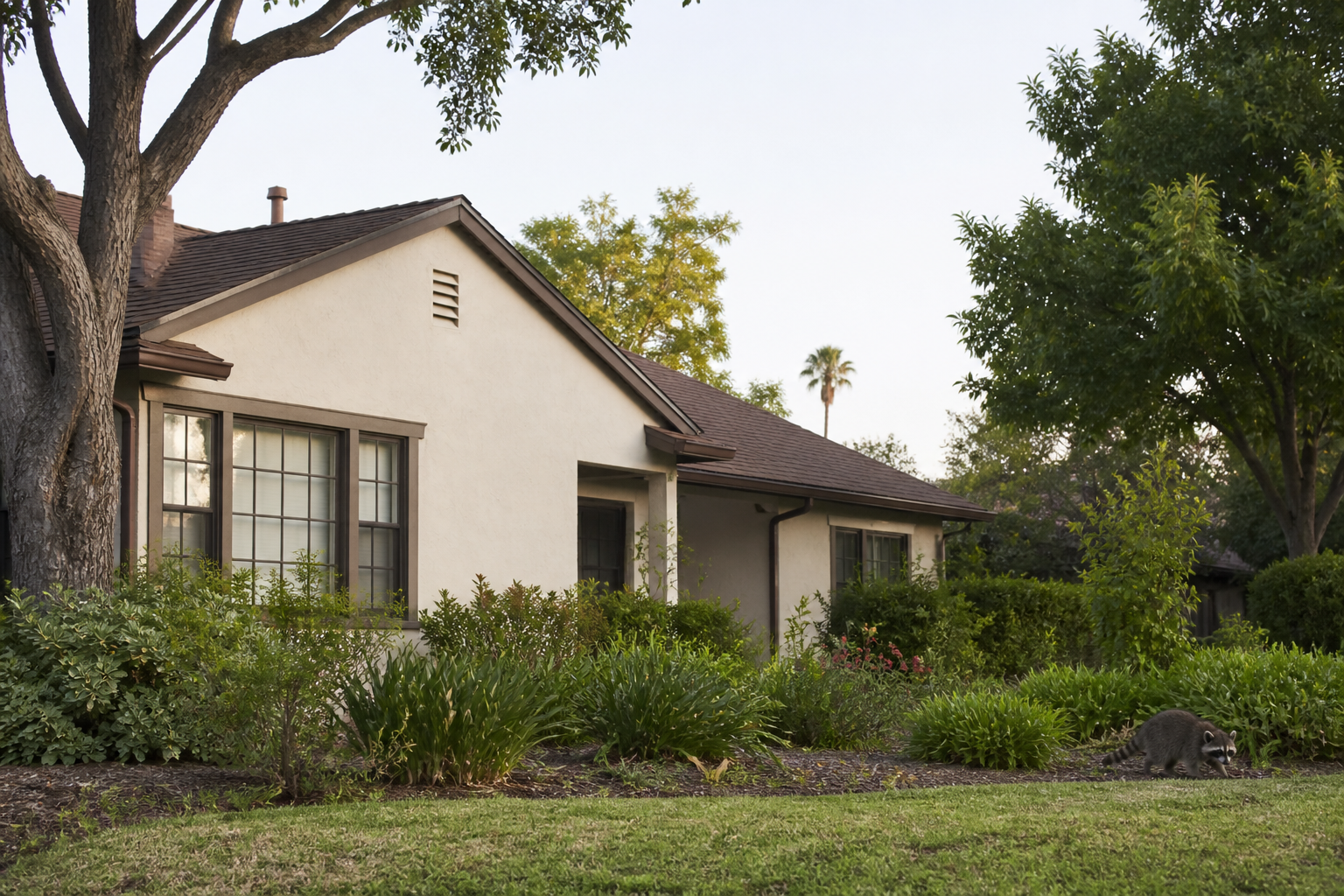
Your immediate priority should be protecting people and pets.
Avoid attempting to capture an unfamiliar wild animal yourself.
Step 1: Stay away from the animal
Do not approach, corner, chase, or attempt to touch wildlife.
Even animals that appear calm may react defensively.
Step 2: Move children and pets to a safe area
Keep pets indoors or in another secure location away from the animal.
Avoid allowing pets to investigate the situation.
Step 3: Separate the affected area when safe
If an animal is inside a room, closing an interior door may help prevent it from moving through the home.
Only do so if you can avoid approaching the animal.
Step 4: Avoid using improvised traps
Do not attempt to capture wildlife using blankets, ropes, household containers, or unsuitable traps.
These methods can create unnecessary risks.
Step 5: Do not seal occupied entry points
If wildlife is inside an attic, wall cavity, or crawlspace, sealing the opening prematurely may trap the animal.
Step 6: Contact a professional
Explain what animal you observed, where it is located, and whether anyone has been injured or exposed.
For urgent wildlife assistance, call All City Animal Trapping at (877) 724-5314.
Step 7: Follow appropriate emergency guidance
If someone is seriously injured or faces an immediate threat, contact emergency services.
For bites, scratches, or possible rabies exposure, seek prompt medical or public health guidance.
Emergency Raccoon Removal
Raccoons are capable climbers that may enter attics, garages, and other sheltered spaces.
They may also investigate accessible food sources around residential properties.
A raccoon inside an occupied room requires a different response from one traveling through a backyard.
Common emergency raccoon situations
These may include:
-
A raccoon trapped in a garage.
-
A raccoon entering an occupied home.
-
A raccoon unable to leave an enclosed space.
-
A direct encounter involving people or pets.
-
A raccoon creating an immediate safety concern.
Why DIY raccoon removal can be risky
Raccoons may bite or scratch when threatened.
If an attic or other shelter contains dependent young, removal must be planned carefully.
Professional assessment helps determine the appropriate response.
Emergency Rat Removal and Rodent Problems
Rats and mice may enter homes through vulnerable openings around roofs, foundations, doors, and utility penetrations.
They may create scratching noises, leave droppings, or damage stored materials.
However, a typical attic rodent infestation does not necessarily require an emergency visit.
Urgent assessment may be appropriate when rodents are entering occupied spaces or when suspected damage creates an immediate concern.
Signs of rodent activity
Common signs include:
-
Scratching or running sounds.
-
Droppings.
-
Gnaw marks.
-
Disturbed insulation.
-
Nesting materials.
-
Damaged stored belongings.
Why rodent exclusion matters
Removing rodents without addressing entry points may allow new animals to enter.
Our rat removal services can help homeowners investigate rodent activity and develop appropriate removal and prevention plans.
If you suspect electrical wiring damage, contact a qualified electrician.
Emergency Skunk Removal
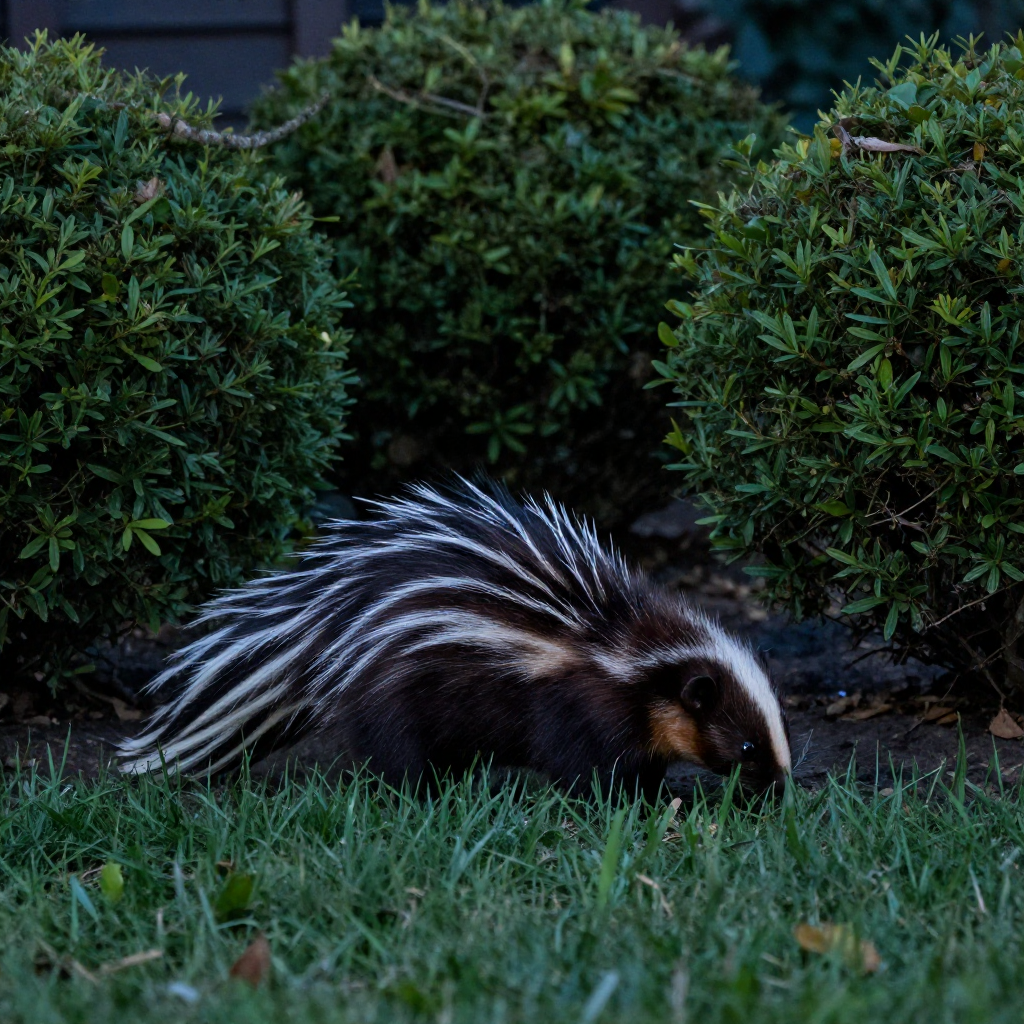
Skunks may shelter beneath decks, porches, sheds, and raised foundations.
They generally avoid confrontation but may spray when frightened.
When skunk activity may be urgent
Examples include a skunk trapped in an enclosed area, a direct encounter involving people or pets, or an animal occupying a location that creates an immediate access problem.
What not to do
Do not corner the skunk.
Do not attempt to grab it.
Do not block an occupied den opening.
Do not use smoke, flooding, or hazardous chemicals to force the animal out.
Why professional assessment matters
The appropriate removal method depends on the animal’s location, den occupancy, and applicable regulations.
Dependent young may also be present.
Emergency Opossum Removal
Opossums may enter garages, crawlspaces, sheds, and other sheltered areas.
They are generally not aggressive toward people, but they may defend themselves if cornered or handled.
An opossum passing through a yard may not require intervention.
However, an animal trapped inside a building or unable to leave an enclosed space may need professional assistance.
Avoid approaching the animal and keep pets away.
Emergency Wildlife Removal From Attics
Hearing scratching or heavy movement in the attic can be stressful, especially at night.
However, noises alone do not establish that an emergency exists.
The appropriate response depends on the animal and whether there is an immediate safety concern.
Possible signs of attic wildlife
These include:
-
Scratching noises.
-
Heavy footsteps.
-
Droppings.
-
Disturbed insulation.
-
Damaged roof vents.
-
Unusual odors.
Why identification comes first
Rats, raccoons, squirrels, and other animals require different approaches.
The removal plan should consider species behavior and whether dependent young are present.
Why sealing the attic immediately can cause problems
Closing an opening while animals remain inside may trap them.
Permanent exclusion should occur only after the affected space is confirmed clear.
How Our 24 Hour Emergency Animal Removal Service Works
At All City Animal Trapping, we focus on identifying the wildlife problem and determining an appropriate response.
Step 1: Contact our emergency animal removal service
Call (877) 724-5314 and explain the situation.
Provide the animal’s location, any visible behavior, and whether people or pets are at risk.
Step 2: Initial situation assessment
We review the information available to understand the immediate concern.
Step 3: Determine the appropriate response
The next steps depend on the species, location, accessibility, and circumstances.
Step 4: Property inspection
When an on-site assessment is appropriate, accessible areas can be evaluated for wildlife activity and possible entry points.
Step 5: Removal planning
The recommended method considers safety, animal welfare, and applicable wildlife regulations.
Step 6: Wildlife removal
Appropriate removal methods are selected based on the situation.
Step 7: Prevention recommendations
Once the immediate concern is resolved, vulnerable openings and other contributing conditions can be assessed.
Step 8: Cleanup and repair assessment
Wildlife-related contamination or damage may require additional work.
Our attic cleaning and repair services can help property owners evaluate affected attic materials.
Important: Our 24-hour emergency service availability does not mean every situation can be resolved immediately. Response timing and removal methods depend on the location, conditions, and animal involved.
Why Professional Emergency Wildlife Removal Is Important
Wildlife removal involves more than capturing an animal.
A professional response should consider safety, species identification, legal requirements, and the conditions that contributed to the intrusion.
Safety
Wild animals may bite, scratch, or react defensively.
Correct identification
Different species require different management methods.
California wildlife regulations
Wildlife trapping, handling, and relocation are subject to applicable regulations.
The California Department of Fish and Wildlife’s Living with Wildlife resources provide guidance on wildlife conflicts.
Dependent young
Some animals may occupy attics or crawlspaces while raising young.
Exclusion
Entry-point repairs may be necessary to reduce repeat intrusions.
Cleanup
Droppings, nesting debris, and damaged insulation may require attention.
A complete wildlife management plan considers both the immediate concern and longer-term prevention.
24 Hour Emergency Animal Removal in Southern California
All City Animal Trapping provides 24-hour emergency animal removal services for homeowners and property managers throughout our Southern California service areas.
Emergency Animal Removal in Los Angeles County
Wildlife may enter attics, garages, crawlspaces, and other building areas throughout Los Angeles County.
Our services help property owners investigate unwanted animal activity and appropriate removal options.
Emergency Animal Removal in Orange County
Residential neighborhoods, landscaped properties, and buildings near open spaces may experience wildlife encounters.
We help property owners address unwanted animals and potential access points.
Emergency Animal Removal in Riverside County
Wildlife may shelter beneath outdoor structures or enter vulnerable building openings.
Our emergency services help property owners respond to urgent animal problems.
Emergency Animal Removal in San Bernardino County
Properties may experience wildlife activity around garages, rooflines, crawlspaces, and outdoor structures.
We help assess the problem and determine appropriate next steps.
Service response and arrival times depend on the specific location and circumstances.
How to Prevent Future Wildlife Emergencies
Once an urgent animal problem has been addressed, prevention becomes important.
Inspect vulnerable openings
Look for damaged roof vents, soffits, fascia, and crawlspace access panels.
Maintain exterior building materials
Repair deterioration that may allow wildlife access.
Secure garbage containers
Keep food waste inaccessible where practical.
Remove outdoor pet food
Avoid leaving pet food available overnight.
Maintain landscaping
Trim vegetation where appropriate and monitor branches that provide access to rooflines.
Protect crawlspaces and outdoor structures
After confirming animals are absent, suitable exclusion repairs can reduce access.
Monitor for repeated activity
Scratching, droppings, or repeated sightings may indicate that further assessment is necessary.
Prevention cannot eliminate all wildlife encounters, but it can reduce opportunities for animals to enter buildings.
Key Takeaways
-
All City Animal Trapping provides 24-hour emergency animal removal services in Southern California.
-
Wildlife emergencies may involve animals trapped inside homes, garages, or other enclosed spaces.
-
Not every wildlife sighting requires immediate removal.
-
Avoid approaching, cornering, or handling unfamiliar wild animals.
-
Keep children and pets away from the affected area.
-
California wildlife regulations must be considered.
-
Exclusion and property maintenance can help reduce future wildlife problems.
Frequently Asked Questions About Emergency Animal Removal
Is All City Animal Trapping open 24 hours?
Yes. All City Animal Trapping provides 24-hour emergency animal removal services throughout its Southern California service areas. Call (877) 724-5314 for assistance.
Who do I call for emergency animal removal at night?
Contact a professional wildlife removal service that handles after-hours enquiries. All City Animal Trapping provides 24-hour emergency animal removal assistance in Southern California.
What should I do if a wild animal enters my house?
Keep your distance, move children and pets away, and avoid attempting to capture the animal. If safe, separate the affected room and contact a wildlife removal professional.
Is an animal scratching in the attic an emergency?
Not always. Attic noises may indicate wildlife activity, but the urgency depends on the circumstances. An animal entering occupied living spaces or creating an immediate safety concern may require prompt assistance.
Can I remove a raccoon from my house myself?
Attempting to handle a raccoon can create bite and scratch risks. Professional assessment is recommended, particularly when the animal is trapped or dependent young may be present.
Do emergency animal removal services include cleanup?
Cleanup and repairs may be separate services depending on the situation. The appropriate work depends on contamination, damage, and inspection findings.
How quickly can an emergency wildlife removal company arrive?
Arrival times depend on location, current service demand, access, and the nature of the situation. Contact the provider directly for an estimated response time.
Conclusion: 24 Hour Emergency Animal Removal When You Need Help
Wildlife problems can happen unexpectedly, including late at night, early in the morning, and outside normal business hours.
Whether an animal has entered your home, become trapped inside a garage, or created an urgent concern around your property, the priority is protecting people and pets while arranging an appropriate response.
At All City Animal Trapping, we provide 24-hour emergency animal removal services throughout Southern California.
We help homeowners, landlords, and property managers investigate wildlife problems, determine suitable removal methods, and identify ways to reduce future intrusions.
Need emergency wildlife removal?
Call (877) 724-5314 or contact All City Animal Trapping to request assistance.