


A skunk smell under your house usually shows up at the worst time: late at night, drifting up through the floor or in through a foundation vent. Sometimes it fades by morning. Sometimes it hangs around for days. Either way, you want to know two things fast: what is causing it, and what you should do (and not do) next.
Direct answer: A skunk smell under a house usually comes from one of three sources: a skunk denning in the crawlspace or under a deck, a skunk that sprayed nearby and the odor drifted in, or an animal that died under the floor. Find the source first, keep people and pets away, and never seal an opening until you know the space is empty.
At All City Animal Trapping, we help homeowners across Los Angeles, Orange, Riverside, and San Bernardino Counties figure out what is under the house, remove it humanely, and close the entry so it does not happen again. If the smell keeps coming back, our skunk trapping and removal service starts with a full inspection so you are not guessing.
In this guide:
- Why it smells like skunk under your house
- Skunk, dead animal, or gas: how to tell
- Signs of a skunk under the house
- What to do right now
- What not to do
- How professional removal and odor cleanup work
- FAQs
Why Does It Smell Like Skunk Under Your House?
Direct answer: Skunk odor under a house means skunk spray oil has landed on soil, wood, insulation, or an animal somewhere below or near your floor. The spray can come from a skunk living there, one passing through and startled by a pet, or a skunk that died under the structure. The pattern of the smell is your best clue.
Skunks look for dark, quiet, protected spaces close to food and water. According to UC Statewide IPM skunk guidance, skunks in urban areas often den under decks, porches, and buildings, and the striped skunk is the species most often found around California homes. A raised foundation with a loose vent screen, a gap under a deck skirt, or soft soil along a slab edge can be all the invitation a skunk needs.
Crawlspace air also tends to move up into the house. Warm air rising inside the home can pull air from below through gaps around pipes, wiring, and floor penetrations. That is why a skunk smell in a crawl space often feels strongest at floor level, or worse when the heater or air conditioning runs.
The four most common sources
- An active skunk den under the house, deck, porch, or an addition.
- A spray event nearby, often a dog or cat startling a skunk near a vent or foundation.
- A dead animal under the floor, which may or may not be a skunk.
- Residual spray soaked into soil or wood from an earlier incident, which can flare up on damp or humid days.
Skunk, Dead Animal, or Gas Leak: How Can You Tell?
Direct answer: Fresh skunk spray is sharp and musky and tends to come and go, often worst at dusk and overnight. A dead animal smells heavier and sweeter and builds steadily over several days. A sulfur or rotten-egg smell near a stove, water heater, furnace, or gas meter should be treated as a possible gas leak first.
| What you notice | What it may point to | Safer first step |
|---|---|---|
| Musky odor that comes and goes, strongest at night | A live skunk using the space or passing through | Keep pets inside at night and note where the smell is strongest |
| Steady odor that does not fade, plus fresh digging | An active den, possibly with young in spring or early summer | Do not block the opening; arrange an inspection |
| Sweet, rotting smell that gets worse for several days, flies at vents | A dead animal under the floor | Do not crawl in; request dead animal location and removal |
| Skunk smell that returns on humid days weeks later | Spray residue held in soil, wood, or insulation | Ask about source cleanup and deodorizing |
| Sulfur smell near gas appliances or the meter, or a hissing sound | Possible natural gas leak | Leave the area and call the gas utility or 911 from outside |
Gas utilities add a sulfur-based odorant to natural gas, and it can be confused with skunk. SoCalGas natural gas leak guidance says that if you smell gas or suspect a leak, you should immediately evacuate the area and call from a safe location. Do not flip light switches or use anything that could spark until you are sure it is not gas.
Odor alone is not proof of a skunk. Montana State University Extension notes that dogs, cats, or other animals sprayed by skunks sometimes move under houses and make owners think a skunk is living there. That is one reason we confirm the animal and the entry before recommending traps or repairs.
What Are the Signs of a Skunk Under the House?
Direct answer: The strongest signs of a skunk under the house are repeated odor near the same spot, a fresh hole or burrow along the foundation or deck, small cone-shaped holes in the lawn, nighttime rustling under the floor, and pets fixating on one vent or deck gap.
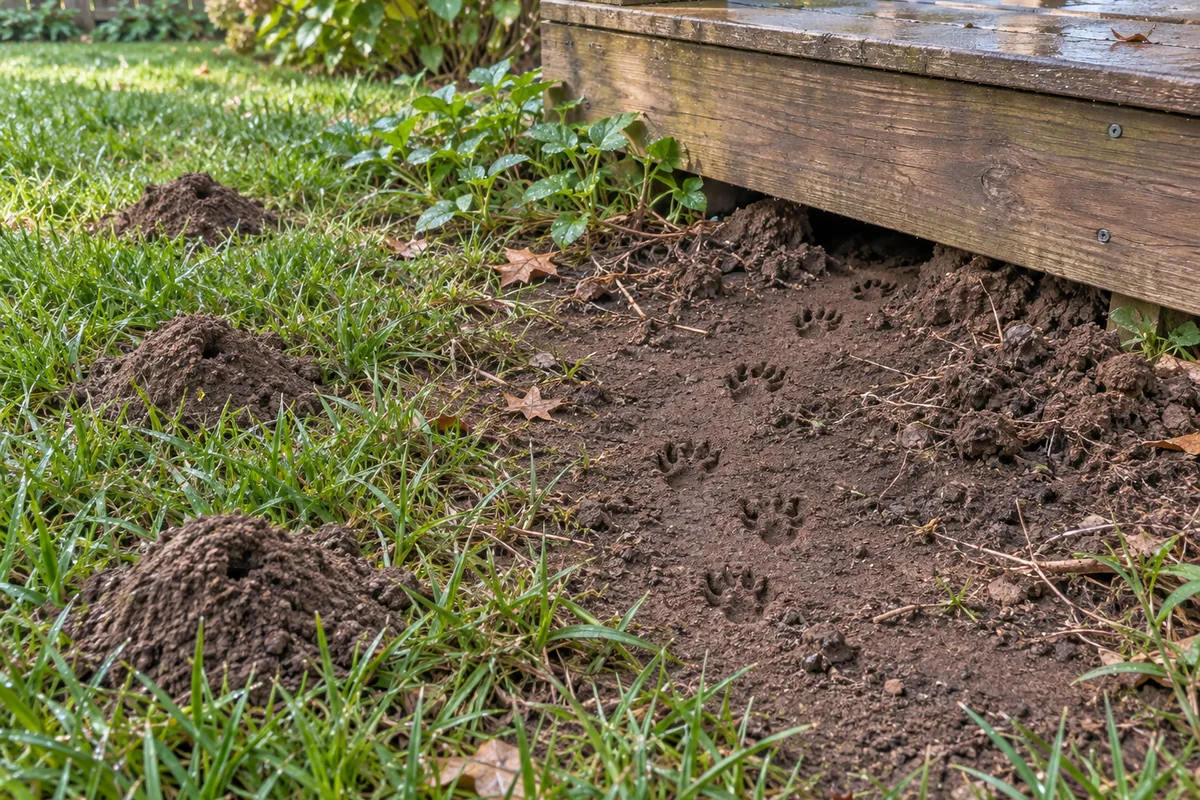
- Repeated odor at one location, especially near a crawlspace vent, access door, or deck edge.
- Fresh digging or a worn path leading under a deck, porch step, shed, or foundation.
- Cone-shaped holes in the lawn, about 3 to 5 inches across, from skunks digging for grubs (as described by UC IPM).
- Torn vent screens or loose lattice near ground level.
- Scratching or shuffling under the floor after dark.
- A dog or cat that gets sprayed or keeps barking at the same spot.
One sign by itself can be misleading. Opossums, raccoons, and feral cats use the same spaces. Several signs clustered at one structure is the pattern that justifies an inspection. If you are seeing two or more of these, request a skunk inspection before the den becomes established.
What Should You Do About Skunk Smell Under Your House Right Now?
Direct answer: Rule out gas first, then create distance. Keep children and pets away from the suspected opening, bring pet food in at night, observe only from a safe spot, and note when and where the smell is strongest. Leave the entry point open until a professional confirms the space is empty.
- Rule out a gas leak. If the smell is near a gas appliance or meter, leave and call your utility or 911 from outside.
- Protect people and pets. Keep dogs on a leash or indoors after dark, and keep kids away from vents and deck edges.
- Remove easy food. Bring pet food and water inside, use tight trash lids, and pick up fallen fruit.
- Track the pattern. Write down the time, the room, and the outdoor spot where the odor peaks. Safe photos of holes or damaged screens help.
- Ventilate living areas when outdoor air is fresh, and check or replace the HVAC filter if the smell circulates through vents.
- Call for an inspection if the odor repeats, builds, or comes with digging or sounds.
If anyone is bitten or scratched, treat it as a medical issue, not a nuisance. The CDC rabies prevention guidance lists skunks among common rabid animals in the United States and recommends washing a wound with soap and water for 15 minutes and contacting a healthcare or public health professional right away.
What Should You Not Do?
Direct answer: Do not crawl under the house, seal the opening, or pour chemicals into the crawlspace. Sealing too early can trap a skunk or its young inside, which often turns a temporary odor into a dead-animal problem. Strong chemicals in an enclosed space can also send fumes into your home.
- Do not seal the hole while a skunk or dependent kits may still be inside.
- Do not use mothballs, ammonia, or bleach under an occupied home. UC IPM warns that ammonia and other strong repellents should not be placed under occupied buildings because fumes can enter living space.
- Do not use smoke, fire, or poison. UC IPM notes there are no registered toxicants for poisoning skunks.
- Do not trap and relocate it yourself. California regulations prohibit relocating skunks without written permission from the California Department of Fish and Wildlife, according to UC IPM.
- Do not rely on air fresheners. They mask the smell for a few hours while the source keeps producing it.
How Do We Get Rid of a Skunk Smell Under a House?
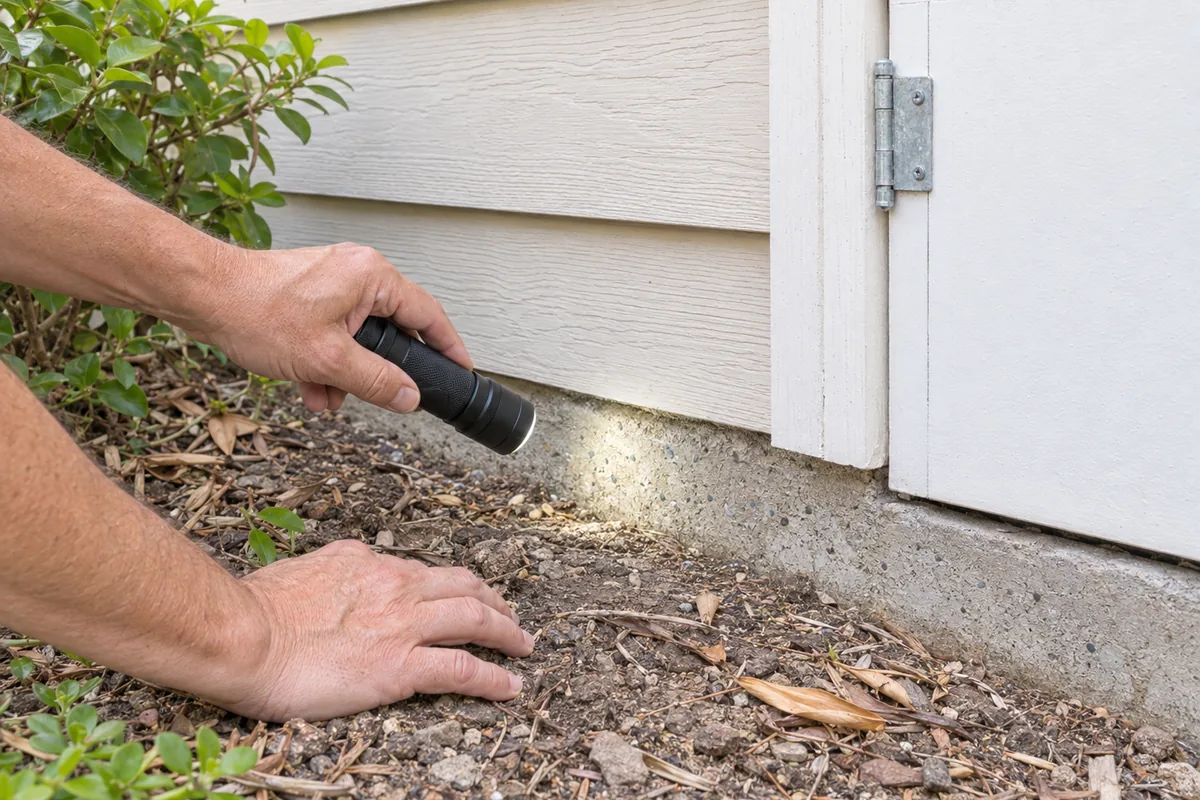
Direct answer: Lasting odor control follows a fixed order: inspect, confirm the animal and den, remove humanely, check for young, seal the entry only after the space is clear, then clean and deodorize the affected area. Skipping straight to deodorizing rarely works because the source keeps producing odor.
1. Inspection
We walk the foundation, vents, access doors, deck skirts, and porch steps to find where the skunk is getting in, how active it is, and what is drawing it to the property.
2. Custom plan and humane trapping
Every property is different. We plan trap placement around the den and travel route, use wildlife-compliant traps designed to reduce stress and spray risk, and check them frequently. Handling follows local regulations.
3. Repair and exclusion
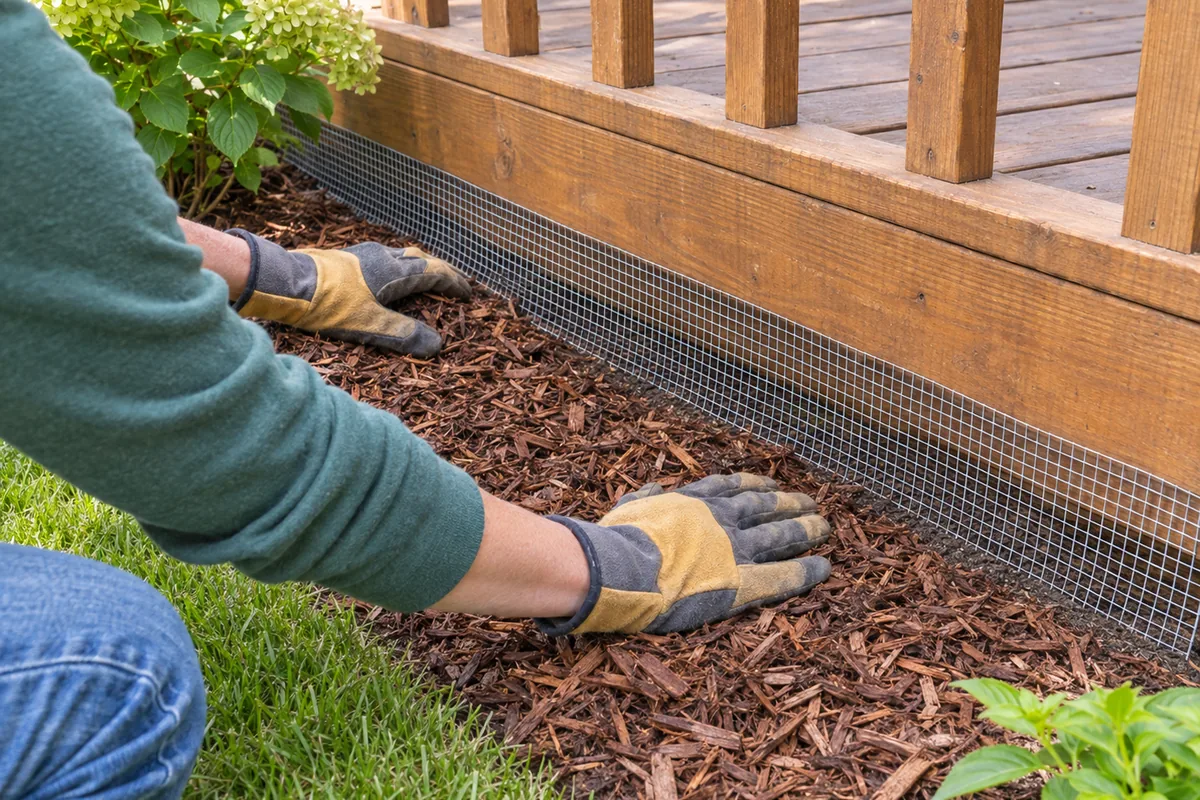
Once the space is confirmed clear, we seal vents, deck skirts, and foundation gaps with durable materials. UC IPM recommends 1/4-inch hardware cloth for openings under structures, buried at least 6 inches where there is soil, so skunks cannot dig back in.
4. Cleanup and deodorizing
We clean nesting debris, treat contaminated areas, and neutralize odors so the smell does not linger in the house or HVAC system. When a skunk has died under the floor, we locate and remove it before treating the area. You can read more on our Los Angeles skunk removal page, which covers dead skunk removal, cleanup, and odor removal.
5. Prevention and follow-up
We share practical steps for pet food, trash, and yard care, and follow up to make sure the repairs hold. Homeowners in Orange County can also see our Orange County skunk removal service.
How Long Does Skunk Smell Under a House Last?
Direct answer: A one-time spray near the house often fades over several days with fresh air. Odor from an active den keeps returning until the skunk is removed. Spray that soaked into soil, wood, or insulation can linger for weeks and flare on humid days until the affected material is cleaned or replaced.
That is why timing matters. The longer a skunk uses the space, the more spray, urine, and nesting debris build up below your floor. Getting the animal out and the entry closed early usually means a smaller cleanup.
Key Takeaways
- A skunk smell under the house usually means a den, a nearby spray, a dead animal, or old spray residue.
- Treat a sulfur smell near gas appliances as a possible gas leak first.
- Several signs at one spot, such as odor, digging, and nighttime noise, point to an active den.
- Never seal an opening until the space is confirmed empty, and skip mothballs, ammonia, and poisons.
- Lasting results come from removal, exclusion, and source cleanup together.
Conclusion: Find the Source Before You Fight the Smell
A skunk smell under your house is a signal, not just a nuisance. The odor tells you something below the floor needs attention, whether that is a live skunk, a dead animal, or spray soaked into the crawlspace. Rule out gas, keep everyone at a safe distance, and leave the opening alone until the space is confirmed clear. Then deal with the animal, the entry, and the contaminated material in that order.
Get Rid of the Skunk Smell for Good
If you keep smelling skunk under the floor, see fresh digging, or hear movement at night, contact All City Animal Trapping for a free consultation or call (877) 724-5314. Our office hours are 7:30 AM to 10:00 PM every day, and our licensed, insured team serves communities across Southern California. Tell us where the smell is strongest and what you have seen, and we will take it from there.
Frequently Asked Questions
How much does it cost to get rid of a skunk under a house?
Cost depends on access, the number of animals, whether young are present, and whether exclusion, cleanup, or deodorizing is needed. Our skunk removal page lists a typical range of $325 to $1,000 depending on difficulty, such as working under a house. We offer free consultations and detailed quotes, so you know the scope before work starts.
Is skunk smell under my house dangerous?
The odor itself is mainly an irritant, though spray can burn the eyes and cause nausea. The bigger risks are a bite or scratch, since skunks can carry rabies, and mistaking a gas leak for skunk. If the smell is near a gas appliance or meter, leave and call your gas utility or 911 from outside.
What happens during a skunk inspection?
A technician checks the foundation, vents, crawlspace access, deck skirts, and porch steps for entry points, den activity, and attractants. From there, we build a plan that may include humane trapping, sealing entries once the space is clear, and cleanup or deodorizing. You get clear next steps instead of guesswork about traps or repellents.
Do skunks commonly live under houses in Los Angeles?
Yes. Homes with raised foundations and crawlspaces, including many in the Valley and Hollywood areas, are common targets because skunks seek dark, secluded space to den. If you smell skunk under your Los Angeles home, keep pets inside at night and schedule an inspection before the den becomes established or young are born.
Will mothballs or ammonia drive a skunk out from under my house?
That is a common misconception. UC IPM reports that commercial skunk repellents are not very effective, and it warns that ammonia and other strong-smelling products should not be placed under occupied buildings because fumes can enter the home. These products also do not seal the entry, so another skunk can move right back in.
How do I get started if I smell skunk under my house?
Write down where and when the smell is strongest, keep pets away from the area, and leave any openings unsealed. Then contact All City Animal Trapping through our contact page or call (877) 724-5314 to request a free consultation. Sharing safe photos of holes or damaged vents helps us prepare for the visit.