

Orange Wildlife Control for Humane Removal, Cleanup, and Prevention
If wildlife is active in your attic, walls, crawlspace, yard, or under a structure, a complete plan should identify the animal, remove it humanely, address contamination when needed, and reduce the chance of repeat entry.
Call an Orange Wildlife Inspector: (877) 724-5314If you need Orange wildlife control, the real goal is not just getting one animal off the property. The safer long-term fix is identifying what is active, finding how it got in, removing it humanely, addressing contamination or odor when needed, and sealing the access points that made the problem possible in the first place.
All City Animal Trapping presents its service around humane trapping, inspection-led recommendations, cleanup support, and prevention-focused follow-up. For Orange homeowners, landlords, property managers, and businesses, that matters because a scratching sound in the attic, droppings in the insulation, or a skunk under a structure can quickly turn from an inconvenience into damage, odor, or repeat activity. For broader county coverage, see the Orange County animal trapping service page.
What should Orange wildlife control actually include?
Professional Orange wildlife control should connect inspection, humane removal, cleanup when needed, and exclusion work that helps reduce repeat entry. The practical sequence is inspect, remove, clean, and prevent.
| Service scope | What it solves | What may still remain |
|---|---|---|
| Inspection only | Identifies likely species, access points, nesting areas, odor zones, and visible damage. | Live animals, contamination, and open entry points still need follow-up work. |
| Removal only | Handles the immediate active animal issue in the area where traps or exclusion tools are placed. | Odor, droppings, damaged insulation, and the same vulnerability to future entry may remain. |
| Removal, cleanup, and exclusion | Addresses the active problem and the property conditions that allowed it to start. | The exact scope still depends on what the inspection finds. |
Start with a property-specific inspection
Connect noise, odor, droppings, or damage to the route the animal is using and the areas that may need cleanup afterward.
Use humane removal methods that fit the species
Rats, raccoons, skunks, birds, bats, and dead-animal situations require different approaches based on species and location.
Address what the animals left behind
Urine, droppings, nesting debris, damaged vents, disturbed insulation, and persistent odor can all become part of the service scope.
Seal the access points
Removal does not close a roof gap, repair a vent screen, or block an opening under a structure. Exclusion helps reduce repeat entry.
For related services, review ACAT's animal removal service overview, attic cleaning and insulation replacement service, and animal in attic removal page.
Wildlife Active in Your Orange Property?
An inspection can help determine what is active, where it is getting in, and whether cleanup or exclusion should be part of the plan.
Call an Orange Wildlife Inspector: (877) 724-5314What wildlife problems are common in Orange properties?
In Orange, wildlife control often involves rats or mice in attics and walls, raccoons or opossums around rooflines and crawlspaces, skunks under decks or sheds, birds or bats near vents, and dead-animal odor after activity inside the structure.
- Rats and mice: Common signs include nighttime scratching, droppings, gnaw marks, insulation disturbance, and odor.
- Raccoons and opossums: These calls often involve attic access, torn soffits, roofline damage, heavy movement overhead, or contamination in denning areas.
- Skunks: Skunks commonly create problems under porches, decks, steps, and sheds where odor and digging are the main complaints.
- Birds and bats: Vents, eaves, and roof gaps can create recurring access points that need species-specific removal and exclusion planning.
- Dead animal odor: Sometimes the most urgent issue is the smell, sanitation concerns, and hidden contamination left behind.
For related local services, see ACAT's Orange County raccoon removal page and Orange County dead animal removal page.
What signs mean it is time to schedule wildlife control?
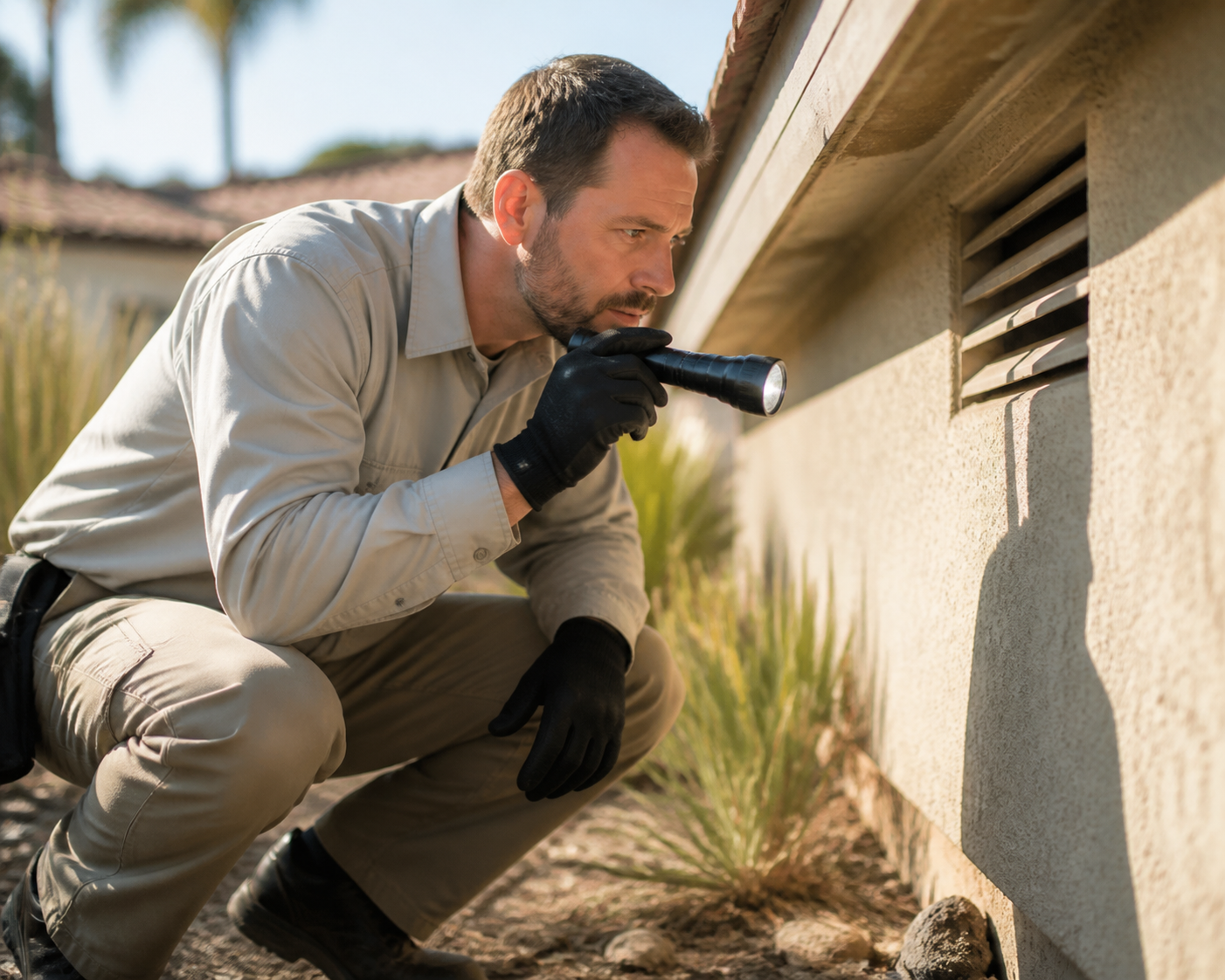
Repeated noise, fresh droppings, visible entry damage, strong odor, or seeing the same animal return to the same area are all signs the issue is active enough to justify an inspection. Waiting usually increases cleanup needs and makes exclusion more important later.
Noise and movement
Scratching, running, thumping, or fluttering in the attic, walls, ceiling, roofline, or crawlspace can point to active use of the structure.
Droppings and damage
Droppings, grease marks, gnaw marks, shredded nesting material, torn vent screens, lifted roof edges, chewed openings, or burrowed soil can reveal an active problem.
Odor and repeat activity
Strong musty, musky, or dead-animal odor, pets fixating on one area, or repeat sightings around trash areas, gardens, roofs, decks, and sheds can justify closer inspection.
If the issue involves rodents, the CDC identifies droppings and gnaw marks as signs of rodent presence and notes that rodent problems are easier to control before they become established.
Why do cleanup and exclusion matter after removal?
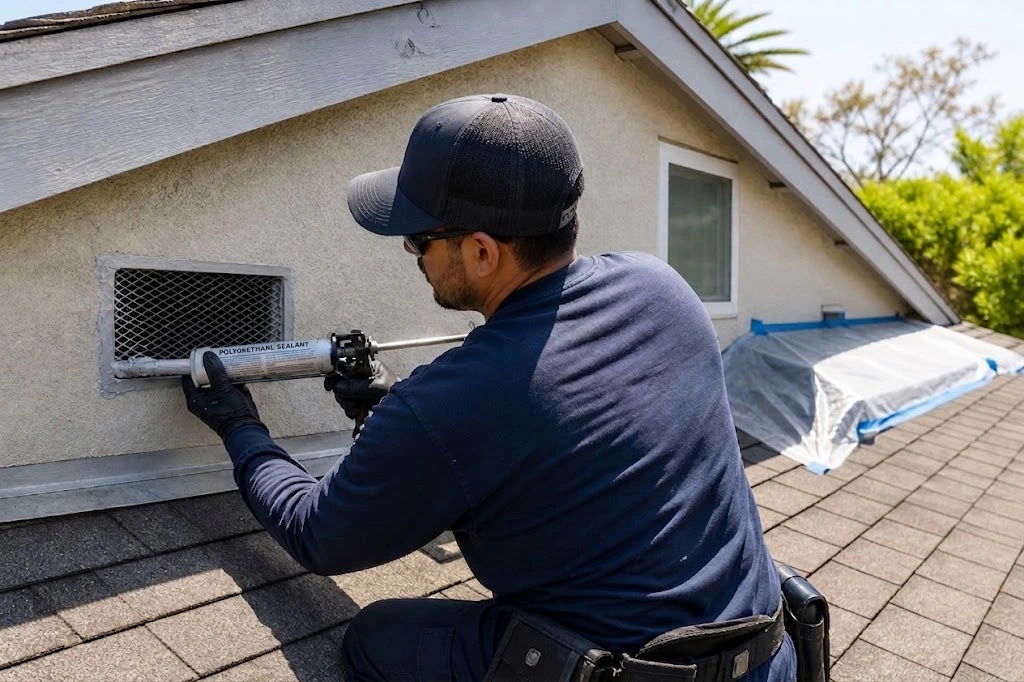
The same property conditions that allowed the first animal in often remain after active removal is done. If vents, eaves, crawlspace openings, roof gaps, or under-structure voids stay vulnerable, another animal can follow the same route.
Cleanup matters for a separate reason. Droppings, urine, nesting debris, and carcass-related contamination can continue causing odor and sanitation concerns even after the wildlife is gone.
Guidance from Humane World for Animals recommends asking for an inspection, a written estimate, identification of entry points, and a plan that helps prevent the problem from recurring. The California Department of Fish and Wildlife Human-Wildlife Conflicts Toolkit also emphasizes how food, water, and shelter around developed properties can contribute to wildlife conflicts.
Need Wildlife Entry Points Sealed?
Removing the active animal is only part of the job when vents, roof gaps, crawlspace openings, or other access points remain vulnerable.
Call a Wildlife Proofing Inspector: (877) 724-5314What affects the cost of wildlife control in Orange?
Wildlife control cost in Orange depends on the species involved, the number of active areas, access difficulty, the amount of cleanup or odor work needed, and how much exclusion or repair is required afterward.
| Cost factor | Why it changes the scope | Possible impact |
|---|---|---|
| Species and behavior | Rodents, raccoons, skunks, birds, bats, and dead-animal calls require different tools and handling. | Different service steps, timelines, and follow-up needs. |
| Access difficulty | Steep rooflines, tight crawlspaces, wall voids, attic corners, and deck voids are harder to inspect and reach. | More labor, more setup time, and greater repair complexity. |
| Activity level | More than one access point or more than one active zone expands the work. | Longer removal process and wider inspection scope. |
| Cleanup and odor | Droppings, nesting debris, carcass removal, and contaminated insulation add restoration steps. | Additional sanitation, deodorizing, and possible insulation work. |
| Exclusion and repair | The number and location of openings determine how much sealing or reinforcement is needed. | Additional materials and prevention labor. |
If you are comparing quotes, look past the starting number and ask what the inspection covers, whether cleanup is separate from removal, whether entry points are documented, and how prevention is handled once the animals are gone.
How should Orange residents compare wildlife control options?
The strongest service options are the ones that explain the full process clearly: what animal is active, where it is getting in, what must be cleaned, what should be sealed, and what the next step is after the inspection.
People searching for Orange wildlife control are usually trying to decide who to call, what kind of problem they are dealing with, and whether the company can solve more than the immediate noise or odor. Clear inspection findings and a property-specific scope make those decisions easier.
For ACAT, useful supporting pages include the Orange County service page, animal removal overview, animal in attic page, and attic cleaning and insulation replacement page.
Key Takeaways
- Effective Orange wildlife control should connect inspection, humane removal, cleanup when needed, and exclusion work.
- Common local issues include rats or mice in attics and walls, raccoons or opossums around rooflines, skunks under structures, and dead-animal odor after wildlife activity.
- Waiting can expand the job from simple removal into cleanup, deodorizing, insulation work, or structural repair.
- Cost depends on species, access, contamination, activity level, and how much sealing or repair the property needs.
- Removal alone may not stop repeat problems if the original entry points stay open.
Frequently asked questions about Orange wildlife control
What animals does wildlife control in Orange usually cover?
It commonly covers rats and mice, raccoons, skunks, opossums, birds, bats, dead-animal odor issues, and other nuisance wildlife affecting attics, walls, crawlspaces, roofs, yards, and similar access areas. The exact service plan depends on what species is active, where it is located, and whether cleanup or repair work is needed after removal.
Do I need wildlife control or city animal services?
If the issue involves wildlife inside the structure, attic noise, rodent droppings, dead-animal odor, burrowing under the house, or repeat property damage, private wildlife control is usually the more relevant service path. Domestic-pet, shelter, or public-agency issues are a different category.
Can animals come back after removal?
Yes, especially if the entry point remains open. A trap can solve the current activity, but it does not automatically close a vent gap, roofline defect, utility penetration, or opening under a deck or shed. Inspection findings and exclusion recommendations should be part of the scope when preventing repeat entry is the priority.
Does wildlife control include attic cleanup too?
It can, depending on the conditions found during the inspection. If droppings, urine, nesting debris, or damaged insulation are part of the problem, cleanup and restoration may matter almost as much as the removal itself. ACAT also presents attic cleaning, sanitizing, and insulation replacement as support services when contamination is part of the job.
What should I do before the inspection?
Document what you have noticed without putting yourself at risk. Note where you hear sounds, see droppings, smell odor, or find visible damage. Take photos from a safe distance if you can. Avoid disturbing contaminated material, climbing into unsafe attic or roof areas, or sealing an opening before you know whether an animal is still inside.
Can wildlife control help with dead-animal odor in walls or attics?
Yes, dead-animal calls are often part of wildlife-control work because the issue may involve locating the carcass, removing contaminated material, disinfecting the area, and reducing lingering odor afterward. If the odor is getting stronger, spreading through vents, or attracting insects, it usually makes sense to schedule an inspection sooner rather than later.
How quickly should I act if I hear animals at night?
The earlier you act, the more likely the issue stays limited to removal and basic sealing rather than expanding into heavier contamination or repair. Nighttime noise can point to active use of the structure, especially with rodents or larger attic animals. Early inspection helps confirm the species and locate the access points.
Request Wildlife Control in Orange
If you are dealing with scratching overhead, odor in the walls, droppings in the attic, animals under a structure, or damage that keeps coming back, identify the source before the scope grows.
Call an Orange Wildlife Inspector: (877) 724-5314