The #1 Rated
Animal Trapping Company
In the US!

Orange County Raccoon Removal That Fixes the Whole Problem

Need Orange County raccoon removal?
Learn what professional Orange County raccoon removal should include, what affects price, and why cleanup plus exclusion matter after removal.

If you need Orange County raccoon removal, the best long-term fix is not just getting one animal out of the attic and hoping the problem is over. A stronger solution starts with inspection, removes active raccoons humanely, checks for nesting or baby-raccoon situations, addresses contamination when needed, and seals the openings that made the property vulnerable in the first place.
 
All City Animal Trapping serves Orange County property owners who need practical help with raccoon activity in attics, garages, crawlspaces, rooflines, and similar access points. If you want the next step now, use the contact page to request an inspection or call (877) 724-5314.

Orange County raccoon removal that solves more than tonight's noise

Orange County raccoon removal should include a property inspection, humane removal of active raccoons, careful handling of nests or baby raccoons when present, cleanup of droppings and damaged materials when needed, and exclusion work that helps reduce repeat entry.
 
That full-service approach matters because raccoon problems often create two jobs at once: the active animal issue and the property problem left behind. A homeowner may hear thumping in the attic tonight, but the larger issue may involve torn vents, disturbed insulation, droppings, odor, or an opening that another animal could reuse later. That is why this page is built around solving the whole problem instead of focusing only on trapping.
 
If you are still comparing service options, ACAT’s broader raccoon removal service page and the Orange County service area page help show how this local page fits into the wider service footprint.

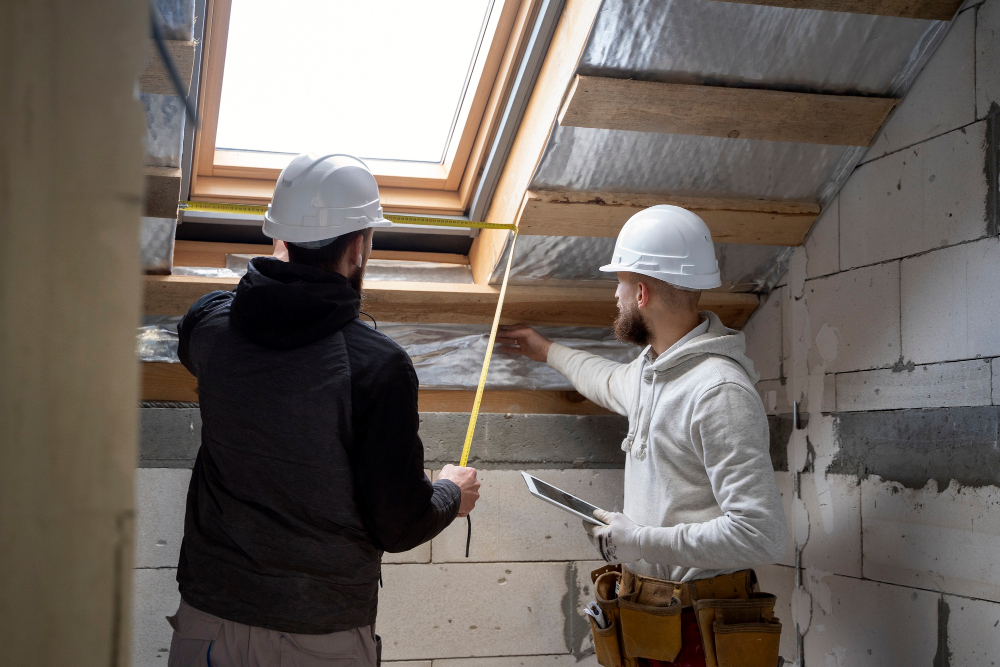
What a complete raccoon job include:

A detailed inspection of the attic, roofline, crawlspace, garage, or other active areas

Humane removal matched to the structure and the level of activity

Careful handling when nesting or baby-raccoon conditions are involved

Cleanup or sanitation support when droppings, odor, or damaged insulation are part of the job

Sealing or exclusion recommendations so the same weak spot is less likely to be reused

When to call now instead of waiting

Call now if you are hearing heavy overhead movement at night, seeing torn vents or soffits, noticing strong odor in the attic, finding droppings near access points, or worrying that a mother raccoon has nested inside the structure. Waiting can give the problem more time to spread into insulation, hidden voids, or additional entry points.

Signs you likely have a raccoon in the attic, roofline, or crawlspace

Raccoons are larger and louder than many homeowners expect. By the time the signs feel obvious, the animal has often already found shelter and a reliable way in and out of the structure.

Why baby raccoon season changes the job

A mother raccoon in the attic is not the same as a single animal using a roof edge temporarily. When nesting is involved, the removal plan has to account for babies, den behavior, and the risk of leaving part of the problem behind. That is one reason DIY trapping often creates more complications instead of fewer.

Heavy attic noises, torn vents, droppings, and overturned trash

Common warning signs include heavy movement in the attic at night, scratching above ceilings, roofline damage, disturbed soffits, droppings near entry areas, overturned trash outside, and a smell that does not go away. Those signs do not always prove a raccoon is the only issue, but they do suggest the property needs a real inspection rather than guesswork.
 
If the attic or roofline has already been affected, the next relevant service page is Orange County attic clean and repair, which supports the restoration side of a wildlife problem after removal is handled.
Does Homeowners Insurance Cover Attic Restoration?
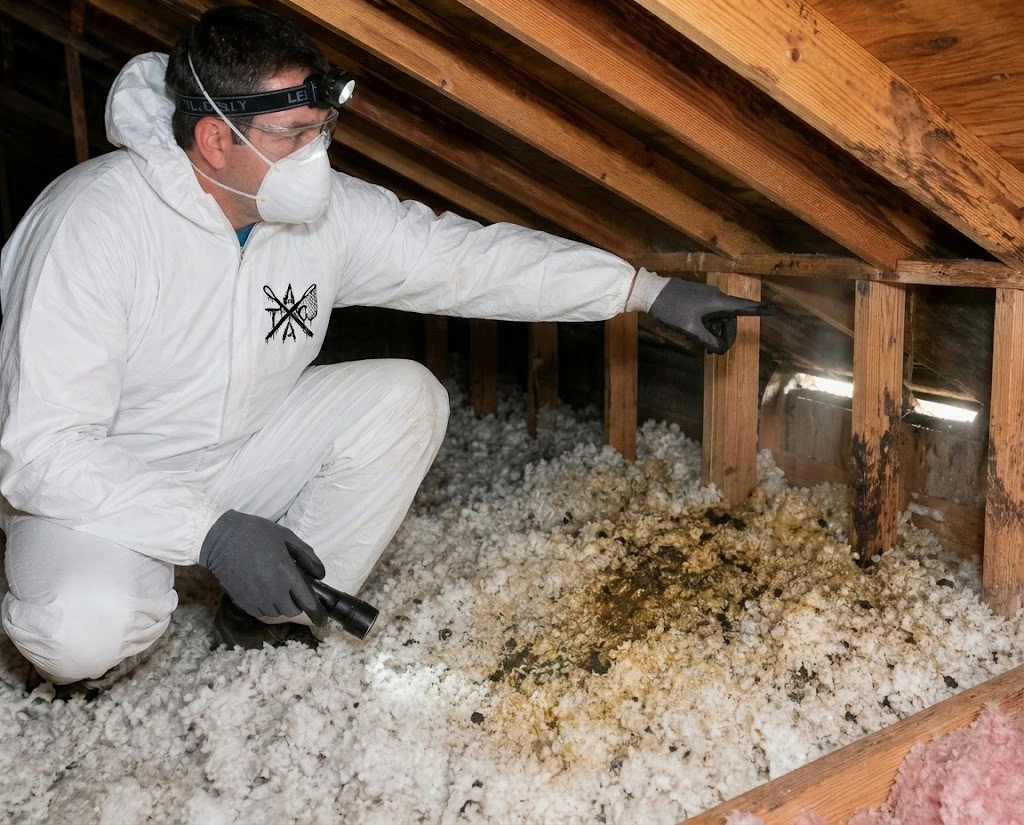
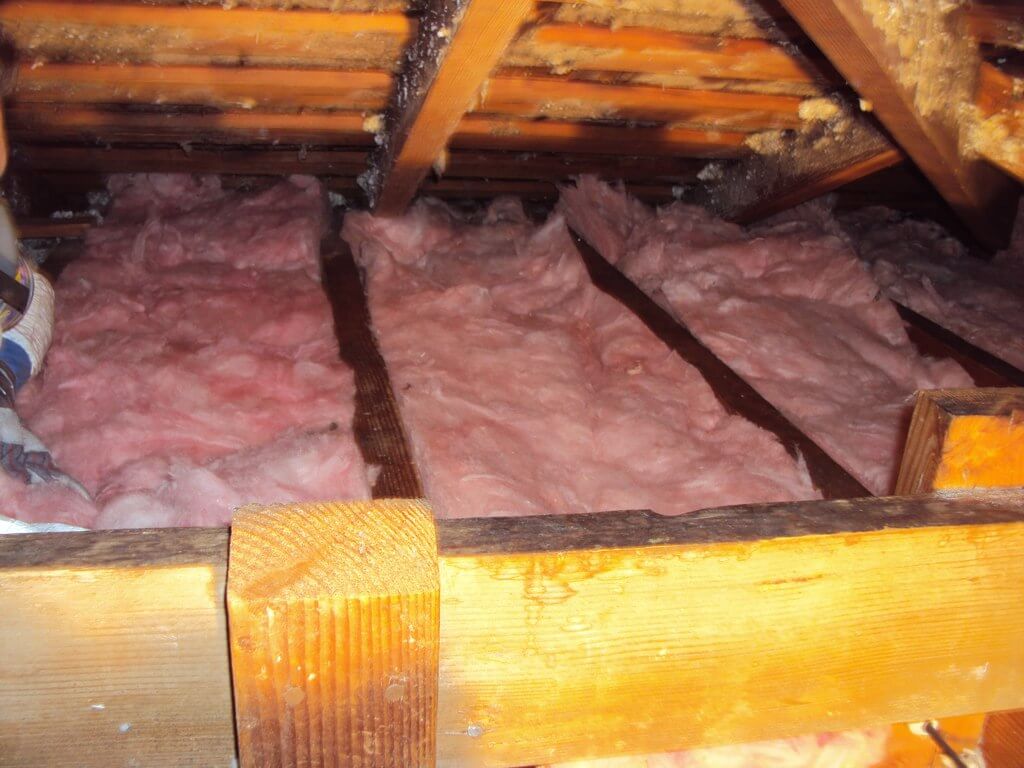
inspecting contaminated insulation and entry points

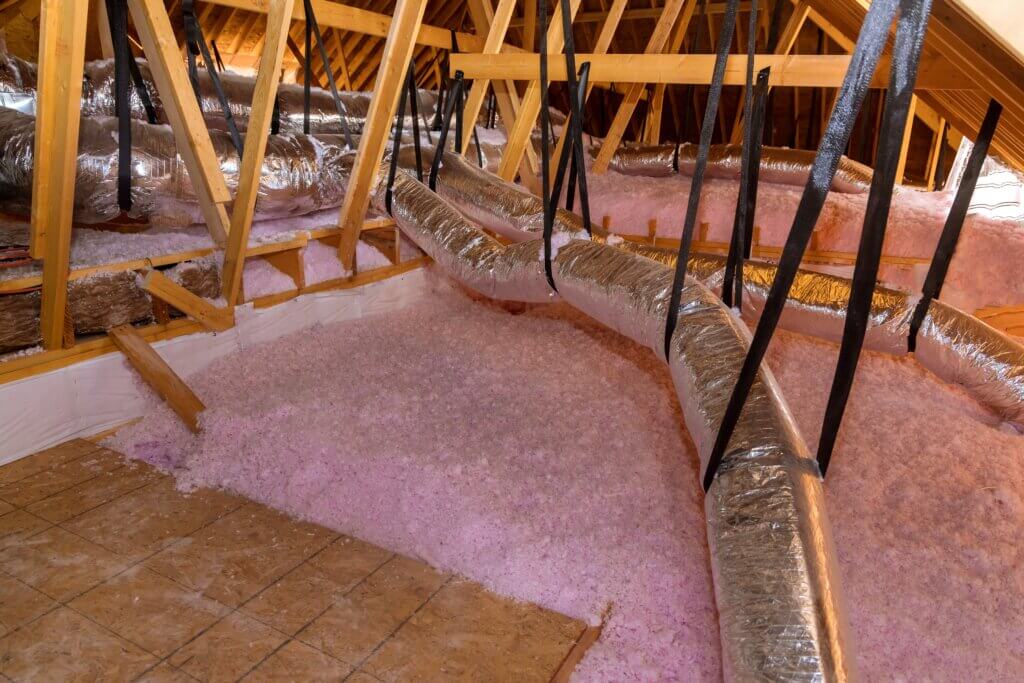
Chewed wiring, duct damage, or visible entry holes

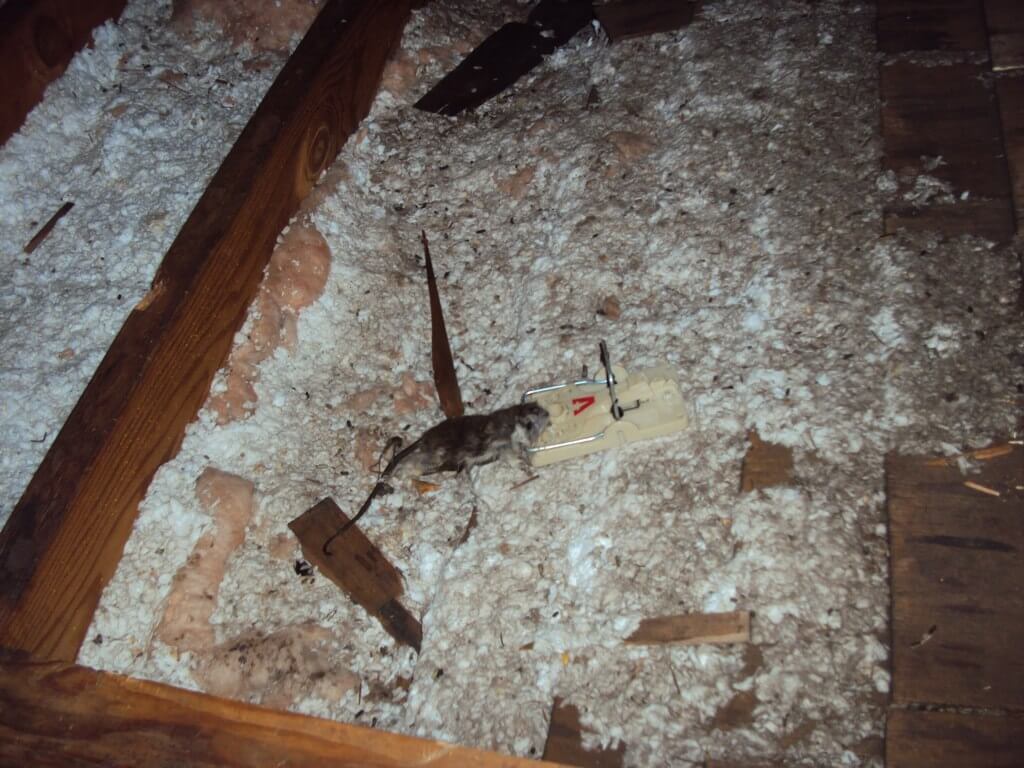
Chewed materials and visible access points suggest the space needs repair as well as sanitation. Even when the infestation is over, damaged openings should be addressed so the cleanup does not become a temporary fix.

Our Orange County raccoon removal process

Homeowners often see local wildlife pages that promise humane service without explaining what the actual work includes. A clear process makes it easier to compare providers and understand why inspection, cleanup, and exclusion matter along with removal.

Step
 
 
What happens
 
 
Why it matters
 
 
1. Inspection
 
 
Identify active areas, entry points, visible damage, and likely scope
 
 
Creates a plan based on the real property condition
 
 
2. Humane removal
 
 
Address the active raccoon problem with a method matched to the site
 
 
Relieves the immediate animal issue safely
 
 
3. Nesting review
 
 
Handle baby-raccoon or den situations carefully when present
 
 
Prevents an incomplete or rushed job
 
 
4. Cleanup and exclusion
 
 
Address contamination and help seal access points
 
 
Reduces re-entry risk and leaves the property in better condition


Step 1: Inspect activity, entry points, and damage

The first step is to inspect the attic, roofline, crawlspace, garage, vents, soffits, and other likely access points. The goal is to understand where raccoons are active, how they got in, and whether the issue is limited or tied to a bigger cleanup or repair need.
 

Step 2: Remove active raccoons humanely

Once the activity pattern is clearer, the active raccoon issue can be addressed with a humane plan suited to the structure. For many Orange County customers, this is the point where urgency matters most because the noise, damage, and stress level have already reached a tipping point.


Step 3: Handle nesting or baby-raccoon situations carefully

If a den or baby-raccoon situation is involved, the job requires more care than a simple trap-and-go approach. A rushed removal can leave babies behind or fail to solve the reason the mother raccoon selected the space in the first place.
 

Step 4: Clean contaminated areas and seal access points

After the active animals are handled, the next question is what they left behind. Cleanup may involve droppings, nesting debris, odor issues, or damaged insulation. Exclusion work then helps reduce the odds of the same opening being reused. When contamination is part of the problem, ACAT’s attic cleanup and decontamination and decontamination and odor removal pages are the most relevant follow-up resources.
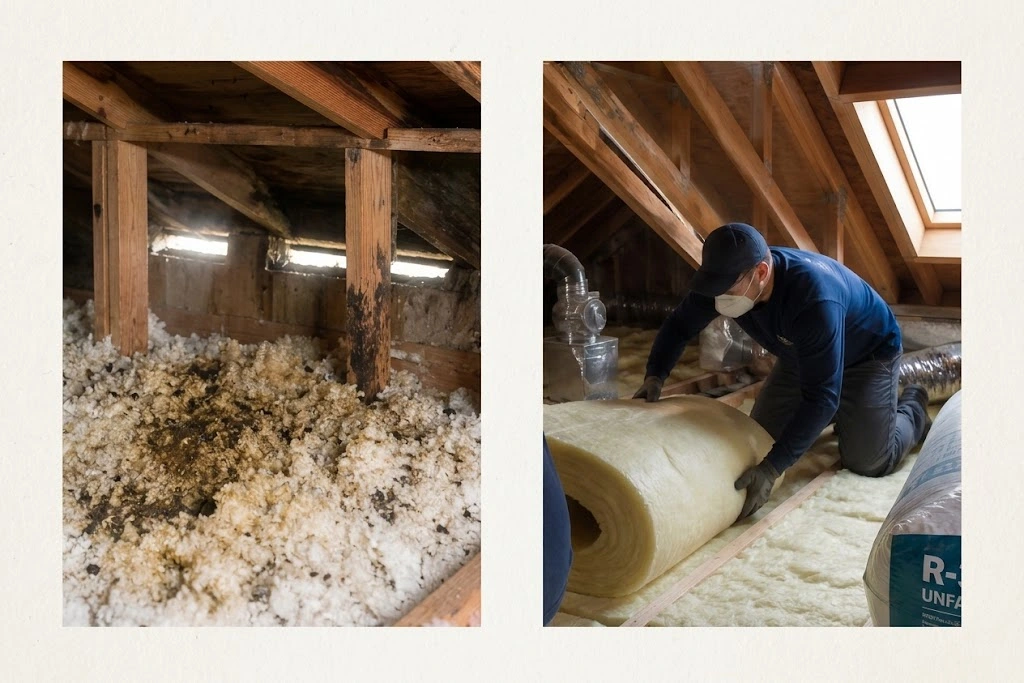
side by side attic image and a person cleaning the attic

What cleanup, sanitation, and exclusion may involve

Many raccoon problems feel urgent because of the animal itself, but the aftermath is often what keeps the property from feeling normal again. Droppings, odor, nesting debris, damaged insulation, and visible access-point damage can all remain after the raccoon is gone.

Droppings, odor, insulation damage, and attic contamination

Cleanup needs vary from property to property. Some jobs only need limited debris removal and sanitation. Others involve contaminated insulation, strong odor, and broader attic recovery. The California Department of Public Health warns that raccoon droppings can carry eggs from raccoon roundworm, which is one reason enclosed-space cleanup should be treated seriously instead of as a cosmetic task.


Why sealing the entry point matters after trapping

If the same weak spot remains open, the property can stay vulnerable even after the current raccoon issue is solved. That is why a better service page talks about exclusion and access-point sealing, not only removal.


Situation


What it usually means


Recommended response


Cleanup only


Light debris, limited contamination, no obvious repeat-entry issue


Inspection plus targeted sanitation


Exclusion only


Access problem is clear, contamination is minimal


Seal vulnerable gaps and improve prevention


Full-scope job


Active raccoons, contamination, and damaged entry points are all present


Combine removal, cleanup, and exclusion as one plan


The goal is not to oversell the job. It is to match the solution to the actual condition of the property.
Attic Clean & Repair Services, Riverside Attic Clean and Repair
Orange County Attic Clean and Repair

What affects raccoon removal cost in Orange County?

There is no honest one-price answer for every property because raccoon jobs vary widely. A simple roofline access issue is different from a long-running attic infestation with contamination and multiple vulnerable openings. The clearest way to think about cost is to understand what expands or reduces the scope.


Cost factor


Why it changes the scope


What it may add


Number of raccoons


More animals can require more monitoring and follow-up


Longer removal timeline


Nesting complexity


Mother-and-babies situations require more careful handling


Added labor and planning


Access difficulty


Steep rooflines, tight attics, and hidden openings take more time


Higher labor complexity


Cleanup needs


Droppings, odor, and damaged insulation expand the project


Sanitation or restoration scope


Exclusion and repairs


Sealing access points is often the difference between temporary relief and a better long-term result


Material and repair work


If you want a property-specific quote, the fastest path is to use the contact page or call (877) 724-5314 rather than relying on generic price ranges.
Riverside Attic Clean and Repair, San Bernardino Attic Clean and Repair
Riverside Attic Clean and Repair
FAQ

Frequently Asked Questions About Home Rat Removal

How do I know if rats are in my house?

Fresh droppings, scratching sounds at night, greasy rub marks, gnaw damage, shredded nesting material, and strong musty or urine-like odor are some of the most common signs. If those signs are recent or getting worse, the infestation is usually active rather than old. Attics, wall voids, garages, and crawlspaces are often the first places to inspect.

How long does home rat removal take?

The timeline depends on how many rats are active, how easy the affected areas are to access, and whether the job includes cleanup or proofing. Some homes can move quickly from inspection to removal and follow-up, while larger or more complex infestations take longer. Lasting results come from handling both the rats and the entry points.

Do you use poison?

A controlled, inspection-first approach is usually more helpful than relying on poison as the main answer. Poison can leave rats to die in hidden parts of the structure, which may create odor and cleanup issues without solving how the infestation started. Many homeowners prefer a plan centered on inspection, targeted removal, sanitation when needed, and proofing.

Do you clean droppings and contaminated insulation?

Cleanup may be part of the scope when rats have left droppings, urine, nesting debris, or odor behind. In more serious cases, the work may extend into attic cleanup, sanitation, or odor removal. The inspection helps define whether the job is only active removal or a larger recovery project for the affected area.

Can you seal the holes too?

Sealing access points is one of the most important parts of long-term prevention. Removing the current rats helps in the short term, but proofing is what makes re-entry harder. Depending on the property, that may include work around rooflines, vents, utility penetrations, crawlspace entries, and other structural gaps.

What should I do before the inspection?

Make note of where you have heard sounds, seen droppings, noticed odor, or found gnaw damage. If possible, avoid disturbing droppings by sweeping or vacuuming them dry, since the CDC advises against that. Clearing light access to attics, garages, or crawlspaces can also make the inspection easier, but safety should come first.

Reviews

Based on over 2000 reviews

Cecily L.
We had such a great experience with All City Animal Trapping. We got the Platinum package, and it was well worth the investment! The team was easy to reach and very responsive. Blake handled everything on site. He was very nice and communicative, showed up on time, and took care of our attic from patching to trapping and everything else. You'd never even know he was here! We're critter free which has given us peace of mind. 100% recommend All City!
Jackie Poles Ran
We really wanted a service that provided live trapping since we didn’t want to kill any animals but we didn’t want them living in our attic either! Pete was great! He was a great communicator and always kept us appraised of what he did and what he recommended. This was at our rental property and he always accommodated our tenants schedule. They are not the cheapest service but they did a great job and I’d definitely use them again.
Eileen C.
Great experience. Kevin was very thorough, patient and professional. He looked through our attic and roof area, fixed the hole in the attic and provided other recommendations.
Angela M.
Unwelcome guests in the attic! Rats! Called All City Animal Trapping, Cole was our technician. He walked around the house and went up into the crawlspace in the attic to assess the entry point. He found an opening in the attic and sealed it off, and set multiple traps. Then he followed up in a week. We caught one! He did a great job, and good attitude. Thank you!