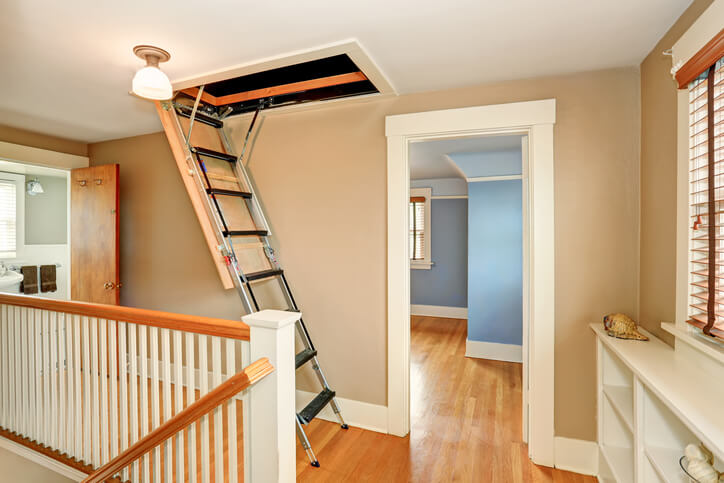
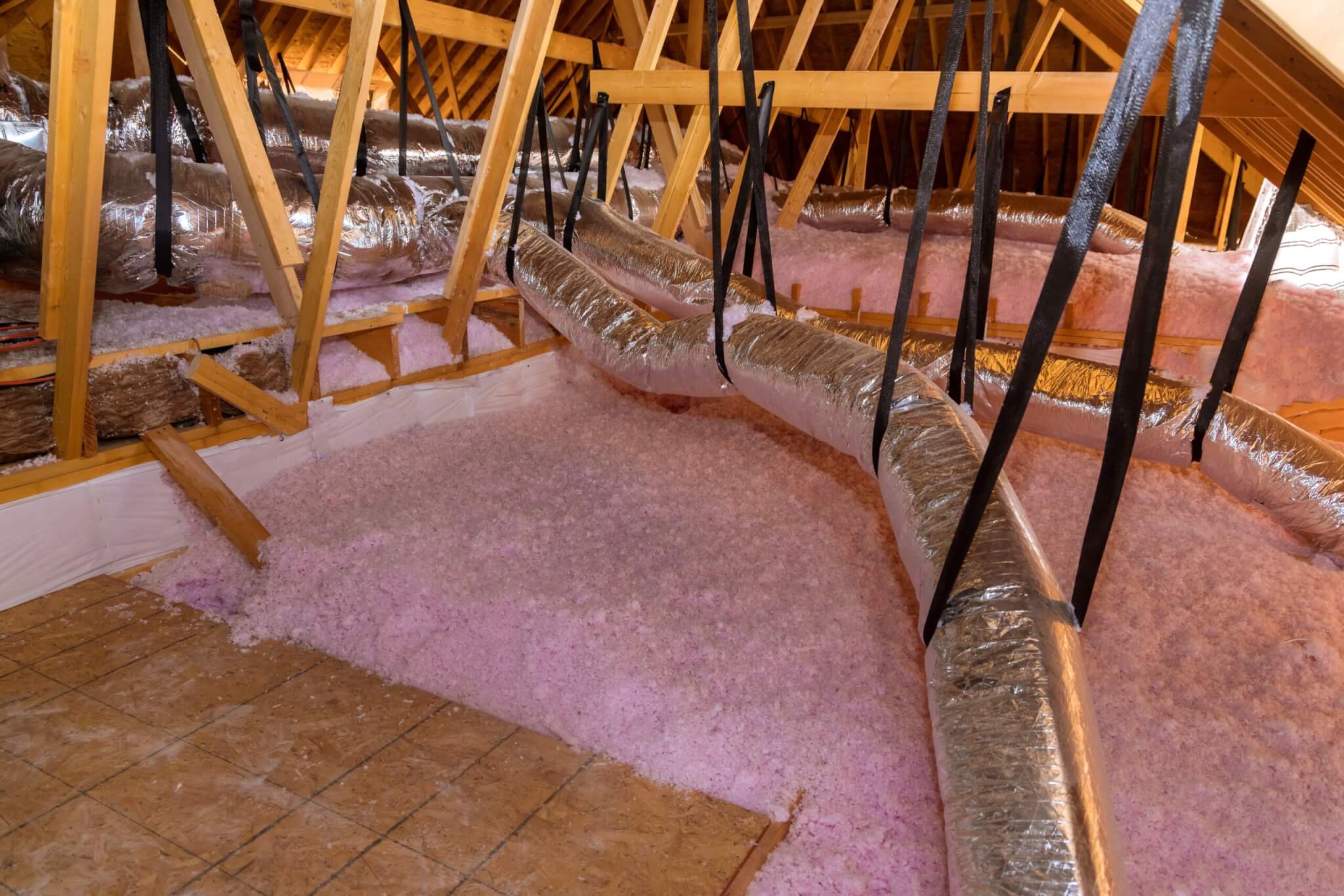
Most homeowners rarely think about their attic insulation until something feels wrong. Maybe an upstairs bedroom stays hot even when the air conditioner is running. Maybe you’ve noticed a strange smell near the ceiling, or you recently discovered rats nesting above the living room.
These problems can have different causes, but they all give you a reason to take a closer look at the attic.
Attic insulation service in Los Angeles can involve inspecting existing insulation, removing damaged or contaminated materials, addressing animal entry points, and installing replacement insulation where needed. The right scope depends on what is actually happening in the space.
At All City Animal Trapping, we help homeowners deal with attic insulation damaged by rodents and other wildlife. Our work connects animal removal, attic cleanup, exclusion repairs, and insulation replacement so that homeowners can address the cause of the damage as well as its effects.
Why Attic Insulation Matters in Los Angeles Homes
Los Angeles has plenty of warm days, but temperatures can vary significantly between neighborhoods and throughout the year. Attic insulation helps reduce unwanted heat transfer between the living space and the attic.
During hot weather, it helps limit heat entering the rooms below. During cooler weather, it helps retain indoor warmth.
Insulation does not create cool or warm air. Instead, it slows heat movement, making it easier for a properly functioning heating and cooling system to maintain comfortable indoor temperatures.
That distinction matters because poor comfort is not always an insulation problem.
Air leaks, inadequate ventilation, ductwork problems, and HVAC performance can also affect room temperatures. Replacing insulation without investigating these issues may leave the homeowner disappointed.
The U.S. Department of Energy explains that insulation performance depends on factors including material, thickness, installation, and thermal resistance, commonly called R-value.
For homeowners, the practical takeaway is simple: insulation should be evaluated as part of the attic’s overall condition rather than treated as a product that solves every comfort problem.
Signs Your Attic Insulation May Need Attention
Some insulation problems are visible. Others are discovered when homeowners investigate changes in comfort or signs of wildlife.
Rooms that stay unusually hot or cold
If one room consistently feels uncomfortable, the attic insulation above it may be uneven, missing, or compressed.
However, uneven temperatures can also result from air leakage or duct issues. An inspection helps determine whether the insulation is contributing to the problem.
Higher heating or cooling bills
An unexplained increase in energy use may prompt homeowners to examine the attic.
Insulation gaps can allow additional heat transfer, but energy bills are influenced by weather, thermostat settings, equipment condition, and household use.
We recommend looking at the attic’s actual condition instead of assuming that insulation replacement will produce a particular percentage of savings.
Flattened or disturbed insulation
Some insulation materials can settle over time. Others become compressed by storage, maintenance work, or animal activity.
Compression and gaps can reduce thermal performance, particularly when insulation no longer provides the intended coverage.
An inspector can determine whether the material can remain in place, needs additional insulation, or should be removed.
Animal droppings and nesting materials
Rodents may tunnel through insulation, move it into nesting areas, or contaminate it with urine and droppings.
If you find evidence of animal activity, the priority is not simply adding another layer of insulation.
The animals, contamination, and entry points need to be evaluated first.
Persistent odors
A musty or unpleasant smell near the attic can have several causes, including moisture, animal waste, or a dead animal.
Insulation may retain odors when contaminated, but an odor alone does not identify the source.
Covering damaged material with fresh insulation is not a substitute for locating and addressing the problem.
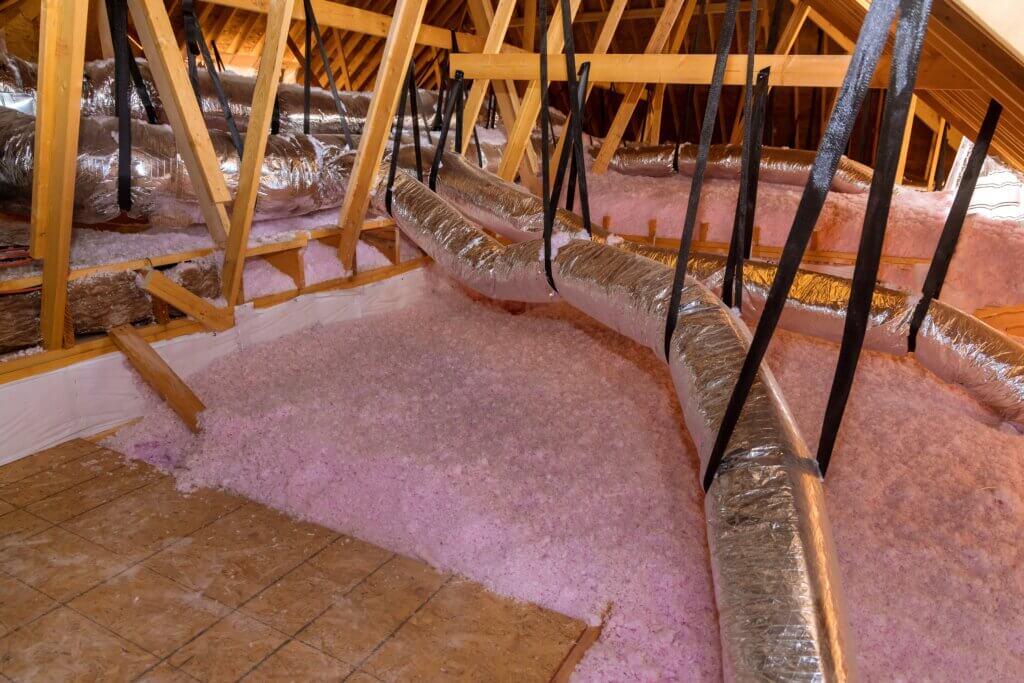
Does All Old Attic Insulation Need to Be Removed?
No. Insulation does not automatically require replacement because it has been in place for many years.
If the material is dry, reasonably intact, uncontaminated, and performing adequately, it may be possible to leave it in place.
Some attics benefit from targeted repairs or additional insulation rather than complete removal.
Replacement becomes more relevant when insulation is heavily contaminated, wet, extensively disturbed, or otherwise unsuitable to remain.
The decision should also consider whether moisture or wildlife entry problems have been corrected.
For example, replacing insulation beneath a leaking roof without repairing the leak first creates the risk of damaging the new material.
Similarly, installing new insulation while rodents can still enter the attic may lead to another round of contamination.
At All City Animal Trapping, we believe homeowners should understand why removal is recommended and which areas are affected before approving the work.
How Rodents and Wildlife Damage Attic Insulation
An attic can be attractive to animals because it provides shelter from weather and human activity.
Rats, mice, squirrels, raccoons, and some birds may access roof openings, vents, or gaps around building materials.
Once inside, animals can disturb insulation while moving through the space or constructing nests.
Nesting and displacement
Rodents may pull apart insulation or create pathways through loose materials.
This can leave some areas thin while other sections become piled up.
Urine and droppings
Animal waste can contaminate insulation and nearby surfaces.
Depending on the amount and distribution, affected material may require careful removal rather than routine household cleaning.
Damage around vents and openings
Wildlife may exploit damaged vent screens, roofline gaps, or other vulnerable areas.
These openings matter because replacement insulation can be damaged again if the access problem remains.
Damage to nearby building components
Animal activity can also affect duct insulation, flexible ducts, and wiring.
Suspected electrical damage should be assessed by a qualified electrician. Wildlife removal technicians should not attempt electrical repairs outside their qualifications.
This is why attic restoration often requires looking beyond the insulation itself.
What Happens During Professional Attic Insulation Removal?
A professional insulation removal project should begin with an assessment of the attic, not immediately with demolition.
The exact process depends on the material, the reason for removal, and the accessibility of the space.
Step 1: Inspect the attic
We look for evidence of animal activity, contaminated materials, disturbed insulation, and openings that may allow wildlife inside.
We also consider access conditions and visible damage that could affect the work.
If the insulation appears wet, we look for signs that a moisture source needs further investigation.
Step 2: Address active animal activity
If animals are still using the attic, removal and exclusion planning must be coordinated with the restoration work.
Sealing an opening without checking whether animals remain inside can create additional problems.
We identify the likely access points and determine an appropriate order for removal and repairs.
Step 3: Remove affected materials
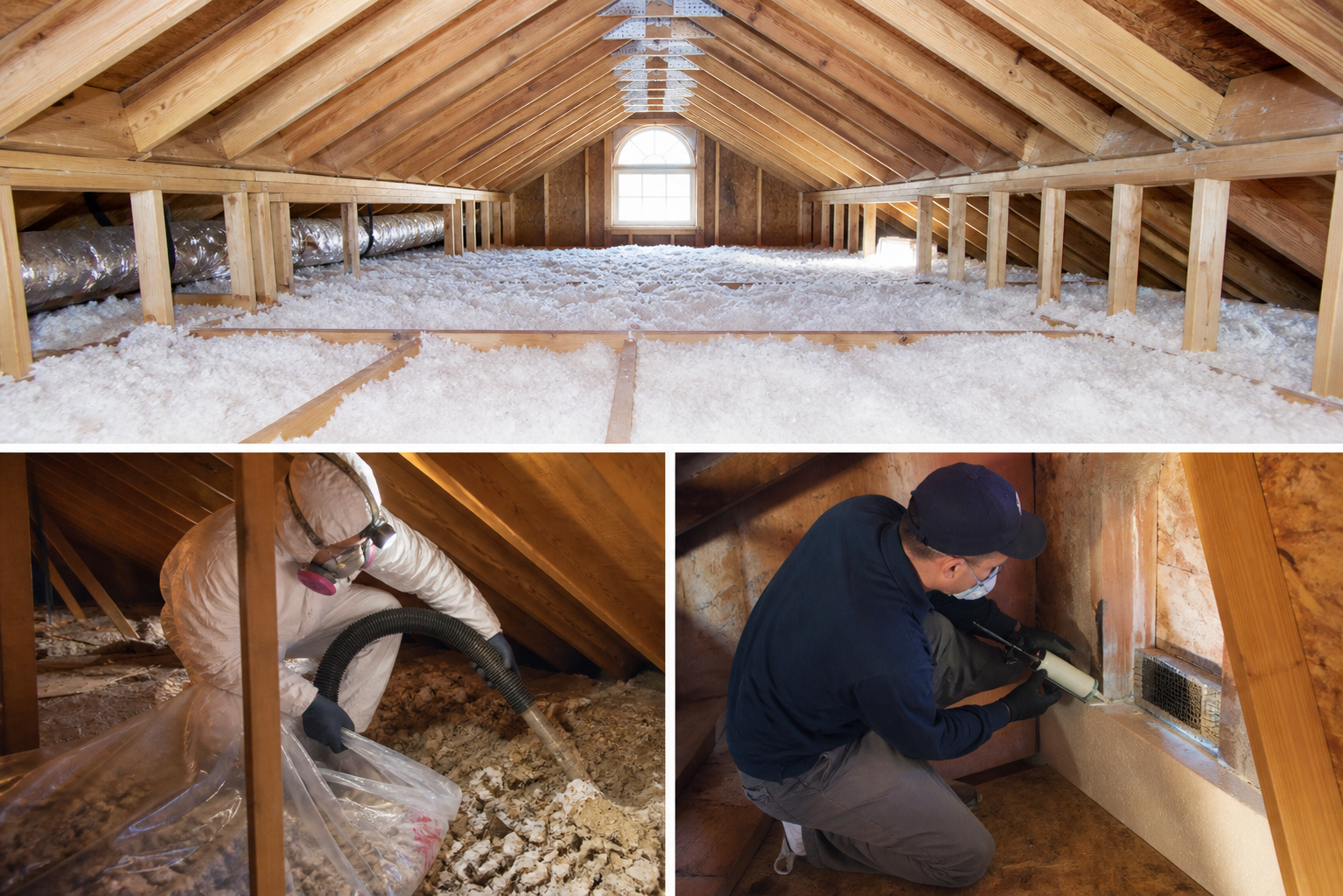
Insulation that cannot reasonably remain in place may need to be removed using suitable containment, equipment, and protective procedures.
Different insulation types require different handling.
Older or unidentified materials may need evaluation before disturbance because some insulation products and building materials can present additional hazards.
Homeowners should not attempt to vacuum or sweep contaminated rodent waste with ordinary household equipment.
Step 4: Clean affected surfaces
After damaged materials are removed, accessible contaminated areas can be evaluated for appropriate cleaning and treatment.
The objective is to address waste and debris, not simply cover odors with fragrance.
Cleaning methods should reflect the type and extent of contamination.
Step 5: Repair vulnerable openings
We identify gaps or damaged barriers that may have allowed animals to enter.
Exclusion repairs can include suitable screening, sealing around utility penetrations, or attention to roofline openings.
These repairs should preserve required ventilation and avoid interfering with building systems.
Step 6: Install replacement insulation
Once the attic is ready, insulation can be installed according to the selected material and the property’s requirements.
Proper coverage and installation matter just as much as the product itself.
Which Type of Attic Insulation Is Best?
There is no single insulation material that is best for every Los Angeles attic.
The right choice depends on existing conditions, available space, installation requirements, budget, and the home’s energy performance goals.
| Insulation type | Common characteristics | Important considerations |
|---|---|---|
| Fiberglass batts | Precut or rolled sections | Must fit properly without gaps or compression |
| Blown-in fiberglass | Loose-fill material distributed across attic surfaces | Requires appropriate depth and even coverage |
| Blown-in cellulose | Loose-fill insulation made primarily from treated paper fiber | Installation and moisture conditions matter |
| Spray foam | Applied material that can provide insulation and air sealing | Requires careful design, professional installation, and attention to ventilation and safety |
Homeowners sometimes assume spray foam is automatically the best choice because it can provide air sealing.
However, spray foam is not rodent-proof, and it is not suitable for every attic design.
It also should not be used as a substitute for identifying and repairing animal entry points.
The insulation plan should be selected after evaluating the attic, rather than choosing a material solely because it is advertised as premium.
What Does R-Value Mean for Attic Insulation?
R-value describes a material’s resistance to heat flow. In general, higher R-values indicate greater resistance, but the recommended insulation level depends on the home’s location, construction, and existing conditions.
A product’s advertised R-value is not the only factor that matters.
Poor installation can leave gaps or compressed sections that reduce the effectiveness of the insulation system.
Air leakage can also undermine comfort even when the attic contains a substantial amount of insulation.
That is why attic upgrades may involve evaluating air sealing, insulation coverage, and ventilation together.
For a Los Angeles homeowner, the best starting point is determining what insulation is already present and whether it is properly installed.
How Much Does Attic Insulation Replacement Cost in Los Angeles?
Attic insulation replacement costs vary because the work is not identical from one home to another.
A clean, accessible attic that needs additional insulation is very different from an attic requiring rodent removal, contaminated material disposal, cleaning, entry-point repairs, and full replacement.
Several factors influence the estimate.
Attic size: Larger spaces generally require more material and labor.
Existing insulation: The type, depth, and condition of the material affect removal requirements.
Contamination: Rodent waste, nesting debris, and other hazards can increase the complexity of the work.
Access: A cramped attic or difficult entry point can slow down removal and installation.
Repair work: Damaged vents, roofline gaps, or other openings may need attention before replacement insulation is installed.
Insulation selection: Different materials and installation methods have different costs.
Instead of relying on a generic price per square foot, request an inspection and written scope that separates the work being recommended.
Ask whether the quote includes removal, disposal, cleaning, exclusion repairs, new insulation, and any additional services.
This makes it easier to compare proposals and understand the full project.
Can You Install New Insulation Over Existing Insulation?
Sometimes.
If existing insulation is dry, uncontaminated, and suitable to remain, adding material may be an option.
However, installing new insulation over rodent-contaminated or wet material can conceal the underlying problem.
It may also make future inspection and cleanup more difficult.
Before adding insulation, determine whether the existing material needs removal, whether air leakage should be addressed, and whether there are any moisture or wildlife concerns.
An attic with a history of rodent activity deserves particular attention because the condition of the insulation may not be obvious from the access hatch.
What About Mold or Water-Damaged Insulation?
Moisture problems require a different response from ordinary insulation upgrades.
Water may enter through roof leaks, plumbing failures, condensation, or other building defects.
Wet insulation can lose performance, and prolonged moisture may contribute to microbial growth in surrounding materials.
If mold is suspected, the source and extent of the moisture problem should be evaluated by appropriately qualified professionals.
Simply spraying a product over affected materials or adding new insulation does not resolve the cause.
The appropriate response may involve leak repair, drying, specialized remediation, and replacement of materials that cannot be salvaged.
Our role in animal-related attic restoration is to identify visible concerns and coordinate recommendations within the scope of the work.
How to Prevent Wildlife From Damaging New Insulation
After investing in attic cleanup and replacement insulation, homeowners naturally want to avoid another infestation.
The most important step is addressing how animals entered the attic.
Potential access points include damaged roof vents, gaps around eaves, openings near utility lines, and compromised screens.
We also recommend checking for conditions that make the property attractive to wildlife.
Outdoor food sources, unsecured trash, and easy access to rooflines can increase the likelihood of animal activity near a home.
No exclusion method guarantees that wildlife will never approach the property again. However, repairing vulnerable openings and monitoring for renewed activity can reduce opportunities for reentry.
New insulation should be the final stage of a properly planned restoration, not the first step taken while animals remain active.
When Should You Schedule an Attic Inspection?
An attic inspection is worth considering when you have found rodent droppings, heard repeated scratching above the ceiling, noticed strong odors, or discovered visibly damaged insulation.
It may also be useful when you are planning an insulation upgrade but do not know whether the existing material is suitable to keep.
If there is a suspected electrical hazard, significant structural damage, or an active roof leak, arrange the appropriate specialist before entering the affected area.
You do not need to wait until insulation is visibly destroyed to ask for an assessment.
A timely inspection can help determine whether you need targeted cleanup, a partial replacement, or a broader attic restoration project.
Why Choose All City Animal Trapping for Attic Insulation Service?
Many insulation projects are straightforward energy upgrades. Others begin with an animal problem.
When rodents or wildlife have occupied the attic, homeowners may need more than an insulation installer.
At All City Animal Trapping, we handle animal removal, attic cleanup, exclusion work, and insulation replacement as connected parts of the restoration process.
We inspect the affected areas, explain what we find, and recommend the services appropriate to the condition of the attic.
Our service area includes Los Angeles and communities throughout Southern California.
Whether the problem involves contaminated insulation, repeated rodent activity, or damaged attic access points, we want homeowners to understand the cause before investing in repairs.
Key Takeaways
-
Old attic insulation does not always need complete removal.
-
Rodent contamination, water damage, and extensive disturbance are reasons to investigate replacement.
-
Removing animals and sealing entry points should be coordinated with insulation restoration.
-
Fiberglass, cellulose, and spray foam each have different installation considerations.
-
A written estimate should explain cleanup, removal, repairs, and replacement separately.
- New insulation is most effective when underlying moisture, air leakage, and wildlife problems have been addressed.

Frequently Asked Questions About Attic Insulation in Los Angeles
How do I know if my attic insulation needs replacement?
Look for heavy contamination, wet material, significant disturbance, or missing coverage. An inspection can determine whether partial or complete replacement is necessary.
Can rodent-contaminated attic insulation be cleaned?
Some nearby surfaces can be cleaned, but heavily contaminated insulation may need removal. The decision depends on the material and extent of contamination.
Will new attic insulation lower my energy bills?
Properly installed insulation may reduce unwanted heat transfer and help improve energy efficiency. Actual savings depend on the home, HVAC system, air leakage, weather, and existing insulation.
Is spray foam insulation rodent-proof?
No. Spray foam should not be considered a wildlife exclusion barrier. Entry points need to be identified and repaired separately.
How long does attic insulation replacement take?
The timeline depends on attic size, access, contamination, removal requirements, and repair work. An inspection is needed for a meaningful project estimate.
Can I stay in my home during attic insulation removal?
That depends on the scope of work, contamination, containment requirements, and materials involved. Ask the contractor about safety precautions and whether occupants need to avoid certain areas.
Should wildlife removal happen before insulation replacement?
Yes, active animal activity should be addressed and exclusion work coordinated before installing replacement insulation. Otherwise, new materials may be damaged again.
Conclusion: Get Attic Insulation Help in Los Angeles
Damaged attic insulation is not always obvious from inside the house. Sometimes the first clue is an uncomfortable room. Other times, it is the sound of an animal moving above the ceiling or an odor that will not go away.
The right solution depends on what caused the problem and whether the existing insulation can still do its job.
At All City Animal Trapping, our attic insulation service in Los Angeles focuses on animal-related damage, safe removal of affected materials, cleanup, entry-point repairs, and replacement insulation when needed.
If you suspect rodents have damaged your attic or want to know whether your insulation needs replacement, call us at (877) 724-5314 to request an attic inspection.