

Rat Removal Sherman Oaks With Inspection, Cleanup, and Proofing
A stronger rat removal plan starts with inspection, moves into targeted removal, addresses droppings or odor when contamination is present, and finishes with proofing that helps reduce repeat entry.
Call a Sherman Oaks Rat Inspector: (877) 724-5314If you need rat removal in Sherman Oaks, the real fix is not just setting one trap and hoping the noise stops. A stronger solution starts with inspection, moves into targeted removal, addresses droppings or odor when contamination is part of the problem, and finishes with proofing that helps stop the same access points from being used again.
All City Animal Trapping (ACAT) positions rat removal around humane wildlife control, practical inspection, and property-specific prevention. For Sherman Oaks homeowners, landlords, property managers, and businesses, that matters because rats can spread quietly through attics, wall voids, garages, crawlspaces, and storage areas before the full scope becomes obvious.
Rat removal Sherman Oaks: what the service should include
Professional rat removal in Sherman Oaks should identify where the rats are active, remove them with targeted methods, address droppings or odor when needed, and evaluate the structure for proofing. The four stages are inspect, remove, clean, and prevent re-entry.
| Service scope | What it addresses | What may remain unresolved |
|---|---|---|
| Inspection only | Likely activity zones, access points, nesting areas, and visible damage. | Active rats, contamination, and open entry points still need follow-up work. |
| Trap-only response | Some of the current rat activity where tools are placed. | Hidden activity, odor, and the openings that allowed the infestation may remain. |
| Removal, cleanup, and proofing | Active rats, affected areas, and the structural conditions that support repeat entry. | The exact scope still depends on the inspection and property conditions. |
Inspect the property and map entry points
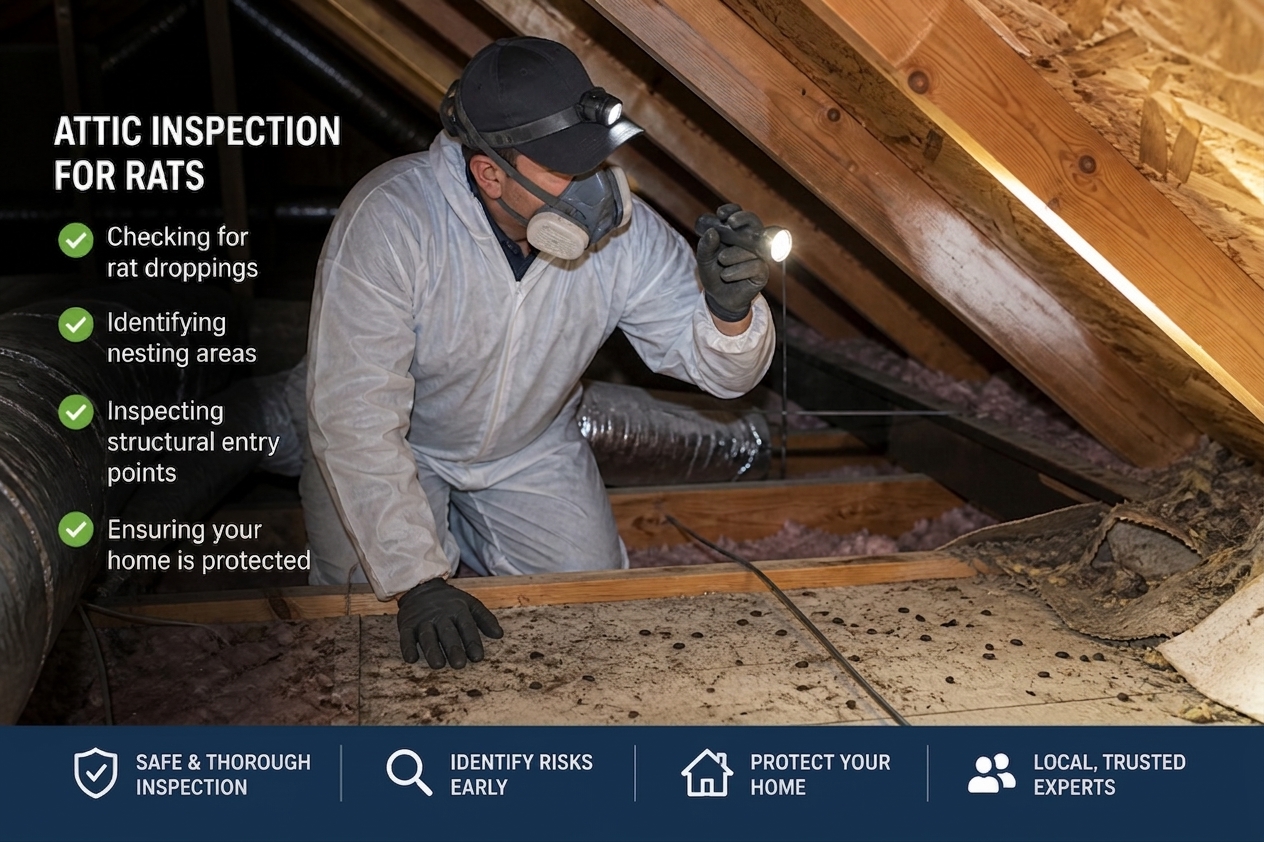
Inspection can include attics, roof returns, eaves, vents, garages, crawlspaces, utility penetrations, and storage-heavy areas to identify activity and access routes.
Remove active rats with targeted methods
Removal tools can be placed where they are most relevant to the infestation and actual travel routes found during inspection.
Address droppings, odor, and affected areas
Cleanup needs vary depending on droppings, urine, nesting debris, odor, contaminated insulation, or a dead rat in a concealed area.
Evaluate proofing and prevention
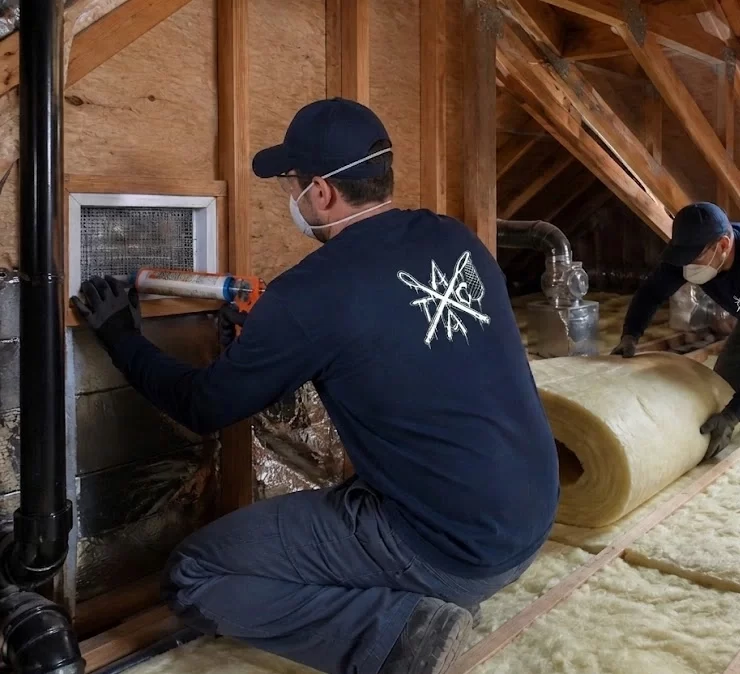
Proofing may include sealing or screening vulnerable openings and reducing access routes based on what the inspection finds.
Need a Sherman Oaks Rat Inspection?
Describe where you hear activity, where you found droppings, and whether odor or visible damage is already part of the problem.
Call a Sherman Oaks Rat Inspector: (877) 724-5314What are the signs you may have rats in a Sherman Oaks property?
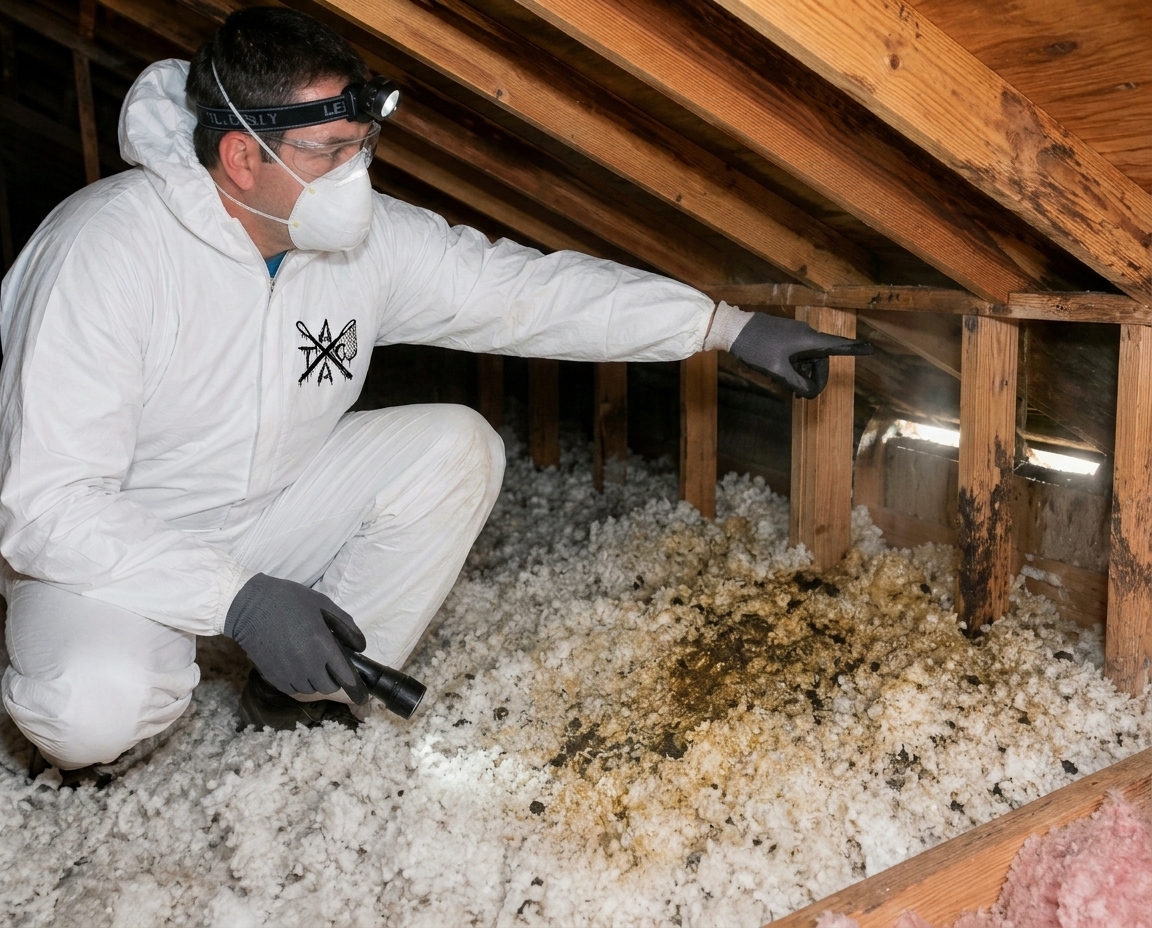
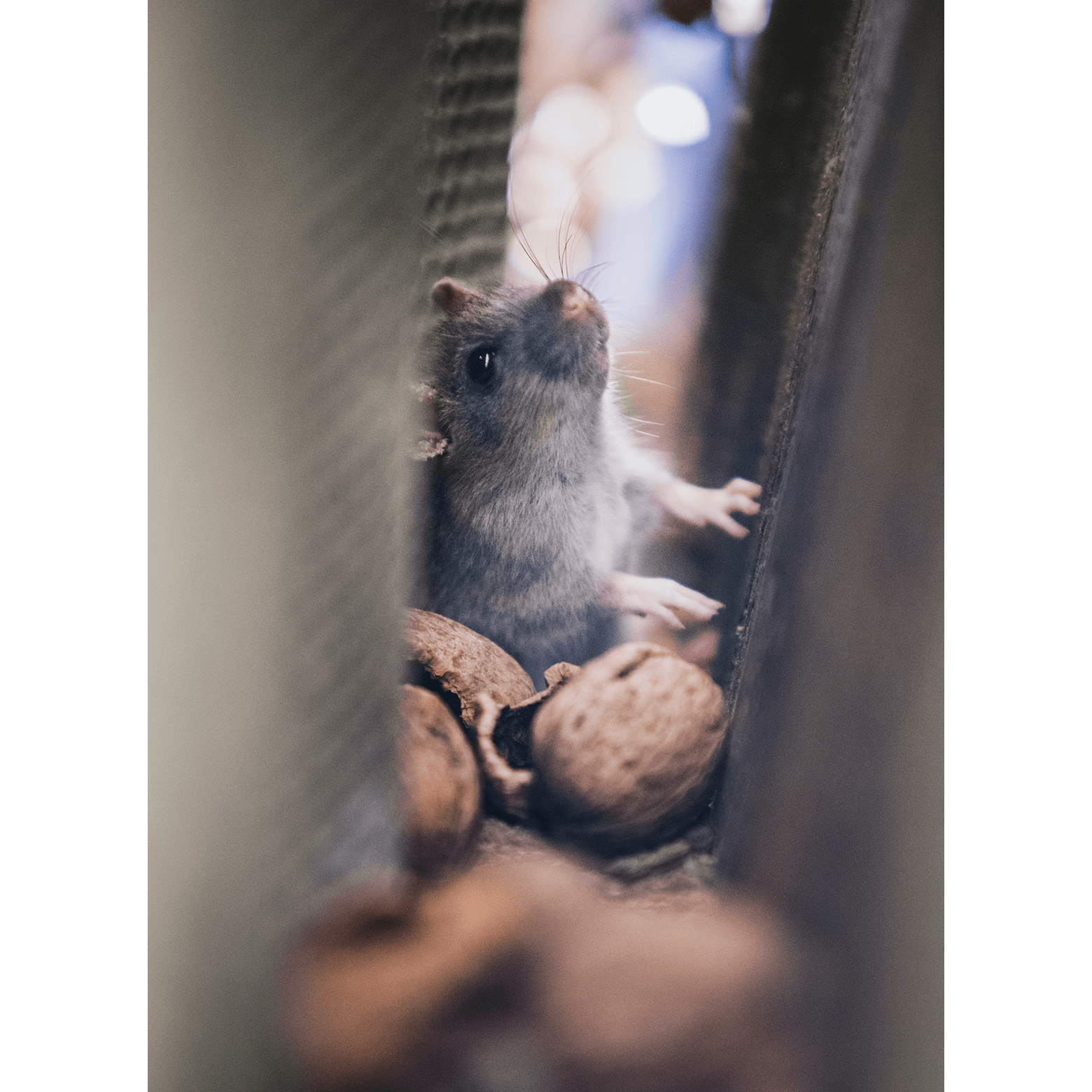
Common signs of an active rat infestation include scratching or running at night, fresh droppings, gnaw marks, grease marks along travel routes, shredded nesting material, disturbed insulation, and persistent musky or dead-animal odor. Repeated evidence across more than one area is a strong reason to move from DIY guesses to a full inspection.
Where do signs usually appear?
Attic noises may point toward roofline, vent, or eave access. Droppings in a garage or crawlspace may point toward lower openings, stored materials, or utility penetrations. A smell inside a wall or ceiling can indicate hidden nesting or a dead rodent.
- Scratching, chewing, or movement in the attic, ceiling, walls, or garage, especially at night.
- Fresh droppings near stored food, insulation, crawlspaces, utility areas, or baseboards.
- Gnawed wiring, vents, boxes, plastic containers, or stored materials.
- Greasy rub marks along rafters, edges, baseboards, and common travel paths.
- Shredded paper, disturbed insulation, nesting debris, or concentrated odor.
- Repeated sightings near trash areas, landscaping, roof access points, or attached structures.
Why do traps alone usually fail to stop repeat rat activity?
Traps can remove some of the current rats, but they do not automatically solve the reason the infestation started. If vents, roof gaps, crawlspace screens, garage openings, or utility penetrations remain accessible, new rats may use the same route.
- Open access remains available: New rats can use the same route after the first animals are removed.
- Hidden activity may be missed: A trap in one room does not confirm that attic, wall, or crawlspace activity has ended.
- Contamination remains behind: Droppings, nesting debris, and odor can continue to affect the space after trapping.
- Attractants may still be present: Accessible food, water, clutter, and shelter can make the property easier to reuse.
For broader service context, review ACAT's rat removal service, Los Angeles rat removal page, and home rat removal page.
Rat Activity Keeps Coming Back?
Targeted removal is stronger when it is connected to inspection, cleanup decisions, and proofing based on the actual access routes.
Call a Rat Proofing Inspector: (877) 724-5314What affects the cost of rat removal in Sherman Oaks?
Rat removal cost in Sherman Oaks depends on the size of the infestation, the number and accessibility of active areas, the property type, cleanup requirements, and the amount of proofing or repair work needed. A property-specific inspection is more useful than a flat promise because a garage issue and a multi-entry attic infestation do not require the same scope.
| Cost factor | Why it changes the scope | Possible impact |
|---|---|---|
| Infestation size | More active areas can require more inspection, monitoring, and follow-up. | Longer service timeline and more removal work. |
| Access difficulty | Attics, wall voids, tight crawlspaces, and concealed gaps can be harder to assess safely. | More labor and more careful setup. |
| Property type | Homes, rentals, multi-unit properties, HOAs, and businesses can have different access and coordination needs. | Different scheduling and service planning. |
| Cleanup and odor | Droppings, nesting debris, dead-rat odor, or contaminated insulation may expand the work beyond removal. | Additional sanitation, odor, or restoration support. |
| Proofing and repairs | The number, size, and location of entry points determine how much sealing or screening is needed. | Additional materials, labor, and prevention work. |
For general pricing guidance, ACAT also maintains a trapping prices page. The best next step is still a property-specific inspection that separates simple removal from cleanup-heavy or proofing-heavy jobs.
What are common rat entry points in Sherman Oaks homes?
Common rat entry points include gaps around roof edges, eaves, attic vents, utility penetrations, garage doors, crawlspace vents, damaged exterior materials, and lower access points near storage or landscaping. An inspection should connect the evidence inside with the route outside.
- Roof returns, eaves, soffits, and attic vents with damaged or missing screening.
- Openings around plumbing, electrical, cable, and other utility lines.
- Crawlspace doors, foundation vents, and lower access areas near stored materials.
- Gaps around garage doors, side-yard entries, sheds, and attached structures.
- Branches, fences, trellises, and other climbable routes that make elevated access easier.
When do rat cleanup and attic restoration become part of the job?
Cleanup becomes more important when rats have left widespread droppings, urine, nesting debris, odor, or contaminated insulation. It is also important when a rodent dies in a wall, attic, or crawlspace. In those cases, the project may involve more than active removal alone.
Do not sweep or vacuum dry droppings
The CDC recommends careful rodent cleanup practices and advises against sweeping or vacuuming dry rodent droppings because contaminated particles can become airborne. If you find a concentrated amount of droppings or nesting material, avoid disturbing it until the cleanup scope is clearer.
When insulation or structural repair may be needed
Rat activity can affect insulation, stored materials, vents, wiring, and other parts of a structure. Whether anything needs to be removed or repaired depends on the extent and location of the damage. Ask for the condition to be documented during inspection so removal, sanitation, proofing, and any restoration work are not treated as one vague step.
Why cleanup and proofing should be planned together
Cleaning a contaminated area without addressing the access route can leave the property vulnerable to a new infestation. The CDC also emphasizes closing gaps and holes as part of rodent prevention. Combining cleanup decisions with proofing helps make the work more durable.
Need Rat Cleanup or Dead-Rat Help?
Droppings, nesting debris, odor, contaminated insulation, or a dead rat may require a broader inspection and cleanup plan.
Call a Rat Cleanup Inspector: (877) 724-5314Why homeowners and property managers contact ACAT
ACAT's service pages position the company around humane trapping, inspection-led recommendations, cleanup support, and practical prevention. That fits Sherman Oaks property owners who want more than a generic extermination pitch and need to understand what happens after the first call.
The service may be relevant to homeowners, landlords, property managers, multi-unit property operators, and businesses dealing with attic noise, droppings, odor, crawlspace activity, or repeat rat access. Each property has different structural conditions and sanitation needs, so the inspection is where the work becomes specific.
Key Takeaways
- Effective rat removal in Sherman Oaks should address inspection, active removal, cleanup when needed, and proofing.
- Traps can reduce current activity, but open entry points can allow new rats to return.
- Cost changes with infestation size, access difficulty, property type, contamination, and prevention work.
- Attic, crawlspace, garage, and wall activity can require different inspection and cleanup decisions.
- Do not sweep or vacuum dry rodent droppings. Use careful cleanup practices and request professional guidance when contamination is significant.
Frequently asked questions about rat removal in Sherman Oaks
How quickly can rat removal begin?
Timing depends on scheduling, access, the size of the infestation, and whether the property also needs follow-up cleanup or proofing. A clear description of where you hear sounds, see droppings, or notice odor can help the service team understand the situation before the inspection. Same-day service should not be assumed unless ACAT confirms current availability.
Is rat removal safe for pets and children?
Safety planning depends on where activity is found, what removal tools are appropriate, and whether contaminated areas are present. Tell the service team about pets, children, and occupied rooms before work begins. Household members should be kept away from traps, droppings, nesting materials, and enclosed access areas until the inspection and service plan are complete.
Do you handle rat droppings and odor after removal?
Cleanup requirements vary by the amount and location of contamination. Some jobs may involve limited affected material, while others require more extensive sanitation, dead-rat removal, odor work, or insulation decisions. Ask for cleanup to be evaluated as part of the inspection.
Can rats come back after removal?
They can if the conditions that allowed entry are not addressed. A removed rat does not close a roofline gap, damaged vent, crawlspace screen, garage opening, or utility penetration. An inspection-led plan can include proofing recommendations when appropriate.
Should I use poison before calling?
Uncontrolled poison use can create hidden odor and dead-animal cleanup problems if a rat dies inside a wall, attic, or crawlspace. It also does not seal the access point. Consider documenting the activity and requesting an inspection before using a product.
What should I do before the inspection?
Note the locations and times of sounds, sightings, droppings, or odor. If possible, take photos from a safe distance and avoid sweeping, vacuuming, or moving heavily contaminated material. Secure food and trash, keep pets away from affected areas, and do not enter unsafe roof, attic, or crawlspace spaces just to search for the source.
Request a Sherman Oaks Rat Inspection
If you are hearing scratching, finding droppings, noticing odor, or dealing with activity that keeps returning, the next step is to identify the source instead of repeating temporary fixes.
Call a Sherman Oaks Rat Inspector: (877) 724-5314